Structured Diagnosis Data in EMR: ABDM, ICD-10-CM, and Interoperable Records
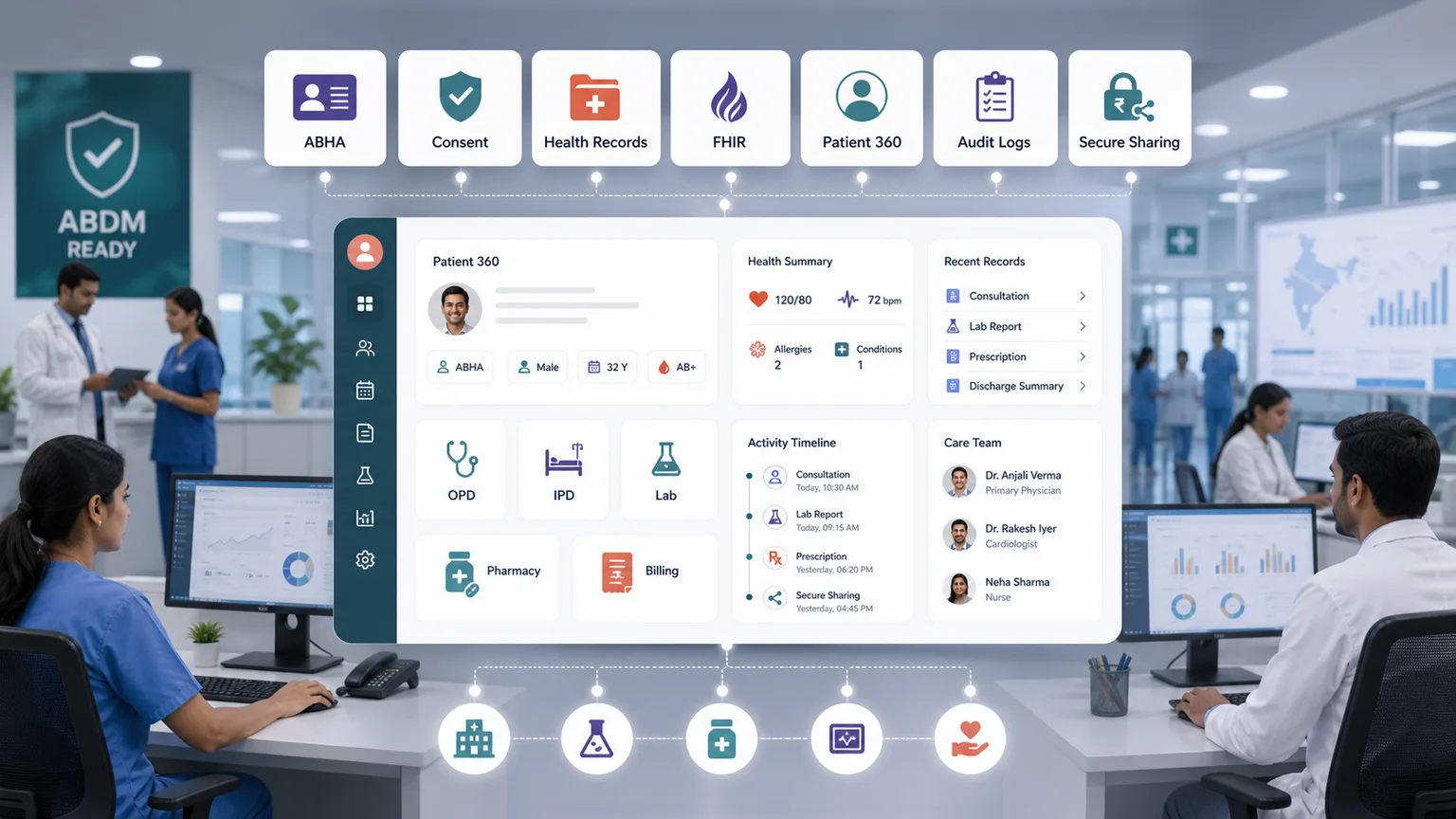
Official Source Basis
- Classification value: ICD-10-CM demonstrates how standardized diagnosis categories can support consistent data capture and downstream reporting.
- Interoperability direction: Structured diagnosis data is more reusable across systems than free-text-only notes, especially for longitudinal records and analytics.
- Human-reviewed extraction: AI can extract candidate diagnosis context from notes, but teams should verify final structured entries before operational use.
Why structured diagnosis data matters beyond billing
Many organizations first encounter diagnosis coding in billing workflows, but structured diagnosis data also improves patient history quality, recall workflows, cohort analysis, and clinical operations.
When diagnoses stay only in narrative text, hospitals lose the ability to reliably track trends and follow-up performance across departments.
ICD-10-CM as a practical reference model
Source note: this article uses the CDC/NCHS ICD-10-CM Tabular List, Index, and April 1, 2026 update files as the coding source. It is written for EMR workflow education, not as a substitute for official coding review.
ICD-10-CM shows how diagnosis concepts can be organized with clear categories and official instruction notes. That structure is useful for designing safer EMR data capture workflows.
For organizations evaluating ABDM-ready platforms, the key idea is structured, reviewable diagnosis data that can be reused across clinical, operational, and reporting surfaces.
ABDM-ready workflows need usable data quality
ABDM-aligned systems benefit from consistent patient identity workflows, consent-aware data sharing, and standardized records. Diagnosis data quality influences how useful those records are over time.
- Capture diagnosis context in structured fields where possible.
- Keep narrative notes and coded fields linked, not isolated.
- Maintain review state and change history for auditability.
- Support Patient 360 timelines and cohort analytics.
Where AI can help
AI can accelerate structured data entry by extracting candidate diagnosis details from physician notes and suggesting likely categories for review. This reduces manual repetition in high-volume settings.
Where doctor and coder review is required
Final structured diagnosis entries should be reviewed by qualified clinical and coding teams before they drive billing, compliance, or operational decision-making.
This article is educational and does not replace certified medical coding guidance. Final code selection should be reviewed by qualified clinical or coding staff using the official ICD-10-CM guidelines for the correct date of service.
How Vivalyn EMR supports structured data readiness
Vivalyn EMR connects department workflows, AI-assisted documentation, Patient 360 records, billing handoff, and analytics with a focus on reviewable, operationally useful clinical data.
Want to turn source-backed clinical documentation into an operational EMR workflow? Vivalyn EMR connects AI-assisted notes, doctor review, Patient 360, billing, analytics, and department workflows in one platform.
Continue From Coding Education to EMR Evaluation
Use this guide with the Vivalyn EMR feature set, department workflows, billing pages, and demo path.
Vivalyn EMR Hub
Start with the core AI EMR product page for clinics and hospitals.
Next pathEMR Features
Review OPD, IPD, Patient 360, billing, lab, pharmacy, and AI workflows.
Next pathEMR Software India
Commercial product page for ABDM-ready EMR software in India.
Next pathClinic Management Software
Evaluate front desk, appointments, billing, inventory, and self check-in.
Next pathEMR by Department
Find specialty and hospital department workflows mapped to EMR use cases.
Next pathPatient Experience
Review patient self check-in, reminders, engagement, and front-desk flow.
Next pathCompliance & Security
Evaluate privacy, access controls, audit trails, and deployment governance.
Next pathEMR by Country
Browse international EMR software pages by country and deployment context.
Next pathEMR by City
Explore city-specific EMR pages for Hyderabad, Bengaluru, Mumbai, and Delhi.
Next pathEMR Alternatives
Compare Vivalyn EMR with common clinic and hospital software alternatives.
Next path2026 EMR Burden Dataset
Use the benchmark dataset on Indian EMR adoption and documentation burden.
Next pathStart 30-Day Free Trial
Move from research to product walkthrough, trial, and implementation planning.
Next pathEMR Knowledge Hub
Read implementation, migration, ABDM, and hospital workflow guides.