Introduction
An AI medical scribe in India can help hospitals and clinics improve the consistency of clinical documentation without adding more manual work to already busy teams. For an Accreditation Cell, the priority is not just faster note creation; it is better structure, clearer records, and workflows that support internal quality review. MedScribe is designed as an AI medical documentation copilot that converts consultation conversations into usable clinical notes and coding suggestions, while keeping the clinician in control of review and sign-off.
For accreditation-focused organisations, documentation quality often affects audit readiness, traceability, and cross-department coordination. An AI medical scribe in India is most useful when it fits real OPD and inpatient workflows, supports multilingual consultations, and helps standardise note formats such as SOAP. Instead of replacing clinical judgment, it supports teams with draft generation, coding assistance, and cleaner handoff into existing record processes. This makes it relevant for Accreditation Cell leaders who want practical improvements in documentation workflows aligned with internal quality goals.
Department workflow
In many hospitals, the Accreditation Cell works across departments rather than in isolation. It reviews whether documentation practices are consistent, whether records are legible and complete, and whether departments follow standard formats for assessment, plan, and follow-up entries. Common friction points include variable note quality, delayed completion of records, inconsistent coding references, and difficulty tracing whether documentation was reviewed before finalisation.
An AI medical scribe in India can support this workflow by helping clinicians create structured drafts during or immediately after consultations. That means the Accreditation Cell spends less time chasing missing elements and more time focusing on process improvement. For example, when SOAP notes are generated from the consultation conversation, teams can review whether subjective history, objective findings, assessment, and plan are captured in a more standard way. Speaker diarization also helps separate clinician and patient speech, which can improve clarity in the draft creation stage.
For Indian healthcare settings, this is especially relevant in high-volume OPDs where doctors may switch between languages and where documentation burden can affect turnaround time. The Accreditation Cell benefits when documentation support is embedded into daily care delivery rather than added later as a retrospective clean-up task.
Features mapped to workflow
Automatic SOAP note generation: Supports more standardised clinical documentation for departments that want consistent note structure. This can help Accreditation Cell reviews focus on completeness and readability.
ICD-10 and CPT suggestions: Provides coding support as part of the documentation workflow. Suggestions should still be reviewed by the clinician or authorised team member before use, but they can reduce manual lookup effort.
Speaker diarization: Distinguishes between patient and clinician voices in the captured conversation, helping create cleaner transcripts and more usable drafts.
Multilingual support: Useful for Indian hospitals and clinics where consultations may move between English, Hindi, and regional languages. This supports practical adoption in real OPD settings.
On-premise deployment options: Organisations with stricter governance preferences may choose deployment models that fit their internal IT and data handling approach. This supports workflows aligned with institutional governance decisions.
Clinician review before finalisation: The draft is not the final record by default. Human review, edits, and sign-off remain essential checkpoints, which is important for quality-focused teams.
How It Works
The workflow of an AI medical scribe in India should be clear, auditable, and easy for clinicians to adopt. MedScribe follows a practical documentation flow built around consultation capture, structured drafting, coding support, and clinician approval.
- Capture the consultation conversation: During the OPD or clinical encounter, the doctor-patient conversation is recorded through the configured workflow. The system is designed to process spoken interactions and prepare them for documentation support.
- Transcribe and separate speakers: The audio is converted into text, with speaker diarization used to distinguish clinician and patient speech. This helps create a more organised transcript that can be used for note drafting.
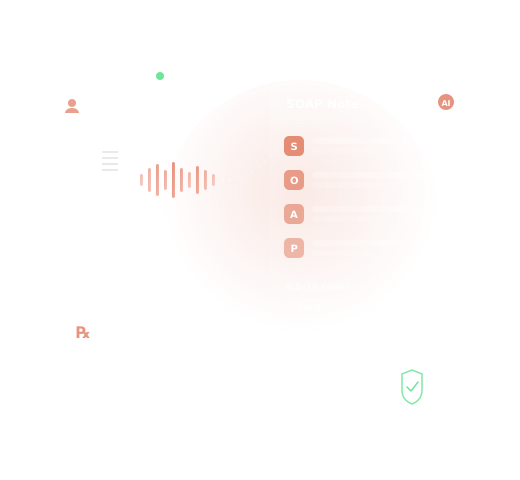
- Generate a structured SOAP draft: The transcript is processed into a draft clinical note, typically organised into SOAP format. This gives the clinician a usable starting point instead of a blank screen.
- Add coding suggestions: Based on the documented encounter, the system can surface ICD-10 and CPT suggestions to support the documentation workflow. These are suggestions for review, not automatic final coding decisions.
- Review, edit, and sign off: The clinician checks the draft, makes corrections, confirms the assessment and plan, and approves the final version before it becomes part of the record. This human review checkpoint is central to safe use.
- Choose deployment posture for governance needs: Depending on organisational preferences, teams may evaluate on-premise or private deployment approaches. This is a workflow and governance choice that can support internal documentation processes and IT policies.
Local context
In India, healthcare organisations often manage high patient volumes, mixed digital maturity, and multilingual communication across departments. That is why an AI medical scribe in India should be practical first: easy to fit into OPD routines, supportive of clinician review, and flexible enough for different infrastructure preferences. For Accreditation Cell teams, the value is not in generic automation claims but in whether the tool helps improve note consistency and reduces documentation gaps that affect internal audits and quality reviews.
The phrase AI medical scribe India healthcare often brings attention to speed, but for accreditation-oriented teams the more relevant lens is documentation quality. Hospitals may also prefer solutions that can be evaluated for private or on-premise deployment depending on internal governance expectations. The right approach is to assess workflow fit, review controls, and note quality outcomes in the context of your own departments.
Use cases
OPD documentation support: Doctors in busy outpatient clinics can generate draft notes from consultations, reducing after-hours documentation burden while keeping final review with the clinician.
Accreditation preparation: Accreditation Cell teams can encourage more standard note structures across departments, making internal reviews more manageable.
Multispecialty hospitals: Different specialties can use the same core workflow of conversation capture, SOAP drafting, coding support, and clinician sign-off.
Quality improvement initiatives: Teams can identify recurring documentation gaps and use structured drafting to support more consistent record creation.
Governance-sensitive deployments: Organisations that prefer tighter infrastructure control can explore deployment options that align with internal IT and data handling preferences.
FAQ
Can this replace clinician documentation review?
No. The system is designed to assist with draft creation and coding suggestions, but clinician review, edits, and final sign-off remain necessary before record finalisation.
Is it useful for accreditation-focused hospitals?
Yes, especially where the goal is to improve note consistency, readability, and completeness across departments. It supports workflows aligned with internal quality review processes.
Does it support multilingual consultations?
Yes. Multilingual support is relevant for Indian care settings where consultations may include English, Hindi, or regional language usage.
Can hospitals evaluate private or on-premise deployment?
Yes. Deployment posture can be considered based on workflow, governance, and infrastructure preferences, without assuming any guaranteed compliance outcome.
CTA
If your Accreditation Cell is looking for a practical way to improve documentation quality, evaluate how an AI medical scribe in India fits your current OPD and clinical record workflow. Start with departments where note consistency matters most, review the draft quality with clinicians, and assess whether structured documentation support can reduce manual follow-up for your quality team.
Explore the product journey through the main MedScribe pages for overview, features, integrations, and pricing, then map the workflow to your hospital's documentation review process before rollout.