Introduction
Adolescent gynecology consultations often require careful listening, sensitive communication, and precise documentation. Clinicians may need to capture menstrual history, pain patterns, puberty concerns, counselling points, examination findings, and follow-up plans while keeping the interaction calm and age-appropriate. An AI medical scribe in India can support this workflow by turning consultation conversations into structured draft notes that are ready for clinician review. Instead of relying only on manual typing after each visit, teams can use AI-assisted documentation to reduce repetitive note-writing and keep attention on the patient and caregiver discussion.
For hospitals, specialty clinics, and OPD setups, the value is practical: faster draft creation, more consistent note structure, and support for coding suggestions where relevant. In adolescent gynecology, where visits may include counselling, symptom review, and longitudinal follow-up, documentation quality matters for continuity of care. This page explains how an AI medical scribe fits into real outpatient workflows in India, with a focus on usable notes, review checkpoints, and deployment choices designed to align with organizational governance preferences.
Department workflow
Adolescent gynecology visits are rarely one-size-fits-all. A typical workflow may begin with registration and prior record review, followed by history taking with the adolescent and, when appropriate, a parent or guardian. The clinician may discuss menarche, cycle regularity, dysmenorrhea, abnormal bleeding, vaginal discharge, acne, PCOS-related concerns, nutrition, weight changes, medication history, and psychosocial context. Some visits are counselling-heavy, while others involve examination, investigations, treatment planning, and follow-up scheduling.
Documentation in this department can become fragmented when details are entered across free-text notes, templates, and billing fields. An AI medical scribe in India helps by capturing the consultation conversation, separating speakers, and organizing the content into a structured clinical draft. This is useful when the doctor wants to preserve nuance from counselling discussions without spending extra time rewriting the encounter. It can also support continuity across repeat visits by making note formats more consistent for the care team.
In practical OPD settings, the workflow benefit is not just speed. It is also about reducing after-hours documentation, improving readability, and helping clinicians maintain a standard structure for subjective history, objective findings, assessment, and plan. For adolescent gynecology, that can mean clearer records for menstrual complaints, endocrine concerns, pelvic pain, contraception counselling, or follow-up after investigations.
Features mapped to workflow
Automatic SOAP note generation: Consultation audio can be converted into a draft SOAP note, helping clinicians move from conversation to structured documentation with less manual effort.
Speaker diarization: In visits where both adolescent and caregiver speak, speaker separation can help preserve context and improve note clarity.
Multilingual support: Many clinics in India work across English and regional language conversations. Multilingual support can help teams document encounters more naturally without forcing a single-language interaction.
ICD-10 and CPT suggestions: Coding support can assist administrative and billing workflows by surfacing likely codes for clinician review, while keeping final judgment with the care team.
Human review before finalization: Drafts are meant to be reviewed, edited, and signed off by the clinician before becoming part of the final record.
On-premise or private deployment options: Organizations that prefer tighter control over infrastructure can evaluate deployment choices based on workflow, IT, and governance needs.
These capabilities make AI medical scribe India healthcare adoption relevant not only for large hospitals but also for specialty clinics that want practical documentation support without changing the core consultation style.
How It Works
The workflow below reflects how an AI medical scribe in India can support adolescent gynecology documentation from start to finish.
- Capture the consultation conversation: During the OPD visit, the system records the doctor-patient discussion, including caregiver participation where applicable. Speaker diarization helps distinguish the clinician from the adolescent or parent, which is useful in counselling-heavy encounters.
- Transcribe and structure the encounter: The conversation is converted into text and organized into clinically relevant sections. Menstrual history, symptom chronology, prior treatment, examination details, and counselling points can be grouped into a more usable draft instead of remaining as raw transcript text.
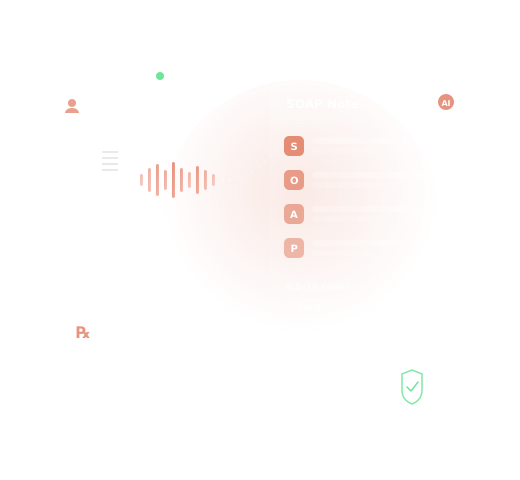
- Generate a SOAP draft: The platform creates a draft SOAP note based on the consultation. This can include subjective complaints, objective findings entered or spoken during the visit, assessment themes, and a plan section for investigations, treatment, counselling, and follow-up.
- Surface coding suggestions: Based on the documented encounter, the system can suggest ICD-10 and CPT options for review. These suggestions are intended to support workflow efficiency and should be checked by the clinician or authorized staff before use.
- Review, edit, and sign off: The clinician reviews the draft note, corrects wording, adds missing context, and confirms the final assessment and plan. Human review is the operational checkpoint before the record is finalized.
- Finalize records and choose deployment posture: Once approved, the note can be used within the documentation workflow, with deployment options such as on-premise or private environments considered according to organizational preferences. These choices support workflows aligned with internal governance and IT requirements rather than serving as blanket guarantees.
Local context
In India, adolescent gynecology practices often manage high OPD volumes, mixed language interactions, and varying levels of digital maturity across clinics and hospitals. That makes documentation tools most useful when they are practical, flexible, and easy to fit into existing routines. An AI medical scribe in India should support real consultation patterns rather than forcing rigid templates that interrupt patient communication.
For example, a clinician may switch between English and a regional language while discussing symptoms, lifestyle factors, or treatment adherence. A documentation copilot that supports multilingual conversations can be more useful in these settings. Similarly, organizations may prefer different deployment models depending on their IT setup, specialty workflows, and internal review processes. The goal is to support better documentation operations in India healthcare environments without overcomplicating the visit.
Use cases
Menstrual disorder consultations: Draft structured notes for irregular cycles, heavy bleeding, dysmenorrhea, and associated counselling.
PCOS and endocrine follow-up: Capture symptom progression, prior investigations, lifestyle advice, and medication review in a consistent format.
Pelvic pain and discharge visits: Organize history, examination findings, differential considerations, and next steps for follow-up.
Puberty and developmental concerns: Support documentation for sensitive counselling conversations where detail matters but manual note-writing can be time-consuming.
Repeat OPD visits: Improve continuity by creating more standardized notes across multiple encounters and clinicians.
Across these scenarios, an AI medical scribe in India can help clinicians spend less time on repetitive drafting and more time on communication, explanation, and decision-making.
FAQ
Can this be used in adolescent gynecology OPD settings?
Yes. The workflow is suitable for outpatient consultations where history taking, counselling, and follow-up planning generate substantial documentation.
Does the system replace clinician judgment?
No. It creates draft notes and coding suggestions, but the clinician reviews, edits, and signs off before finalization.
Can it handle multilingual consultations common in India?
The product is designed with multilingual support, which can help when consultations move between English and regional languages.
Is deployment flexible for hospitals and clinics?
Yes. Teams can evaluate on-premise or private deployment approaches based on workflow, IT, and governance preferences.
CTA
If your adolescent gynecology team wants more consistent documentation without adding friction to OPD care, explore how an AI medical scribe in India can fit your workflow. Review the product overview, feature details, integration approach, and pricing path to assess whether it supports your clinic or hospital documentation process in a practical way.
Explore MedScribe | View features | See integrations | Check pricing