Introduction
An AI medical scribe in India can help Allergy and Immunology teams reduce documentation load during busy OPD sessions while keeping the clinician in control of the final record. For specialists managing allergic rhinitis, asthma follow-ups, urticaria, eczema, food allergy counselling, immunotherapy reviews, and complex history-taking, documentation often takes time away from patient interaction. MedScribe is designed to convert consultation conversations into structured clinical notes and coding support that fit day-to-day practice.
This page focuses on practical use in Indian clinics and hospitals rather than broad claims. The goal is simple: help doctors capture relevant history, examination details, assessment, and plan more efficiently. In Allergy and Immunology, where symptom triggers, exposure history, medication response, recurrence patterns, and counselling points matter, an AI documentation copilot can support more consistent note creation. An AI medical scribe in India is especially useful when teams need multilingual conversation capture, clinician review before sign-off, and deployment choices that support internal governance preferences.
MedScribe is built as an AI medical documentation copilot for doctors and clinics. It supports automatic SOAP note generation, speaker diarization, ICD-10 and CPT suggestions, multilingual workflows, and on-premise deployment options. The output is intended to support workflows aligned with local operational needs, while the clinician remains responsible for review, edits, and final approval.
Department workflow
Allergy and Immunology consultations often involve detailed questioning that is clinically important but repetitive to document manually. A typical workflow may include presenting complaints, duration and seasonality of symptoms, trigger exposure, family history, prior episodes, medication history, inhaler or antihistamine use, skin manifestations, food reactions, environmental factors, and previous investigations. Follow-up visits may also include treatment response, adverse effects, adherence, counselling, and escalation planning.
In many Indian settings, the same specialist may move between new consults, follow-ups, procedure counselling, and coordination with pulmonology, dermatology, paediatrics, or ENT. This creates a documentation burden that can delay note completion. An AI medical scribe in India can support this workflow by listening to the consultation, separating speakers, structuring the conversation into clinically useful sections, and preparing a draft note for review. Instead of starting from a blank screen after every visit, the clinician gets a usable first draft that can be edited quickly.
For Allergy and Immunology teams, this is valuable when documenting symptom chronology, trigger patterns, prior treatment failures, counselling around avoidance strategies, and follow-up plans. It can also help standardize note quality across consultants, junior doctors, and multi-site practices.
Features mapped to workflow
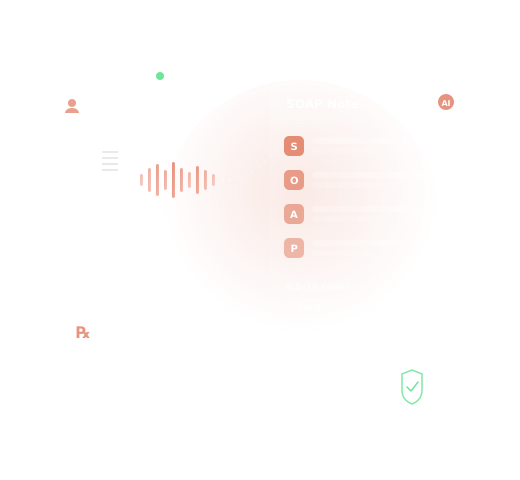
Automatic SOAP note generation: Converts consultation dialogue into Subjective, Objective, Assessment, and Plan format, which is useful for both first visits and follow-ups in allergy care.
Speaker diarization: Distinguishes clinician and patient speech, helping preserve context when symptoms, exposures, and treatment instructions are discussed in detail.
Multilingual support: Helpful for Indian practices where consultations may move between English and regional languages during history-taking and counselling.
ICD-10 and CPT suggestions: Supports coding workflows by surfacing likely codes based on the documented encounter. These remain suggestions for clinician or billing review.
Human review before finalization: Drafts are meant to be checked, edited, and approved by the clinician before they become part of the record.
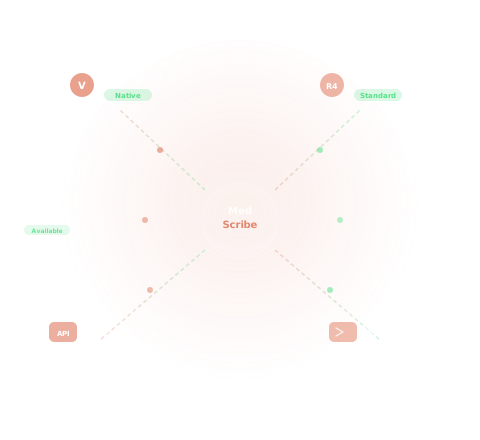
On-premise or private deployment options: Useful for hospitals and larger groups that prefer tighter control over infrastructure and data handling decisions.
Workflow fit for OPD practice: Designed to complement daily consultation flow rather than force a separate documentation process.
How It Works
MedScribe follows a practical end-to-end workflow for clinical documentation in Allergy and Immunology:
- Capture the consultation conversation: During the OPD visit, the system captures the doctor-patient interaction, including symptom history, trigger discussion, medication use, examination comments, and counselling. Speaker diarization helps separate who said what, which is useful when documenting nuanced allergy histories.
- Transcribe and structure the encounter: The conversation is transcribed and organized into clinically relevant sections. Instead of a raw transcript alone, the system prepares structured content that can support note drafting for common allergy workflows such as rhinitis review, urticaria follow-up, asthma symptom discussion, or food allergy counselling.
- Draft a SOAP note automatically: Based on the structured conversation, MedScribe generates a draft SOAP note. This may include the presenting complaint, symptom pattern, relevant history, examination points mentioned during the visit, assessment summary, and treatment or follow-up plan discussed by the clinician.
- Surface coding suggestions: The platform can suggest ICD-10 and CPT codes based on the documented encounter. These suggestions are intended to support coding workflows and should be reviewed by the clinician or billing team before use.
- Clinician review, edits, and sign-off: The doctor reviews the draft, corrects details, adds missing findings, adjusts wording, and confirms the final note. This human checkpoint is essential before the record is finalized.
- Choose deployment posture for operations: Depending on clinic or hospital preferences, teams can evaluate on-premise or private deployment approaches as workflow and governance decisions. This helps align implementation with internal IT and documentation processes.
Local context
In India, Allergy and Immunology services may be delivered through standalone specialty clinics, multispecialty hospitals, paediatric centres, pulmonary practices, and urban outpatient departments with high patient throughput. Documentation needs can vary widely across these settings. Some teams need faster note completion for same-day records, while others prioritize multilingual capture, coding support, or infrastructure choices such as private deployment.
An AI medical scribe in India should therefore be practical, flexible, and easy to fit into existing consultation habits. Rather than replacing clinical judgment, it should reduce repetitive typing and support more consistent records. For hospitals and larger groups, deployment posture may also matter as part of internal governance planning. For smaller clinics, the main value may be faster draft creation and easier follow-up documentation. This is where AI medical scribe India healthcare workflows become relevant: they need to support real OPD operations, not just generic transcription.
Use cases
New allergy consultation: Capture detailed symptom history, trigger exposure, family history, prior treatment, and counselling into a structured draft note.
Follow-up for chronic urticaria or allergic rhinitis: Document response to treatment, recurrence pattern, medication adherence, and next-step planning.
Asthma and allergy overlap visits: Support note creation when respiratory symptoms, inhaler use, environmental triggers, and follow-up instructions are discussed together.
Food allergy counselling: Organize reaction history, suspected triggers, avoidance advice, and follow-up recommendations into a usable record.
Multilingual OPD encounters: Help structure consultations where the doctor and patient switch between English and local languages.
Hospital specialty workflows: Support consultants who need draft notes plus coding suggestions before final review and sign-off.
FAQ
Can this replace clinician documentation entirely?
No. MedScribe is intended to create draft documentation and coding support. The clinician should review, edit, and approve the final note.
Is it useful for Allergy and Immunology specifically?
Yes, especially for visits that involve detailed history-taking, trigger review, counselling, and follow-up planning. It helps organize long conversations into structured notes.
Does it support multilingual consultations?
MedScribe includes multilingual support, which can be useful in Indian OPD settings where consultations may include English and regional language speech.
Can hospitals consider private or on-premise deployment?
Yes. Deployment options can be evaluated based on workflow, IT preferences, and internal governance needs. These choices support operational alignment rather than guarantee compliance outcomes.
CTA
If your team is evaluating an AI medical scribe in India for Allergy and Immunology workflows, MedScribe offers a practical path from conversation capture to draft notes, coding support, and clinician-reviewed finalization. Explore the product overview at /medscribe, review capabilities at /medscribe/features, and assess how the workflow can fit your clinic or hospital documentation process.