Introduction
Anesthesiology teams work across pre-operative assessment, intra-operative coordination, post-operative review, pain management, and critical communication with surgeons, nurses, and patients. Documentation often needs to be clear, timely, and clinically useful without pulling attention away from care delivery. An AI medical scribe in India can support this need by turning consultation and care conversations into structured draft notes that clinicians can review, edit, and sign off. For hospitals, day-care centres, and specialty clinics, the goal is practical: reduce repetitive typing, improve note consistency, and support workflows aligned with existing documentation habits.
MedScribe is designed as an AI medical documentation copilot for doctors and clinics. It converts consultation conversations into usable clinical notes and coding suggestions, with capabilities such as automatic SOAP note generation, speaker diarization, multilingual support, and deployment options such as on-premise or private environments. For anesthesiology, this means the product can support pre-anaesthesia check discussions, perioperative handoffs, pain clinic visits, and follow-up reviews while keeping the clinician in control of the final record.
Department workflow
Anesthesiology documentation is different from many OPD specialties because the workflow is distributed across multiple touchpoints. A typical day may include pre-anaesthesia evaluation, consent-related discussion, airway and risk review, medication history, allergy checks, ASA-related assessment habits, procedure planning, post-anaesthesia notes, and pain management follow-ups. In many settings, the same clinician or team must move quickly between OT coordination and patient-facing conversations.
This creates a documentation burden in two ways. First, important details are often spoken during fast-moving interactions and later rewritten from memory. Second, note formats may vary between clinicians, units, and facilities. An AI medical scribe in India is useful here when it helps capture the conversation, separate speakers, structure the content into a draft, and present it for review before finalization. Instead of replacing clinical judgment, it supports the repetitive part of note creation so anesthesiologists can focus on assessment, planning, and communication.
Features mapped to workflow
For pre-operative assessment, automatic SOAP note generation can help organize history, examination findings, assessment points, and plan into a familiar structure. Speaker diarization is useful when the conversation includes the doctor, patient, and attendant, helping distinguish who said what. Multilingual support matters in India because patient interactions may shift between English and regional languages during the same encounter.
For procedure-related and follow-up documentation, coding suggestions can support downstream administrative workflows by surfacing ICD-10 and CPT suggestions for clinician review. These are suggestions, not automatic billing decisions, which keeps the workflow practical and review-led. For hospitals with stricter governance preferences, deployment choices such as on-premise or private setups can be considered as operational decisions that support workflows aligned with internal IT and record-management practices.
Across all these steps, the product value remains reusable: capture the encounter, structure the note, support coding review, and keep the clinician as the final decision-maker. That is why an AI medical scribe in India can fit both standalone anesthesiology clinics and larger hospital departments with varied documentation needs.
How It Works
The workflow is designed to move from conversation capture to clinician-approved documentation in a clear sequence.
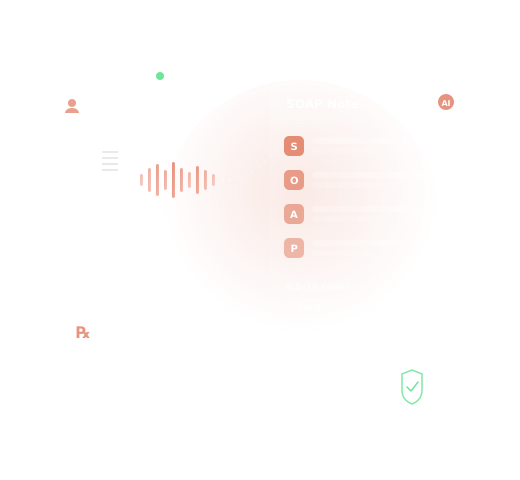
- Capture the clinical conversation: During a pre-anaesthesia consult, pain clinic visit, or post-procedure review, the encounter audio is captured through the configured workflow. This may include multilingual speech and multiple speakers such as clinician, patient, and caregiver.
- Transcribe and separate speakers: The system converts speech into text and uses speaker diarization to distinguish the clinician from the patient or attendant. This helps preserve context, especially when risk factors, prior anaesthesia history, allergies, and medication details are discussed quickly.
- Structure the encounter into a draft: The transcript is organized into a usable draft note, including SOAP-style sections where appropriate. For anesthesiology, this can help summarize history, relevant findings, assessment considerations, and the immediate plan in a more consistent format.
- Surface coding support: Based on the documented encounter, the product can suggest ICD-10 and CPT codes for review. These suggestions are intended to support documentation and billing workflows, while the clinician or authorized team member validates what is appropriate.
- Review, edit, and sign off: The clinician reviews the draft, corrects terminology, adds missing clinical nuance, and approves the final note before it becomes part of the record. Human review is the operational checkpoint that keeps the process safe and clinically accountable.
Deployment posture can also be chosen based on workflow and governance needs. Some organizations may prefer on-premise or private deployment approaches to align with internal infrastructure decisions, while others may adopt a managed setup depending on operational readiness.
- Route into the broader documentation workflow: Once approved, the finalized note can fit into the clinic or hospital documentation process, with related product information available through the broader MedScribe pages for features, integrations, and pricing discussions.
Local context
In India, anesthesiology teams often work in high-throughput environments where documentation quality must be balanced with speed. OPD pain clinics, pre-surgical assessment desks, day-care surgery units, and multispecialty hospitals all have slightly different note expectations. An AI medical scribe in India should therefore be practical rather than theoretical: it should support multilingual conversations, variable encounter lengths, and clinician-led review before finalization.
This is also why the product message should stay grounded in daily operations. Teams may want support for clearer draft notes, more consistent documentation, and easier coding review, without changing how clinicians make decisions. For organizations evaluating an AI medical scribe in India, deployment flexibility and workflow fit are often as important as transcription quality.
Use cases
Pre-anaesthesia assessment: Capture history, prior anaesthesia experience, allergies, comorbidities, and planned approach discussions into a structured draft note.
Pain clinic consultations: Convert detailed symptom discussions, prior treatment history, and follow-up plans into organized documentation with less manual typing.
Post-operative review: Support concise summaries of recovery status, pain control, adverse events discussed, and next-step planning.
Team handoff support: Improve note consistency when multiple clinicians contribute to perioperative care and need a clearer written summary.
Coding assistance workflow: Surface ICD-10 and CPT suggestions for review after the note is drafted, helping administrative teams work from more structured documentation.
FAQ
Can this replace clinician documentation judgment?
No. It is designed to create draft notes and coding suggestions that the clinician reviews, edits, and approves before final sign-off.
Is it useful only for large hospitals?
No. It can be relevant for specialty clinics, day-care centres, and hospital departments where anesthesiology documentation is repetitive and time-sensitive.
Does it support multilingual conversations?
Yes. Multilingual support is part of the product capability, which is useful for mixed-language consultations common in India.
Can deployment be aligned with internal IT preferences?
Yes. On-premise and private deployment options can be considered as workflow and governance choices based on organizational needs.
CTA
If your anesthesiology team wants more consistent draft notes with less manual typing, explore how MedScribe can fit your daily workflow. Review the core product at /medscribe, compare capabilities at /medscribe/features, and assess whether an AI medical scribe India healthcare workflow is the right operational step for your clinic or hospital. A practical evaluation starts with your real encounters, your review process, and your documentation standards.