Introduction
An AI medical scribe in India can help audiology clinics and hospital departments reduce time spent on repetitive documentation while keeping the clinician in control of the final record. In hearing care settings, consultations often involve detailed symptom history, device discussions, counselling, follow-up planning, and structured note creation. That makes documentation important, but also time-consuming during busy OPD schedules.
MedScribe is designed as an AI documentation copilot for practical clinical use. It converts consultation conversations into structured drafts such as SOAP notes, supports coding suggestions, and helps teams move from spoken interaction to usable documentation faster. For audiologists, ENT-linked hearing clinics, and multispecialty hospitals, the goal is not to replace clinical judgment. The goal is to support cleaner note capture, more consistent records, and easier review before sign-off.
This page focuses on how an AI medical scribe in India fits audiology workflows, where patient communication may include multilingual conversations, caregiver input, hearing aid counselling, and repeat visits that benefit from consistent note structure.
Department workflow
Audiology documentation has its own rhythm. A typical visit may begin with case history, hearing complaints, onset and duration, occupational or noise exposure, tinnitus or vertigo discussion, prior reports, and device usage history. The clinician may then document observations, testing context, counselling points, and next steps. In many settings, this information is split across free-text notes, templates, and billing-related fields.
That creates friction in daily operations. Clinicians may need to listen carefully, explain findings simply, and still capture enough detail for records. Front-desk and support teams may also depend on clear notes for follow-up scheduling, hearing aid trial planning, or referral coordination. An AI medical scribe in India is useful here because it supports the flow of conversation-first care while helping convert that interaction into structured documentation.
In audiology, the most useful documentation support usually includes: capturing the consultation conversation, separating speakers, organizing history and assessment details into a SOAP-style draft, suggesting coding support where relevant, and leaving the final review with the clinician. This is especially practical in high-volume OPD environments where note quality matters but time is limited.
Features mapped to workflow
For audiology teams, product value comes from how features map to real tasks rather than from generic automation claims.
Automatic SOAP note generation: After the consultation, the system drafts structured notes that can reflect subjective history, objective observations, assessment context, and plan. This helps standardize records across first visits, follow-ups, counselling sessions, and device-related reviews.
Speaker diarization: In hearing care visits, both patient and clinician may speak at length, and sometimes a caregiver contributes important history. Speaker separation helps the draft reflect who said what more clearly.
Multilingual support: Many clinics in India handle consultations in English mixed with Hindi or regional languages. Multilingual support is useful when the conversation and the final note need to stay clinically usable.
ICD-10 and CPT suggestions: Coding support can help teams prepare documentation for downstream workflows. Suggestions should still be reviewed by the clinician or billing team before use.
On-premise or private deployment options: Some hospitals and larger groups prefer deployment choices that align with internal governance, IT controls, and data handling preferences. These are workflow and infrastructure decisions, not guarantees.
Review before finalization: The most important feature is not automation alone. It is the checkpoint that keeps the clinician responsible for edits, approval, and final sign-off.
How It Works
The workflow below reflects how the product is designed to support day-to-day documentation from consultation capture to final record review.
- Capture the consultation conversation: During an audiology visit, the conversation is recorded through the configured workflow. This may include symptom history, hearing aid usage discussion, counselling, and follow-up planning. The system prepares the audio for transcription while preserving speaker turns where possible.
- Transcribe and structure the interaction: The platform converts the conversation into text and applies speaker diarization to distinguish clinician and patient contributions. This is especially useful when a caregiver adds history or when the visit includes counselling-heavy discussion.
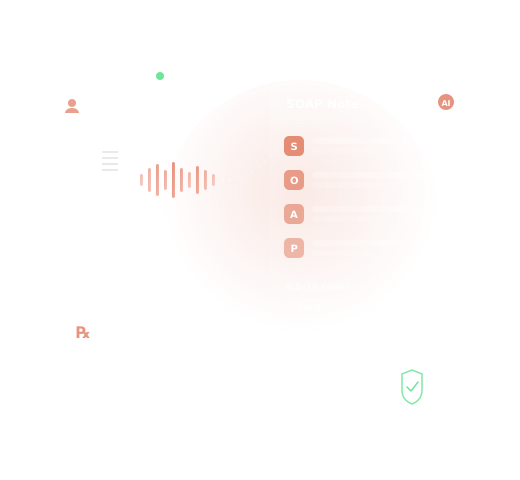
- Draft a SOAP note automatically: Based on the transcript, the system generates a structured clinical draft. The note is organized into sections that are easier to review than raw transcript text, helping the clinician move quickly from conversation to documentation.
- Suggest coding support: The platform can surface ICD-10 and CPT suggestions based on the documented encounter. These suggestions are intended to support workflow efficiency and should be checked before they are used in records or billing processes.
- Review, edit, and sign off: The clinician reviews the draft, corrects terminology, adds missing context such as test findings or counselling details, and approves the final version. The record is finalized only after human review and sign-off.
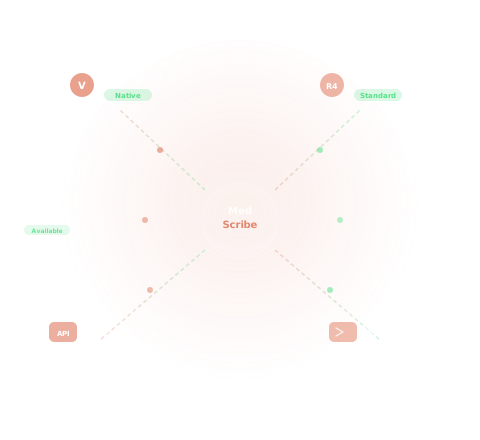
For organizations evaluating deployment posture, the same workflow can be considered alongside private or on-premise setups depending on operational needs. That allows teams to choose an implementation approach designed to align with internal governance and IT preferences.
Local context
In India, audiology services are delivered across independent clinics, ENT-linked practices, rehabilitation centres, and hospital outpatient departments. Documentation needs can vary widely between these settings, but the pressure points are similar: limited consultation time, mixed-language communication, repeat follow-ups, and the need for consistent records that support continuity of care.
An AI medical scribe in India is most useful when it adapts to these practical realities. For example, a clinic may need faster note completion during a hearing aid counselling day, while a hospital department may need more standardized documentation across multiple clinicians. In both cases, the value comes from reducing manual note burden without removing the clinician review step.
The broader AI medical scribe India healthcare conversation is also shifting from novelty to workflow fit. Clinics are asking whether the tool supports multilingual consultations, whether drafts are easy to edit, and whether deployment options can align with internal processes. Those are the right questions for implementation.
Use cases
New patient hearing complaint visits: Capture symptom history, onset, associated concerns, and plan in a structured draft.
Follow-up consultations: Speed up repeat documentation when discussing progress, device adaptation, or persistent symptoms.
Hearing aid counselling: Summarize patient concerns, usage guidance, expectations, and next review steps.
ENT-audiology coordination: Create clearer notes that support handoffs between departments or referral pathways.
High-volume OPD sessions: Help clinicians complete documentation more efficiently while maintaining a human review checkpoint.
Multilingual patient interactions: Support consultations where spoken language and final documentation format may differ.
FAQ
Common implementation questions from clinics and hospitals evaluating an AI medical scribe in India usually focus on workflow, review, and deployment rather than generic AI claims.
Can this be used in audiology clinics only?
It can support audiology-specific workflows, but it is also relevant for ENT-linked hearing care settings and multispecialty hospitals where documentation needs to be structured and reviewable.
Does the system finalize notes automatically?
No. The intended workflow includes clinician review, edits, and final sign-off before the record is finalized.
Can it help with coding?
Yes, it can provide ICD-10 and CPT suggestions as workflow support. These suggestions should be reviewed before use.
What if consultations happen in mixed languages?
Multilingual support is useful for clinics in India where patient conversations may include English, Hindi, or regional language usage within the same visit.
CTA
If your team wants a practical way to reduce documentation load in hearing care workflows, MedScribe can support consultation capture, structured note drafting, coding assistance, and clinician-led review. Explore the product in more detail through the core MedScribe pages, feature overviews, and integration pathways to assess fit for your clinic or hospital. For organizations comparing deployment models, an AI medical scribe in India should be evaluated based on workflow compatibility, review controls, and operational readiness rather than broad automation claims alone.