Introduction
AI medical scribe in India is becoming a practical option for clinics and hospitals that want to reduce documentation load without disrupting the consultation experience. For Ayush Unani settings, the need is often simple: capture the doctor-patient conversation, turn it into structured notes, support coding workflows where relevant, and keep the clinician in control of the final record. Instead of spending extra time typing after every OPD visit, teams can use an AI documentation copilot designed to convert spoken interactions into usable drafts.
This approach is especially useful in busy outpatient environments where doctors move quickly between history taking, examination, advice, and follow-up planning. An AI medical scribe can support SOAP note creation, organize findings into a readable structure, and help staff prepare records for review. For organizations evaluating an AI medical scribe in India, the key question is not just automation, but whether the workflow fits real consultation patterns, multilingual communication, and operational preferences such as private or on-premise deployment.
For Ayush Unani providers, the value is practical: less repetitive typing, more consistent note structure, and a clearer review process before sign-off.
Department workflow
Ayush Unani consultations often involve detailed patient narratives, symptom progression, lifestyle context, prior treatment history, and physician advice that may include regimen guidance, follow-up instructions, and medication planning. In many clinics, this information is captured partly on paper, partly in software, or entered later by the doctor or support staff. That creates delays, uneven note quality, and extra administrative effort.
An AI medical scribe in India can fit into this workflow by listening to the consultation, separating speakers, transcribing the interaction, and organizing the content into a structured draft. In a Unani OPD setting, this can help with documenting presenting concerns, relevant history, observations, assessment, and plan in a more standardized way. The clinician still reviews and edits the output, but the first draft is created automatically.
For hospitals and larger centers, the workflow benefit extends beyond the doctor. Front-desk teams, assistants, and medical records staff often need cleaner documentation for continuity, follow-up scheduling, and internal reporting. A documentation copilot supports these downstream tasks by producing notes that are easier to review and finalize.
Features mapped to workflow
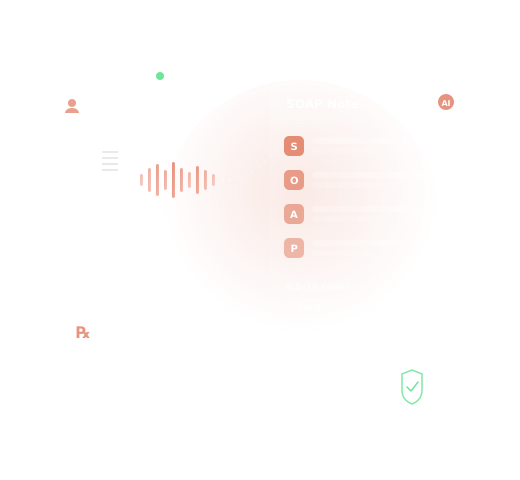
Automatic SOAP note generation: Consultation audio can be converted into a draft SOAP note, helping clinicians move from conversation to structured documentation faster.
Speaker diarization: The system can distinguish between doctor and patient voices, which improves readability and helps organize the transcript into clinically useful sections.
Multilingual support: Many Indian consultations shift between English, Hindi, Urdu, and regional languages. Multilingual support is important for realistic OPD use and clearer documentation review.
Coding suggestions: Where coding workflows are relevant, the platform can provide ICD-10 and CPT suggestions to support staff review. These suggestions are assistive and should be checked by the clinician or authorized team member.
Human review and edits: Drafts are not the final record. Doctors can edit, refine, and approve the note before it is saved into the patient chart or exported into the existing process.
Deployment flexibility: Some organizations prefer private infrastructure or on-premise deployment for governance and operational reasons. This supports workflows aligned with internal data handling preferences.
How It Works
The product workflow is designed around day-to-day consultation documentation rather than generic voice dictation. A typical setup for an Ayush Unani clinic or hospital follows these steps:
- Capture the consultation conversation: During the OPD visit, the doctor-patient interaction is recorded through the configured workflow. The system is built to process natural consultation dialogue rather than requiring rigid dictation commands.
- Transcribe and separate speakers: The audio is transcribed and speaker diarization identifies who said what. This helps distinguish patient history from clinician questions, observations, and advice.
- Structure the transcript into a clinical draft: The raw conversation is organized into a usable note format. The platform can generate a SOAP-style draft so the clinician does not start from a blank screen.
- Add coding support where needed: Based on the documented encounter, the system can surface ICD-10 and CPT suggestions to support coding workflows. These are prompts for review, not automatic final coding.
- Review, edit, and sign off: The clinician checks the draft, makes corrections, adds missing context, and approves the final note. Human review is the operational checkpoint before record finalization.
- Choose the right deployment posture: Depending on the organization, the workflow can be aligned with private or on-premise deployment preferences. This is a governance and implementation decision that supports internal processes.
Local context
In India, healthcare teams often work across mixed documentation environments, varying patient volumes, and multilingual consultations. That makes usability more important than feature lists alone. An AI medical scribe in India should support practical OPD realities: short consultations, code-switching between languages, and the need for quick review before the next patient.
For Ayush Unani providers, the local context also includes diverse clinic sizes, from independent practices to multi-specialty hospitals with AYUSH departments. Some may want a lightweight documentation assistant, while others may need deployment options that align with internal IT and governance preferences. In both cases, the goal is the same: reduce manual note burden while keeping the clinician responsible for the final chart.
Teams comparing options for AI medical scribe India healthcare should look for workflow fit, review controls, multilingual handling, and implementation flexibility rather than broad automation claims.
Use cases
Busy OPD clinics: Reduce after-hours documentation by generating draft notes during or immediately after consultations.
Hospital AYUSH departments: Support more consistent note structure across multiple clinicians and shifts.
Follow-up visits: Capture symptom updates, treatment response, and revised plans in a faster, more standardized format.
Multilingual consultations: Help document encounters where patient communication moves across languages during the same visit.
Documentation quality improvement: Create clearer first drafts that clinicians can review and finalize instead of typing every section manually.
For organizations seeking an AI medical scribe in India, these use cases matter because they connect directly to daily throughput, note consistency, and clinician time.
FAQ
Can this be used in Ayush Unani consultations?
Yes. The workflow is suitable for consultation-based documentation where the goal is to convert doctor-patient conversations into structured draft notes for clinician review.
Does it replace the doctor's judgment?
No. The system assists with documentation and coding suggestions, but the clinician reviews, edits, and signs off before the record is finalized.
Can it support multilingual conversations common in India?
Yes. Multilingual support is part of the product design, which is useful for clinics where consultations may include English, Hindi, Urdu, or regional language usage.
Is deployment limited to one model?
No. Organizations can evaluate private or on-premise deployment options based on workflow, infrastructure, and governance needs.
CTA
If your team is evaluating an AI medical scribe in India for Ayush Unani workflows, focus on how well it supports real consultation capture, structured SOAP drafting, coding assistance, and clinician review. Explore the product pathways for MedScribe overview, compare capabilities on features, and assess how the workflow can fit your clinic or hospital documentation process.