Introduction
AI medical scribe in India is becoming a practical option for hospitals and clinics that want to reduce documentation load without disrupting clinical judgment. For bed management teams, documentation quality affects more than notes alone. It influences admission clarity, transfer communication, discharge readiness, and coordination between doctors, nursing staff, and administrative teams. An AI medical documentation copilot can help convert consultation conversations into structured drafts that are easier to review, complete, and move into downstream workflows.
MedScribe is designed to support doctors and care teams by turning spoken consultations into usable clinical notes, with structured SOAP drafting, coding suggestions, speaker diarization, multilingual support, and deployment options such as on-premise or private environments. In Indian healthcare settings, where OPD volume, inpatient turnover, and mixed digital maturity often exist side by side, the value is not just faster note creation. It is better continuity between the consultation room and operational teams that depend on timely documentation.
For hospitals looking at AI medical scribe in India, the goal is usually straightforward: reduce repetitive note-taking, improve consistency, and support workflows aligned with existing record systems. In bed management contexts, that means clearer admission reasons, more complete progress summaries, and better handoff visibility for teams coordinating occupancy and patient movement.
Department workflow
Bed management depends on timely information from clinicians. A patient may be seen in OPD, emergency, or an inpatient unit, but bed allocation and movement decisions often rely on whether the clinical note is complete, understandable, and available at the right time. Delays in documentation can slow admission decisions, transfer planning, and discharge coordination.
A typical workflow starts with a doctor consultation or review round. The clinician captures history, symptoms, findings, and plan through conversation with the patient or caregiver. That information then needs to be documented in a structured format. Once the note is available, teams can use it to support admission requests, specialty escalation, coding review, and communication across departments. In many hospitals, this process still involves manual typing after the encounter, fragmented summaries, or inconsistent note styles.
An AI medical scribe in India can fit into this workflow by helping clinicians create draft documentation during or immediately after the encounter. Instead of replacing clinical decision-making, it supports the operational chain that follows the consultation. For bed management teams, this can mean more reliable context for why a patient needs admission, what level of care is being considered, and what next steps are pending before transfer or discharge.
Features mapped to workflow
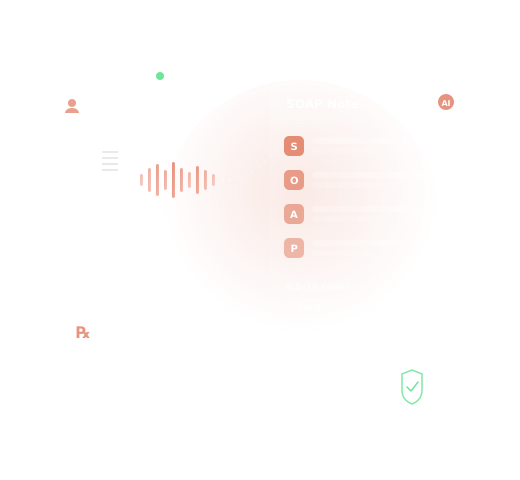
Automatic SOAP note generation: Consultation conversations can be converted into structured subjective, objective, assessment, and plan sections. This helps clinicians move from raw conversation to a usable draft quickly, which is especially useful when bed requests or transfer decisions depend on complete notes.
Speaker diarization: Distinguishing between clinician and patient speech improves readability and reduces confusion in the draft. In busy hospital environments, this is useful when multiple participants are involved in the encounter.
ICD-10 and CPT suggestions: Coding support can help clinicians and administrative teams review likely coding options based on the documented encounter. These suggestions support workflow efficiency but still require human validation before final use.
Multilingual support: Indian healthcare settings often involve mixed-language consultations. Multilingual capability can help capture the encounter more naturally and reduce the need to force every interaction into one language pattern.
On-premise or private deployment options: Hospitals may prefer different deployment postures based on IT governance, infrastructure, and workflow needs. These choices are best treated as operational and governance decisions that support workflows aligned with internal policies.
Review and sign-off controls: Drafts are meant for clinician review, editing, and final approval before record finalization. This checkpoint is essential for safe adoption in real-world care settings.
How It Works
The workflow for this AI medical scribe in India is designed around real consultation and documentation steps rather than abstract automation claims.
- Capture the consultation conversation: During an OPD visit, ward review, or admission discussion, the clinician records the encounter audio through the configured workflow. The system is designed to capture the conversation in a way that supports multilingual interactions and identifies different speakers where possible.
- Transcribe and structure the encounter: The recorded conversation is converted into text, then organized into clinically relevant sections. Speaker diarization helps separate patient statements from clinician prompts, making the draft easier to review.
- Generate a SOAP draft: The system creates a structured SOAP note draft from the consultation. This gives the doctor a usable starting point instead of a blank screen, which can be especially helpful when documentation needs to be completed quickly for admission or transfer workflows.
- Suggest coding support: Based on the documented encounter, the platform can surface ICD-10 and CPT suggestions for review. These are workflow aids, not final coding decisions, and should be checked by the clinician or coding team before use.
- Review, edit, and sign off: The clinician reviews the draft, corrects details, adds missing context, and approves the final note. Human review is the operational checkpoint before any record is finalized or shared downstream.
- Route into the chosen deployment environment: Depending on hospital preferences, the workflow can be aligned with on-premise or private deployment choices. This supports internal governance decisions while keeping the documentation process practical for daily use.
Local context
In India, hospitals and clinics often manage high patient volumes, mixed documentation habits, and varying levels of digital adoption across departments. Bed management teams may depend on information coming from consultants, duty doctors, nursing updates, and administrative coordination. That makes documentation consistency important even when the primary note is created by the treating clinician.
AI medical scribe India healthcare use cases are most practical when they focus on reducing repetitive work in everyday OPD and inpatient settings. For example, a doctor finishing rounds may need to complete notes quickly so that transfer planning, discharge preparation, or bed reassignment can move forward. A documentation copilot can support that process by shortening the time between conversation and draft note creation.
For providers evaluating AI medical scribe in India, deployment flexibility also matters. Some organizations may prefer private or on-premise setups based on internal IT strategy, while others may prioritize ease of rollout across departments. The right choice depends on workflow, infrastructure, and governance needs rather than one universal model.
Use cases
Admission documentation support: When a patient is being considered for admission, clinicians can generate a structured draft from the consultation, helping bed management teams understand the clinical context sooner.
Ward round note drafting: During inpatient reviews, doctors can use the tool to create progress note drafts that are easier to finalize before handoffs or transfer decisions.
Discharge planning coordination: Clear documentation of assessment and plan can help teams align on discharge readiness, pending investigations, and follow-up instructions.
Cross-department communication: Structured notes can improve readability when patients move between emergency, specialty units, and inpatient beds.
High-volume OPD to inpatient conversion: If a patient seen in OPD needs escalation to admission, a faster draft note can support continuity between the initial consultation and bed allocation workflow.
FAQ
Can this replace clinician documentation entirely?
No. The system is designed to create draft notes and coding suggestions that clinicians review, edit, and approve before finalization.
Is it useful only for outpatient clinics?
No. While it fits OPD workflows well, it can also support inpatient reviews, admission discussions, and documentation steps that affect bed management.
How does multilingual support help in India?
Many consultations involve more than one language. Multilingual support can make conversation capture more practical in real clinical settings.
Can hospitals choose how the system is deployed?
Yes. Deployment posture can be planned around operational needs, including on-premise or private environments, depending on internal workflow and governance preferences.
CTA
If your hospital or clinic is exploring a practical AI medical scribe in India for better documentation flow, MedScribe can support clinicians with structured note drafting, coding assistance, and review-first workflows. Explore the product pathways through /medscribe, feature details at /medscribe/features, integration considerations, and pricing options to assess fit for your bed management and clinical documentation processes.