Introduction
Biochemistry labs in hospitals and diagnostic centres handle a steady flow of clinician interactions, test discussions, interpretation notes, and follow-up communication. An AI medical scribe in India can help reduce manual documentation effort around these touchpoints by turning spoken consultations and review conversations into structured clinical drafts. For biochemistry lab teams, the value is practical: less time spent rewriting findings, more consistent note structure, and smoother handoff between clinicians, lab specialists, and administrative staff.
MedScribe is designed as an AI documentation copilot for healthcare settings that need usable drafts rather than generic transcripts. It supports conversation capture, structured note creation, coding suggestions, and clinician review before final sign-off. In biochemistry lab workflows, this can support OPD-linked diagnostic discussions, physician-lab coordination, and interpretation documentation where speed and clarity matter. The goal is not to replace clinical judgment, but to support teams with faster first drafts and more organized records.
For organisations evaluating an AI medical scribe in India, the key question is usually operational fit: can the tool work with existing documentation habits, multilingual conversations, and governance preferences? A practical deployment should support daily workflows, allow edits, and fit into hospital or clinic processes without forcing teams into rigid templates.
Department workflow
Biochemistry lab documentation often sits between diagnostic operations and clinical decision-making. A typical workflow may begin when a clinician discusses symptoms, prior reports, and test requirements with a patient. The lab team may then document sample-related context, test rationale, interpretation comments, and communication back to the treating doctor. In many settings, these details are captured across handwritten notes, LIS comments, EMR entries, and follow-up calls.
This fragmented process creates avoidable repetition. Staff may listen, type, summarize, and re-enter the same information in multiple places. When patient volumes rise, note quality can become inconsistent, and important context may be buried in free text. An AI medical scribe in India can support this department workflow by converting relevant conversations into structured drafts that are easier to review, edit, and finalize.
For biochemistry labs, the most useful documentation support usually includes: capturing consultation context linked to tests, organizing findings into a SOAP-style structure where appropriate, preparing interpretation-ready drafts, and suggesting coding references for downstream billing or record workflows. This is especially relevant in hospitals where lab medicine intersects with OPD reviews, chronic disease monitoring, and specialist consultations.
Features mapped to workflow
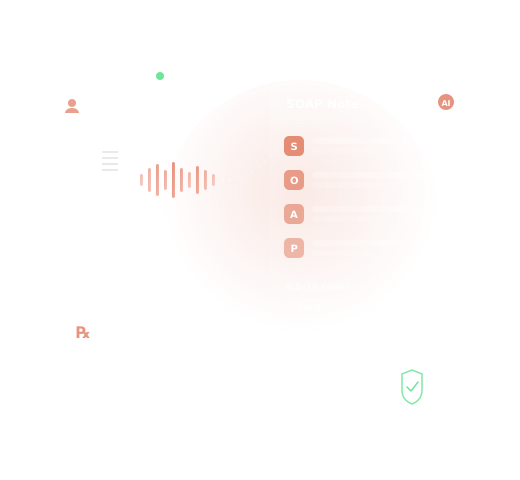
Automatic SOAP note generation: When a clinician discusses symptoms, history, test rationale, and next steps, the system can convert the conversation into a structured draft. This helps standardize documentation for review visits, diagnostic discussions, and result interpretation.
Speaker diarization: In multi-speaker settings such as doctor-patient interactions or clinician-lab coordination calls, speaker separation helps preserve context. This makes the draft easier to review because comments are attributed more clearly.
Multilingual support: Many Indian healthcare interactions move between English and regional languages. For teams considering an AI medical scribe in India, multilingual capability is important for practical adoption in day-to-day care settings.
ICD-10 and CPT suggestions: Coding support can help staff prepare documentation that is easier to align with billing and record workflows. Suggestions should still be reviewed by the clinician or authorized team member before use.
On-premise or private deployment options: Some hospitals and larger diagnostic networks prefer infrastructure choices that support internal governance models. Deployment posture should be treated as an operational decision based on workflow, IT readiness, and data handling preferences.
How It Works
The product workflow is designed around real clinical documentation steps rather than generic voice-to-text output.
- Capture the consultation or review discussion: The clinician or authorized staff member records the relevant conversation during an OPD visit, diagnostic review, or physician-lab discussion. This may include symptoms, prior history, test context, interpretation points, and follow-up plans.
- Transcribe and structure the conversation: The system converts speech into text and applies speaker diarization to separate participants. It then organizes the content into clinically useful sections instead of leaving teams with a raw transcript.
- Draft SOAP notes automatically: Based on the captured interaction, MedScribe prepares a SOAP-style draft where appropriate. For biochemistry-linked workflows, this can help summarize the clinical context behind investigations and the interpretation discussion around results.
- Suggest coding references: The platform can surface ICD-10 and CPT suggestions to support downstream documentation and billing workflows. These are suggestions only and should be checked by the responsible clinician or coding team.
- Review, edit, and sign off: A clinician reviews the draft, corrects terminology, adds missing findings, and approves the final version before it becomes part of the record. Human review is a core checkpoint in the workflow.
- Choose the right deployment posture: Depending on organisational needs, teams can evaluate private or on-premise deployment models. This supports workflows aligned with internal governance preferences without presenting deployment as a blanket compliance claim.
This end-to-end flow is especially useful when biochemistry lab teams need faster documentation support without losing clinician oversight. Instead of manually building every note from scratch, staff can start from a structured draft and focus on validation.
Local context
Healthcare teams in India often work across mixed digital maturity levels. Some hospitals have established EMR or HIS environments, while others rely on partial digitization with manual steps still present in OPD and diagnostic workflows. That is why an AI medical scribe in India should be evaluated for flexibility, not just automation. It should support practical use in busy departments, variable consultation styles, and multilingual communication patterns.
For biochemistry labs, local context also includes coordination across consultants, pathologists, lab physicians, and front-desk teams. Documentation tools need to support this reality by helping teams create usable drafts quickly and maintain a clear review process. In India healthcare settings, the strongest fit usually comes from tools that reduce repetitive typing while preserving clinician control over the final note.
Use cases
OPD-linked diagnostic consultations: When a physician orders or reviews biochemistry tests during a consultation, the conversation can be converted into a structured draft for the medical record.
Result interpretation discussions: Lab physicians or specialists discussing abnormal values, trends, or follow-up recommendations can use AI-generated drafts to speed up documentation.
Chronic disease monitoring: Diabetes, renal, liver, and metabolic follow-up visits often involve repeated review of biochemistry parameters. Structured note drafting can help maintain consistency across visits.
Internal clinician coordination: Discussions between treating doctors and lab teams about test relevance or interpretation can be summarized into clearer documentation for continuity.
High-volume hospital workflows: In settings with repeated consultations and diagnostic reviews, an AI medical scribe in India can help reduce the burden of repetitive note preparation while keeping final approval with the clinician.
FAQ
Can this be used only by doctors?
The final clinical review should remain with the responsible clinician, but authorized staff may support recording, draft preparation, and workflow coordination based on internal processes.
Does it replace manual review?
No. The intended workflow includes human review, edits, and final sign-off before the note is finalized in the patient record.
Is it useful for biochemistry labs if most work is test-based?
Yes, especially where labs are involved in consultation-linked documentation, interpretation notes, physician communication, and follow-up discussions around results.
Can it support multilingual conversations?
The product is built with multilingual support in mind, which is useful for Indian healthcare environments where consultations may shift between English and regional languages.
CTA
If your hospital, clinic, or diagnostic centre is assessing an AI medical scribe in India for biochemistry lab workflows, focus on practical fit: conversation capture, structured drafting, coding support, clinician review, and deployment choices that match your operating model. Explore how MedScribe can support faster documentation for diagnostic and consultation workflows while keeping the final record under clinician control. For broader product details, teams can also review related pages covering core capabilities, features, integrations, and pricing before planning a workflow assessment.