Introduction
Breast clinics manage consultations that are often detailed, sensitive, and time-intensive. Clinicians may need to capture symptoms, prior imaging, family history, examination findings, counselling points, and follow-up plans while still maintaining eye contact and patient trust. An AI medical scribe in India can support this workflow by turning consultation conversations into structured draft notes that are ready for clinician review. For hospitals, specialty centres, and independent breast clinics, the goal is practical: reduce manual typing, improve note consistency, and help teams complete documentation closer to the point of care.
MedScribe is designed as an AI documentation copilot for daily OPD use. It converts doctor-patient conversations into usable clinical notes, supports SOAP formatting, and provides coding suggestions that clinicians can verify before finalizing the record. In breast clinic settings, this can help teams document common visit types such as breast pain evaluation, lump assessment, post-biopsy review, survivorship follow-up, and counselling visits. The product is built to support workflows aligned with operational and governance needs in India, including options such as multilingual use and private deployment approaches where required.
Department workflow
Breast clinic documentation usually spans more than a simple chief complaint. A typical visit may include symptom chronology, menstrual and reproductive history, family history, prior mammography or ultrasound references, medication use, examination findings, risk discussion, and next-step planning. In many clinics, the doctor or assistant must document all of this while also coordinating imaging, pathology, referrals, and patient education.
This creates a familiar bottleneck: the consultation is clinically rich, but the note is delayed, shortened, or completed after hours. An AI medical scribe in India is useful here because it supports the natural consultation flow rather than forcing the clinician to pause and type continuously. Instead of starting from a blank screen, the clinician gets a structured draft that can be edited, approved, and added to the record. For breast clinics with repeat follow-ups and multidisciplinary coordination, this can also improve consistency in how findings and plans are captured across visits.
Features mapped to workflow
Conversation capture and transcription: During the consultation, the system captures the interaction and converts speech into text. This is helpful in breast clinic visits where history-taking and counselling are often nuanced and detailed.
Speaker diarization: The platform distinguishes between speakers, helping separate clinician guidance from patient-reported symptoms. That makes draft notes easier to review and reduces confusion in longer consultations.
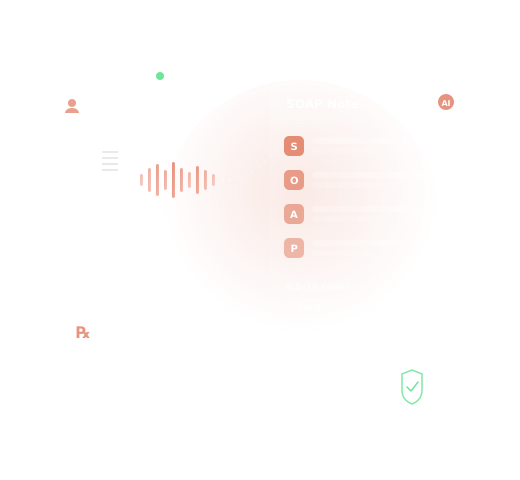
Automatic SOAP note generation: The transcript is structured into a draft SOAP note, giving clinicians an organized starting point for documentation. This is especially useful for first consultations, follow-up reviews, and post-procedure visits.
ICD-10 and CPT suggestions: Coding support can help administrative and clinical teams review likely codes based on the documented encounter. Suggestions remain reviewable and should be validated by the care team before use.
Multilingual support: In India, breast clinic consultations may move between English and regional languages. Multilingual support can help preserve the natural flow of the visit while still producing usable documentation.
On-premise or private deployment options: Some hospitals and larger groups prefer tighter control over infrastructure. Deployment posture can be chosen as a workflow and governance decision based on internal IT and documentation processes.
How It Works
The workflow is designed to fit routine OPD operations in a breast clinic without changing the clinician's core consultation style.
- Capture the consultation: The doctor begins the visit as usual while the system records the conversation with patient awareness and clinic-defined workflow controls. This may include symptom discussion, prior reports, examination narration, and counselling.
- Transcribe and structure the interaction: The audio is converted into text, with speaker diarization used to separate patient and clinician speech. The transcript is then organized into clinically relevant sections rather than remaining as raw conversation.
- Draft a SOAP note automatically: Based on the structured transcript, the platform generates a draft SOAP note. In a breast clinic, this may include presenting complaint, relevant history, examination summary, assessment context, and the planned next steps.
- Surface coding suggestions: The system can present ICD-10 and CPT suggestions linked to the documented encounter. These are intended as support for review, not as final coding decisions.
- Clinician review and edits: The doctor reviews the draft note, corrects wording, adds missing findings, and confirms that the assessment and plan reflect the actual encounter. Human review is the operational checkpoint before any record is finalized.
- Finalize within the clinic record workflow: After sign-off, the approved note can move into the clinic's documentation process. Depending on deployment choices, teams may align this step with private or on-premise governance preferences.
Local context
Breast clinics in India often operate across mixed documentation environments, from standalone specialty centres to multispecialty hospitals with established IT teams. Consultation volumes can vary by day, and clinicians may need to balance new evaluations, imaging reviews, procedure follow-ups, and counselling-heavy visits in the same session. An AI medical scribe in India is relevant in this setting because it supports practical documentation needs without requiring every clinic to follow the same infrastructure model.
For some organizations, multilingual support matters because patients may describe symptoms in one language while the final note is reviewed in another. For others, deployment flexibility matters more, especially when internal teams prefer private hosting or on-premise approaches. The value is not in replacing clinical judgment; it is in helping clinicians document more efficiently while keeping review and sign-off under their control. This is why many teams evaluating AI medical scribe India healthcare tools focus on workflow fit, editability, and governance choices rather than automation alone.
Use cases
New breast symptom evaluation: Capture history around pain, lump, discharge, skin changes, duration, and associated concerns, then convert it into a structured draft note.
Imaging and pathology review visits: Summarize discussion of mammography, ultrasound, biopsy findings, and next-step planning in a consistent format.
Post-procedure follow-up: Support documentation for wound review, symptom updates, medication guidance, and follow-up instructions.
High-risk counselling and surveillance: Help document family history, prior screening, counselling points, and surveillance planning in longer visits.
Multidisciplinary continuity: Create clearer notes that can be reviewed by surgeons, oncologists, radiologists, and nursing teams as needed.
Across these scenarios, an AI medical scribe in India can help reduce after-hours note completion and improve consistency, while keeping the clinician responsible for final edits and approval.
FAQ
Can this be used in a breast clinic with mixed visit types?
Yes. It is suited to consultations that include history-taking, counselling, examination discussion, imaging review, and follow-up planning, provided the clinician reviews the draft before final sign-off.
Does the product replace clinician documentation review?
No. The system creates draft notes and coding suggestions, but human review, edits, and approval remain essential before the record is finalized.
Is multilingual consultation support relevant for India?
Yes. Many clinics need flexibility when conversations move between English and regional languages. Multilingual support can help preserve natural consultation flow while producing usable documentation.
Can hospitals choose a private deployment approach?
Yes. Deployment posture can be discussed based on workflow, IT preferences, and governance needs, including private or on-premise options where appropriate.
CTA
If your team is evaluating an AI medical scribe in India for breast clinic workflows, focus on what matters in daily practice: accurate draft notes, clear review checkpoints, multilingual usability, and deployment choices that fit your organization. Explore how MedScribe supports consultation capture, SOAP drafting, coding assistance, and clinician sign-off for practical OPD documentation. For broader product details, teams can also review the main MedScribe pages covering features, integrations, and pricing before planning the next step.