Introduction
Cardiac rehabilitation teams manage repeat visits, counselling, exercise guidance, medication review, risk-factor tracking, and coordination across clinicians. That creates a high documentation load even when the visit itself is structured and predictable. An AI medical scribe in India can help reduce manual note-taking by turning consultation conversations into draft clinical documentation that clinicians can review, edit, and sign off. For hospitals, rehab centres, and specialty clinics, the goal is practical: spend less time typing after OPD sessions and more time focusing on patient education, adherence, and continuity of care.
MedScribe is designed as an AI medical documentation copilot for doctors and clinics. It converts consultation audio into structured notes, supports SOAP drafting, and provides coding suggestions that can be checked before finalization. In cardiac rehabilitation settings, this is useful for recurring follow-ups where teams need consistent records for symptoms, exercise tolerance, vitals discussion, medication adherence, lifestyle counselling, and next-step planning. Rather than replacing clinical judgment, the system supports workflows aligned with routine documentation needs in India healthcare environments.
Department workflow
Cardiac rehabilitation documentation often follows a repeatable pattern. A patient may arrive for post-procedure or post-cardiac-event follow-up, supervised exercise review, risk-factor counselling, or long-term recovery monitoring. The clinician or rehab team typically reviews symptoms, exertional capacity, blood pressure trends, medication adherence, diet, smoking status, activity goals, and any warning signs since the last visit. These details then need to be captured in a usable note, often under time pressure.
In many OPD settings, the workflow includes registration, consultation, counselling, note entry, coding support, and record closure. The challenge is not only writing the note but keeping it consistent across repeat visits. An AI medical scribe in India can support this by helping structure the conversation into a draft that reflects the visit flow. For cardiac rehabilitation, that may include subjective symptom updates, objective observations discussed during the visit, assessment of progress or barriers, and a plan covering exercise, medication reinforcement, diet, follow-up, or referral escalation.
This is especially relevant when multiple stakeholders contribute to the encounter. Cardiologists, physiotherapists, rehab coordinators, and nursing staff may all need clear documentation. A practical AI scribe workflow helps reduce fragmented note-taking and supports more standardized records without forcing clinicians to dictate every line manually.
Features mapped to workflow
MedScribe maps well to day-to-day cardiac rehabilitation documentation because its core capabilities align with common consultation steps:
- Automatic SOAP note generation: Converts the encounter into a structured draft that clinicians can quickly review.
- Speaker diarization: Helps separate clinician and patient speech, useful in counselling-heavy follow-ups.
- Multilingual support: Supports real-world consultations where English may be mixed with Indian languages during OPD interactions.
- ICD-10 and CPT suggestions: Provides coding support as a starting point for staff review, helping teams move from note creation to billing-ready workflows more efficiently.
- On-premise deployment options: Useful for organizations that prefer private infrastructure choices based on internal governance and workflow preferences.
For cardiac rehabilitation departments, these features are most valuable when they reduce repetitive admin work. Instead of documenting every counselling point from scratch, clinicians can review a draft, correct specifics, and finalize the record. This makes the product relevant not only for large hospitals but also for specialty heart clinics and rehab programs looking for a practical AI medical scribe in India that fits existing OPD routines.
How It Works
The workflow is designed around real consultation documentation, from conversation capture to clinician-approved final notes:
- Capture the consultation conversation: During a cardiac rehabilitation visit, the consultation audio is captured from the doctor-patient interaction. This may include symptom review, exercise adherence discussion, medication updates, and counselling on diet or lifestyle goals.
- Transcribe and structure the encounter: The system converts speech to text and applies speaker diarization to distinguish who said what. It then organizes the content into clinically relevant sections so the visit is easier to review than a raw transcript.
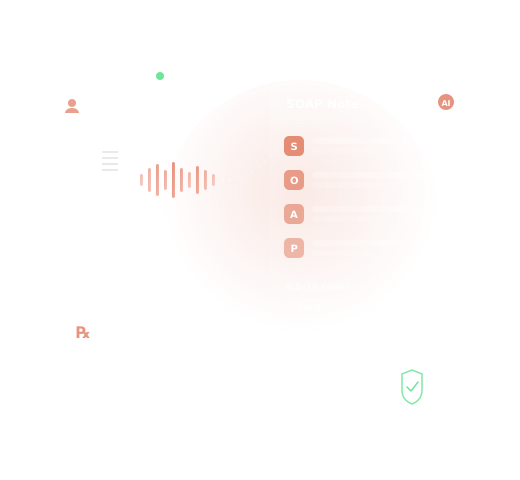
- Draft a SOAP note automatically: Based on the structured conversation, MedScribe generates a draft SOAP note. For cardiac rehabilitation, this can help summarize progress, barriers to adherence, current concerns, and the next-step plan in a format clinicians already use.
- Add coding support: The platform can suggest ICD-10 and CPT codes as a support layer after note drafting. These suggestions are intended for staff or clinician review, not automatic finalization, so teams can verify relevance before use.
- Review, edit, and sign off: The clinician checks the draft note, makes edits where needed, confirms coding suggestions if applicable, and completes final sign-off before the record is saved or shared downstream. Human review remains the operational checkpoint before record finalization.
Deployment posture can also be chosen based on organizational workflow needs. Some providers may prefer private or on-premise setups to align with internal IT and governance decisions, while others may evaluate hosted models depending on operational readiness.
Local context
In India, cardiac rehabilitation services often operate across mixed documentation environments, from digital hospital systems to partially manual specialty clinics. Teams may handle high patient volumes, multilingual consultations, and recurring follow-up visits that require consistent records over time. An AI medical scribe in India is most useful when it adapts to these realities rather than assuming a single documentation model.
For India healthcare organizations, practical considerations include multilingual conversations, variable staffing patterns, and the need to keep OPD flow moving without adding extra admin burden. That is why the value of AI medical scribe India healthcare adoption is often operational rather than theoretical: faster draft creation, more consistent note structure, and easier clinician review. In cardiac rehabilitation, where patient education and repeat counselling are central, this can support better continuity across visits without changing the core care pathway.
Use cases
- Post-discharge follow-up: Document recovery progress after cardiac events or procedures with structured summaries of symptoms, adherence, and next steps.
- Exercise counselling visits: Capture discussions around tolerance, activity progression, and barriers to participation.
- Medication and lifestyle review: Draft notes for repeat visits focused on adherence, diet, smoking cessation, and risk-factor modification.
- Multi-clinician rehab programs: Support more standardized documentation across cardiologists, rehab physicians, and allied care teams.
- Coding-assisted documentation workflows: Help staff move from consultation notes to coding review with less manual effort.
These use cases show why an AI medical scribe in India can be relevant for both enterprise hospitals and focused cardiac care centres. The product value remains reusable across specialties, while the cardiac rehabilitation context highlights recurring follow-up documentation, counselling-heavy encounters, and the need for efficient review before final sign-off.
FAQ
Can this be used for repeat cardiac rehabilitation follow-ups?
Yes. It is well suited to recurring visits where clinicians review symptoms, exercise adherence, medication use, and lifestyle changes, then need a structured note draft for review.
Does the product replace clinician documentation review?
No. The workflow is designed around draft generation followed by clinician edits and final sign-off before the record is finalized.
Can it support multilingual consultations common in India?
The product includes multilingual support, which can help in consultations where English is mixed with Indian languages during routine OPD interactions.
How are coding suggestions handled?
ICD-10 and CPT suggestions are provided as support for review. Teams should verify relevance before using them in operational workflows.
CTA
If your cardiac rehabilitation team is looking for a practical way to reduce documentation burden, explore how MedScribe can fit into your OPD process. Review the core product at /medscribe, compare capabilities at /medscribe/features, and assess whether an AI medical scribe in India matches your documentation, coding, and deployment workflow needs.