Introduction
Cardiology consultations often involve dense clinical detail, longitudinal follow-up, medication changes, risk-factor review, and careful documentation of symptoms, investigations, and treatment plans. An AI medical scribe in India can help cardiologists, hospitals, and specialty clinics reduce manual note-taking during OPD and follow-up visits by turning consultation conversations into structured draft documentation. Instead of replacing clinical judgment, the product is designed to support the doctor with faster note preparation, coding assistance, and a clearer review workflow before the record is finalized.
For cardiology practices, documentation quality matters because visits may include chest pain assessment, hypertension review, heart failure follow-up, arrhythmia history, medication titration, and interpretation of prior reports. MedScribe acts as an AI documentation copilot that converts doctor-patient conversations into usable clinical notes, including SOAP-style drafts and coding suggestions. This makes it practical for clinics that want more consistent records while keeping the clinician in control of edits, sign-off, and final documentation decisions.
This page focuses on practical use in India healthcare settings, where busy OPD schedules, multilingual conversations, and variable documentation habits can create friction. An AI medical scribe in India is most useful when it fits daily workflows, supports human review, and helps teams document faster without adding another complex system to manage.
Department workflow
Cardiology workflows are documentation-heavy because each visit can combine history taking, symptom progression, prior diagnosis review, medication adherence, comorbidity tracking, and next-step planning. In a typical OPD setting, the clinician listens to the patient, asks targeted questions, reviews prior records, and then documents findings after or during the consultation. This can slow throughput and increase after-hours charting.
In cardiology, common documentation elements include presenting complaints such as chest discomfort, dyspnea, palpitations, edema, dizziness, and fatigue; history of hypertension, diabetes, coronary artery disease, or prior interventions; current medications and dose changes; examination findings; and recommendations for tests, follow-up, or escalation. When these details are captured manually, note quality can vary by clinician, time pressure, and case complexity.
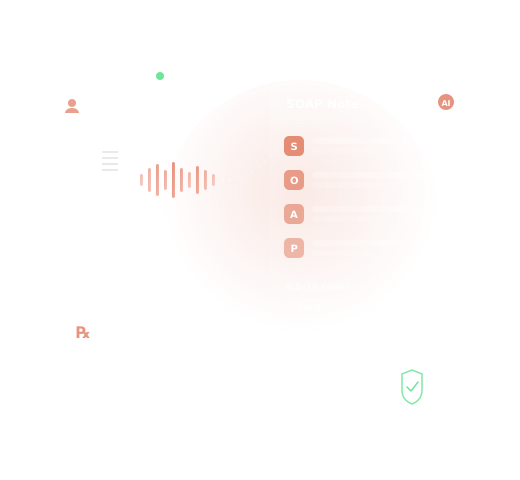
An AI medical scribe in India can support this workflow by capturing the consultation conversation, separating speakers, structuring the transcript, and drafting a note that the clinician can quickly review. For cardiology teams, this is especially useful in repeat visits where trend-based documentation and medication adjustments need to be recorded clearly and consistently.
Features mapped to workflow
MedScribe is built around the practical steps of clinical documentation rather than generic transcription alone. Automatic SOAP note generation helps convert conversation into a familiar format for assessment and plan documentation. Speaker diarization helps distinguish the doctor from the patient, which is useful in specialty consultations where symptom chronology and clinician recommendations must be separated clearly.
ICD-10 and CPT suggestions can support downstream coding workflows by surfacing likely options based on the documented encounter. These suggestions are intended to assist staff and clinicians, not replace coding review. Multilingual support is relevant in India healthcare environments where consultations may shift between English and regional languages. On-premise or private deployment options can support organizations that prefer tighter control over infrastructure and workflow governance.
For cardiology departments, these features map well to routine needs: faster draft creation after consultation, more consistent note structure across clinicians, support for coding review, and a workflow that keeps the final sign-off with the treating doctor. This makes AI medical scribe in India a practical operational tool for both independent cardiology clinics and larger hospitals.
How It Works
The product workflow is designed to follow the real sequence of a consultation, from conversation capture to clinician-approved documentation.
- Capture the consultation conversation: During the cardiology visit, the system records the doctor-patient interaction through the configured setup. This may include discussions on symptoms, prior cardiac history, medication use, lifestyle factors, and follow-up concerns.
- Transcribe and structure the encounter: The audio is converted into text with speaker diarization so the system can distinguish clinician and patient contributions. The transcript is then organized into clinically relevant sections instead of remaining as raw conversation.
- Draft a SOAP note automatically: Based on the structured transcript, MedScribe prepares a draft SOAP note that can include subjective history, relevant objective details from the conversation, assessment framing, and a plan draft for review. This is especially useful for repeat cardiology visits where symptom progression and treatment changes need to be documented clearly.
- Surface coding support: The system can suggest ICD-10 and CPT options based on the documented encounter. These are presented as support for clinician or billing-team review rather than final coding decisions.
- Review, edit, and sign off: The clinician reviews the draft note, corrects terminology, adds missing clinical nuance, and confirms the final version before it becomes part of the record. Human review is an operational checkpoint, not an optional extra.
- Choose deployment posture for workflow needs: Organizations can evaluate on-premise or private deployment approaches depending on internal IT preferences, data handling expectations, and governance models. These choices are best treated as workflow and infrastructure decisions designed to align with organizational requirements.
Local context
In India, cardiology practices often manage high patient volumes, mixed digital maturity, and multilingual consultations across OPD, follow-up, and hospital-based settings. That makes documentation tools most valuable when they are simple to adopt and flexible enough to fit existing routines. An AI medical scribe in India should help reduce repetitive typing, support clearer records, and work alongside current documentation habits rather than forcing a complete process redesign.
For hospitals and specialty clinics, practical considerations may include whether the tool can support private or on-premise deployment preferences, whether it can handle multilingual interactions, and whether clinicians can easily review and edit notes before finalization. These are often more important than broad marketing claims because documentation tools succeed only when they fit the pace of real consultations.
Use cases
Cardiology teams can use this product across several common scenarios. In OPD consultations, it can help draft notes for new patients presenting with chest pain, palpitations, breathlessness, or hypertension. In follow-up visits, it can support documentation of symptom changes, medication titration, adherence concerns, and next-step planning. In preventive cardiology, it can help structure counseling discussions around risk factors, lifestyle, and long-term monitoring.
Hospitals may also use it to support specialists who move between outpatient and inpatient workflows and need a more consistent way to prepare draft documentation. Smaller clinics may value it for reducing after-hours charting and improving note completeness without hiring additional documentation staff. Across these settings, the goal is not automation for its own sake, but a more efficient path from conversation to reviewed clinical record.
FAQ
Can this be used for cardiology OPD visits?
Yes. It is designed to support consultation documentation for specialty workflows such as cardiology, including history capture, SOAP drafting, and coding support for clinician review.
Does it replace the doctor's documentation responsibility?
No. The system prepares draft notes and suggestions, but the clinician reviews, edits, and signs off before the record is finalized.
Can it support multilingual consultations?
Yes. Multilingual support is part of the product narrative, which is useful for India healthcare settings where consultations may move between English and regional languages.
Is deployment limited to one model?
No. Teams can evaluate on-premise or private deployment approaches based on workflow, IT, and governance preferences.
CTA
If your cardiology clinic or hospital wants a more practical way to turn consultations into structured draft notes, MedScribe can support that workflow with transcription structuring, SOAP generation, coding suggestions, and clinician-first review. Explore how an AI medical scribe in India can fit your OPD process, compare workflow options on /medscribe, review capabilities on /medscribe/features, and assess whether the setup aligns with your documentation goals.