Introduction
AI medical scribe in India is becoming a practical option for clinics and hospitals that want to reduce documentation burden without disrupting the consultation. For clinical coding teams and doctors, the challenge is rarely just transcription. The real need is to turn patient-doctor conversations into structured notes, capture relevant clinical details, and support coding workflows in a way that still keeps the clinician in control. An AI medical documentation copilot can help by converting consultation audio into draft SOAP notes, surfacing coding suggestions, and organizing information for review before the record is finalized.
This page focuses on how an AI medical scribe supports clinical coding operations in Indian healthcare settings, especially where OPD volume, multilingual conversations, and variable documentation styles are part of daily work. The goal is not to replace clinical judgment. It is to help teams document faster, review more consistently, and prepare cleaner records for downstream coding and billing workflows.
Department workflow
In many organizations, clinical coding quality depends on the quality of source documentation. When consultation notes are incomplete, delayed, or inconsistent, coding teams spend extra time clarifying diagnoses, procedures, and encounter details. An AI medical scribe in India can support this workflow by improving the first draft of documentation at the point of care.
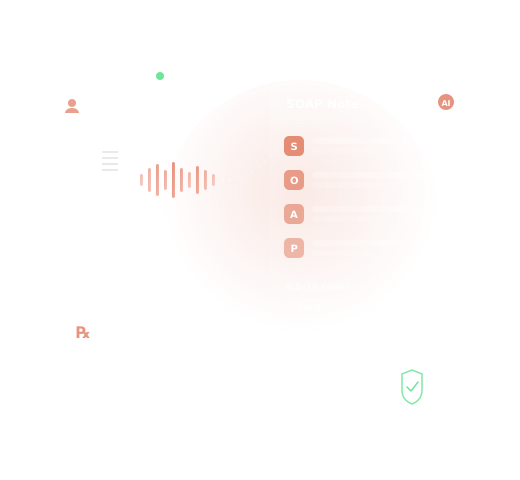
A typical workflow starts in the consultation room or OPD. The doctor speaks with the patient, asks follow-up questions, and records findings, assessment, and plan. Instead of relying only on manual typing after the visit, the scribe system captures the conversation, transcribes it, separates speakers, and structures the content into a draft note. From there, coding-relevant details such as diagnosis terms, procedure references, and treatment context can be surfaced as suggestions for review. The clinician then edits, confirms, and signs off before the note becomes part of the patient record.
For coding teams, this means less time chasing missing context and more time validating documentation quality. For doctors, it means less after-hours charting and a more consistent note structure across encounters.
Features mapped to workflow
MedScribe is designed as an AI medical documentation copilot for doctors and clinics. Its value in clinical coding comes from how product capabilities map to real documentation steps rather than acting as a generic speech tool.
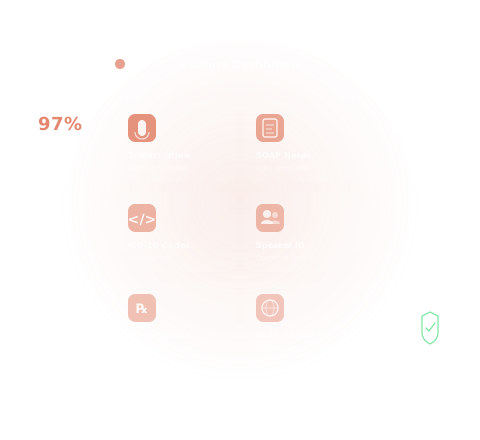
- Automatic SOAP note generation: Converts consultation conversations into draft Subjective, Objective, Assessment, and Plan notes that are easier to review and standardize.
- ICD-10 and CPT suggestions: Supports coding workflows by surfacing likely code options based on documented clinical context. These remain suggestions for human validation.
- Speaker diarization: Distinguishes between clinician and patient speech, helping preserve context and reducing ambiguity in the draft record.
- Multilingual support: Useful for Indian healthcare environments where consultations may shift between English and regional languages.
- On-premise or private deployment options: Supports organizations that prefer tighter control over infrastructure and governance decisions.
- Clinician review checkpoints: Keeps the doctor responsible for edits and final sign-off before record completion.
These features make AI medical scribe in India relevant not only for note creation but also for cleaner handoff into coding and documentation review processes.
How It Works
The workflow below reflects how this product is typically used in day-to-day OPD and consultation settings.
- Capture the consultation conversation: During the patient visit, the system records the consultation audio from an approved device or setup. This creates the source input for documentation while allowing the doctor to focus on the interaction instead of typing continuously.
- Transcribe and structure the encounter: The audio is converted into text, with speaker diarization used to separate patient and clinician speech. The transcript is then organized into clinically meaningful sections so the encounter is easier to review.
- Draft SOAP notes automatically: Based on the structured conversation, the system generates a draft SOAP note. This gives the clinician a usable starting point rather than a raw transcript, helping reduce manual summarization time.
- Surface coding support: The drafted note can include ICD-10 and CPT suggestions linked to the documented encounter context. These suggestions are intended to support clinical coding workflows, not replace coder or clinician judgment.
- Review, edit, and sign off: The clinician checks the draft, corrects details, adds missing findings if needed, and approves the final note. This human review checkpoint is essential before the record is finalized or shared downstream.
- Choose deployment posture for operations: Depending on organizational needs, teams may use private or on-premise deployment approaches to support workflows aligned with internal governance, IT, and documentation practices.
Local context
Indian healthcare teams often work across high patient volumes, mixed documentation maturity, and multilingual consultations. In this environment, an AI medical scribe in India needs to be practical, not theoretical. It should fit OPD routines, support doctors who switch between languages during visits, and help coding teams work from clearer records.
For smaller clinics, the main value may be reducing time spent on note preparation after consultations. For hospitals and larger groups, the value may extend to more standardized documentation across departments and better preparation for coding review. The phrase AI medical scribe India healthcare is often associated with digital transformation, but the day-to-day benefit is simpler: better draft documentation, faster review, and more consistent clinical records.
Deployment choices also matter locally. Some organizations prefer private or on-premise setups because they want closer control over infrastructure and workflow governance. These are operational decisions that should align with internal IT and documentation practices.
Use cases
- Busy OPD clinics: Reduce manual note-taking during back-to-back consultations and create structured drafts for quick review.
- Clinical coding support: Improve source documentation quality and surface coding suggestions that help teams validate records more efficiently.
- Multispecialty hospitals: Standardize note structure across clinicians while preserving flexibility for specialty-specific documentation.
- Doctors handling multilingual consultations: Support encounters where patient communication may move between English and regional languages.
- Organizations evaluating private deployment: Use workflow-aligned deployment models where infrastructure control is an operational priority.
If your team is evaluating AI medical scribe in India, the key question is not whether AI can generate text. It is whether the workflow helps clinicians document accurately, supports coding review, and keeps final control with the care team.
FAQ
Below are common implementation questions from clinics and hospitals considering this workflow.
CTA
Looking for an AI medical scribe in India that supports clinical coding workflows without adding complexity? Explore how MedScribe helps convert consultations into structured SOAP notes, coding suggestions, and review-ready documentation for clinics and hospitals. You can also review related product details on the MedScribe overview, features, integrations, and pricing pages to assess fit for your workflow.