Introduction
Clinical nutrition consultations often involve detailed history taking, diet recall, symptom review, counselling, follow-up planning, and careful documentation. An AI medical scribe in India can help nutrition departments reduce manual note-writing by turning consultation conversations into structured draft documentation that clinicians can review and finalize. For hospitals, specialty clinics, and multi-doctor OPD settings, the goal is practical: save time during busy schedules, improve note consistency, and support cleaner handoff into the medical record.
MedScribe is designed as an AI documentation copilot for day-to-day care delivery. It converts clinician-patient conversations into usable clinical notes, supports SOAP-style drafting, and surfaces coding suggestions for review. In clinical nutrition, this can be useful for first consultations, chronic disease nutrition counselling, obesity management, renal diet follow-ups, oncology nutrition reviews, and preventive care visits. Rather than replacing clinical judgment, the system supports the documentation layer so dietitians and doctors can focus more on patient interaction and less on repetitive typing.
For organisations evaluating an AI medical scribe in India, the most important question is not just transcription accuracy, but whether the workflow fits OPD reality: multilingual conversations, variable consultation lengths, clinician review needs, and deployment choices that align with internal governance preferences.
Department workflow
Clinical nutrition workflows are documentation-heavy because the consultation usually combines medical context with behavioural counselling. A typical visit may include referral reason, diagnosis context, anthropometry, dietary pattern, appetite changes, allergies, gastrointestinal symptoms, medication interactions, lab-linked nutrition concerns, and a personalized meal or supplement plan. Follow-up visits add adherence review, barriers, progress tracking, and revised goals.
In many Indian healthcare settings, these details are captured across free-text notes, templates, spreadsheets, and hospital information systems. That creates friction for clinicians who need to maintain note quality while keeping OPD moving. An AI medical scribe in India is most useful when it supports this real workflow: listening to the consultation, separating speakers, structuring the conversation into clinically relevant sections, and preparing a draft that can be edited quickly before sign-off.
For nutrition teams, this is especially relevant in settings where counselling is conversational and often multilingual. Patients may switch between English, Hindi, or regional languages while discussing food habits, family routines, affordability, and adherence challenges. Documentation tools need to support that reality without forcing clinicians into rigid templates too early in the encounter.
Features mapped to workflow
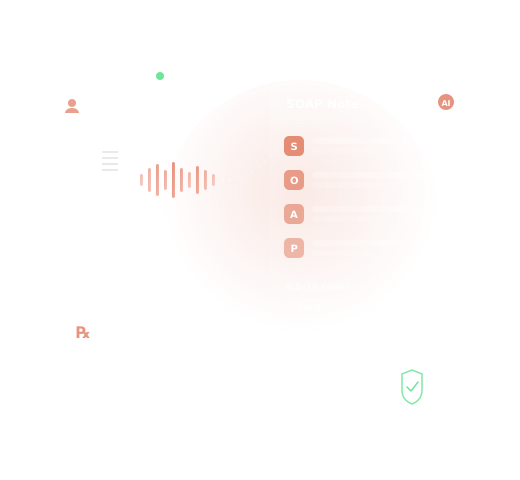
Automatic SOAP note generation: After a consultation, the system can organize captured information into a draft SOAP note. For clinical nutrition, this helps convert long conversations into a more usable structure covering subjective history, objective observations, assessment themes, and plan elements.
Speaker diarization: Nutrition consultations often include extended patient narratives and counselling responses. Speaker separation helps distinguish clinician guidance from patient-reported symptoms, diet history, and adherence concerns.
Multilingual support: In Indian OPD environments, mixed-language consultations are common. Multilingual capability supports more natural conversation capture and reduces the need to re-document key details manually after the visit.
Coding suggestions: The platform can surface ICD-10 and CPT suggestions for clinician review. In nutrition-linked care pathways, this can support cleaner downstream documentation, while keeping the final coding decision with the clinician or authorized team member.
Deployment posture options: Some organisations prefer private or on-premise deployment models as part of their internal IT and governance approach. These choices are best evaluated as operational decisions that support workflows aligned with institutional requirements.
Review before finalization: Drafts are not the final record. The workflow includes clinician edits and sign-off, which is important in nutrition care where recommendations must reflect the patient’s condition, preferences, and treatment plan accurately.
How It Works
The product workflow is designed around real consultation documentation, from conversation capture to final clinician approval.
- Capture the consultation conversation: During or immediately after the visit, the consultation audio is captured through the configured workflow. This may include in-person OPD discussions covering diet recall, symptoms, goals, and counselling. The system is built to handle multilingual interactions and uses speaker diarization to separate clinician and patient speech.
- Transcribe and structure the encounter: The captured conversation is converted into text and organized into clinically meaningful sections. Instead of leaving the team with a raw transcript, the system prepares structured content that is easier to review for nutrition history, symptoms, assessment points, and plan details.
- Draft a SOAP note automatically: Based on the structured transcript, MedScribe generates a draft SOAP note. In clinical nutrition, this can include subjective dietary concerns, objective observations discussed in the encounter, assessment themes, and a plan that the clinician can refine. This step is intended to reduce repetitive typing, not bypass clinical review.
- Surface coding suggestions for review: The workflow can present ICD-10 and CPT suggestions linked to the documented encounter. These are support prompts for the care team and should be reviewed before use in the final record or billing workflow.
- Clinician edits, review, and sign-off: The doctor or nutrition professional reviews the draft, corrects details, adds missing context, and confirms the final note. Human review is the operational checkpoint before record finalization, helping ensure the documentation reflects the actual consultation.
- Fit deployment to organisational needs: Depending on the setup, teams may evaluate private or on-premise deployment approaches. This is a workflow and governance decision for the organisation, especially where internal IT teams want tighter control over how documentation tools are implemented.
Local context
Healthcare teams evaluating an AI medical scribe in India usually need a solution that works in practical OPD conditions rather than idealized demo scenarios. Clinical nutrition departments may operate inside large hospitals, diabetes centres, nephrology programs, oncology units, bariatric clinics, or preventive health services. Documentation needs vary by setting, but common priorities remain the same: faster note completion, support for mixed-language consultations, and a workflow that does not add friction for already busy clinicians.
In India, nutrition counselling often includes family context, food availability, cultural meal patterns, and affordability considerations. These details matter clinically, but they also make documentation longer. An AI medical scribe in India can support teams by converting these nuanced conversations into structured drafts that are easier to finalize and store in the clinical record.
Use cases
New patient nutrition assessments: Capture detailed history, dietary pattern, symptoms, and counselling points in a structured draft note.
Chronic disease follow-ups: Support repeat documentation for diabetes, renal disease, gastrointestinal conditions, obesity, and cardiovascular risk counselling.
Hospital outpatient departments: Help clinicians keep pace with high consultation volumes while maintaining more consistent documentation.
Multidisciplinary care pathways: Improve note readiness for coordination with physicians, endocrinologists, nephrologists, oncologists, and care managers.
Private clinics and specialty centres: Reduce after-hours documentation burden by preparing review-ready notes soon after the encounter.
FAQ
Can this be used by clinical nutrition teams and doctors together?
Yes. The workflow is suitable for departments where nutrition professionals and physicians both contribute to patient documentation, as long as the final note is reviewed by the responsible clinician.
Does it only create transcripts?
No. The product is designed to go beyond raw transcription by structuring the encounter, drafting SOAP notes, and surfacing coding suggestions for review.
How does it handle multilingual consultations?
It is built with multilingual support to better fit Indian clinical conversations where English and local languages may be used in the same visit.
Is the generated note final automatically?
No. The workflow includes clinician review, edits, and final sign-off before the record is finalized.
CTA
If your organisation is exploring an AI medical scribe in India for clinical nutrition workflows, start by evaluating how it fits your current OPD process: conversation capture, note drafting, coding review, and final clinician approval. Review the core product pages for MedScribe, explore detailed capabilities on features, and assess whether the workflow matches your documentation goals across clinics or hospital departments.