Introduction
Colorectal surgery consultations often involve detailed symptom histories, prior treatment timelines, bowel habit discussions, examination findings, procedure planning, and follow-up instructions. Capturing all of this accurately during a busy OPD can be time-consuming for surgeons and support staff. An AI medical scribe in India can help reduce documentation burden by turning consultation conversations into structured draft notes that clinicians can review, edit, and sign off. For colorectal surgery teams, this is especially useful when visits include sensitive discussions, repeat follow-ups, perioperative counseling, and multidisciplinary coordination.
MedScribe is designed as an AI medical documentation copilot for doctors, clinics, and hospitals. It converts consultation audio into usable clinical documentation, including SOAP-style drafts and coding suggestions, while keeping the clinician in control of final output. For organisations evaluating an AI medical scribe India healthcare solution, the practical value lies in supporting daily workflows rather than changing how surgeons practice. The goal is simple: help teams document faster, maintain note consistency, and keep attention on the patient interaction.
Department workflow
In colorectal surgery, documentation needs vary across first visits, procedure counseling, postoperative reviews, and chronic condition follow-up. A typical workflow may begin with registration and prior record review, followed by history taking around pain, bleeding, constipation, incontinence, fistula symptoms, weight loss, or prior surgery. The surgeon may then perform an examination, discuss investigations such as colonoscopy or imaging, explain treatment options, and provide medication or procedural advice. Each step creates documentation requirements that can slow down throughput if entered manually after every consultation.
An AI medical scribe in India fits into this workflow by supporting note capture during or immediately after the encounter. Instead of relying only on memory or fragmented shorthand, the clinician gets a structured draft that reflects the conversation and can be refined before finalization. This is useful in high-volume OPD settings, day-care procedure units, and hospital-based specialty clinics where consistency across notes matters. For colorectal teams, the benefit is not only speed but also better organization of findings, assessment, and next-step planning.
Features mapped to workflow
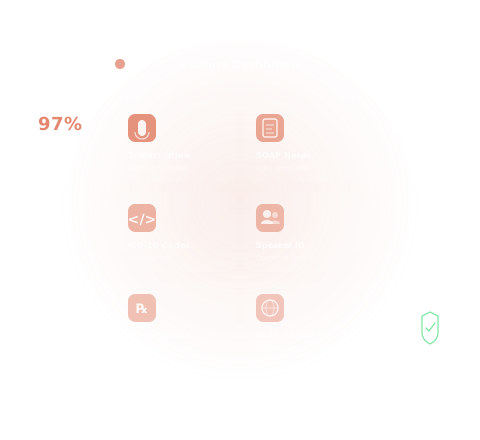
Conversation capture and transcription: The product supports consultation audio capture and transcription so the clinical interaction can be converted into text for documentation. This helps when surgeons want to focus on patient communication instead of typing throughout the visit.
Speaker diarization: By separating speakers, the system can better distinguish clinician and patient dialogue. In colorectal consultations, where symptom descriptions and counseling details are both important, this can improve note structure and readability.
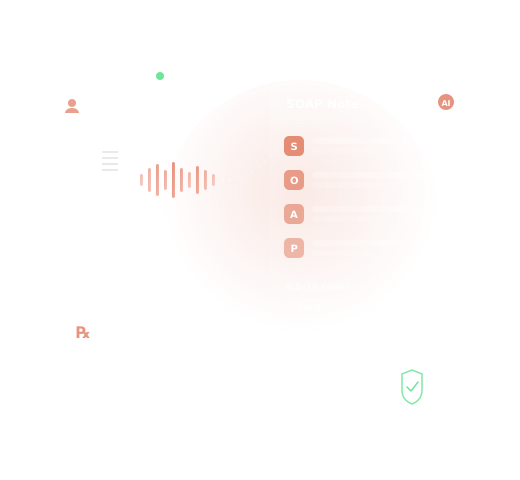
Automatic SOAP note generation: Draft SOAP notes can help standardize documentation across first consults, follow-ups, and postoperative reviews. This is especially useful for teams that want a repeatable note format without building every note from scratch.
ICD-10 and CPT suggestions: Coding support can assist teams during billing preparation and record completion. Suggestions should still be reviewed by the clinician or authorized staff before use, but they can reduce manual lookup effort.
Multilingual support: In many Indian clinics, consultations may include English mixed with Hindi or regional language phrases. Multilingual support can help teams document more naturally in real-world OPD settings.
On-premise or private deployment options: Some hospitals prefer deployment choices that align with internal governance, IT, and data handling preferences. These options should be evaluated as operational decisions that support workflows aligned with institutional requirements.
How It Works
The workflow below reflects how an AI medical scribe in India can support colorectal surgery documentation from consultation to final note completion.
- Capture the consultation conversation: During the OPD visit, the consultation audio is captured through the configured workflow. This may include history, symptom discussion, examination commentary, treatment planning, and follow-up instructions relevant to colorectal care.
- Transcribe and structure the interaction: The system converts speech to text and uses speaker diarization to separate patient and clinician contributions. This creates a cleaner source record for downstream note drafting and reduces the need to reconstruct the visit later.
- Generate a draft SOAP note: Based on the transcribed conversation, the platform prepares a structured draft note with subjective history, objective findings where stated, assessment, and plan. For colorectal surgery, this can help organize symptoms, prior interventions, examination references, investigation advice, and procedural planning.
- Suggest coding support: The system can provide ICD-10 and CPT suggestions linked to the documented encounter. These suggestions are intended to support staff and clinicians, not replace review. Teams can use them as a starting point for coding workflows.
- Review, edit, and finalize: The clinician reviews the draft, corrects details, adds missing findings, and confirms the final note before sign-off. Human review remains the operational checkpoint before the record is finalized.
- Choose deployment posture for governance needs: Depending on the clinic or hospital setup, teams may evaluate on-premise or private deployment options. This is a workflow and governance choice that can support internal documentation processes and integration planning.
Local context
Healthcare teams in India often manage high patient volumes, mixed-language consultations, and varying levels of digital maturity across clinics and hospitals. In this environment, an AI medical scribe in India needs to be practical, easy to review, and adaptable to existing documentation habits. Colorectal surgery practices may also see a mix of elective, chronic, and postoperative cases, which makes note consistency important across repeated visits.
For organisations comparing an AI medical scribe India healthcare platform, useful evaluation points include multilingual handling, note quality, coding support, deployment flexibility, and how easily the tool fits into current OPD routines. The strongest fit is usually a system that helps clinicians save time on repetitive documentation while preserving oversight and clinical judgment.
Use cases
New patient consultations: Draft structured notes for symptoms such as rectal bleeding, pain, altered bowel habits, fistula concerns, or suspected hemorrhoidal disease.
Pre-procedure counseling: Document discussions around investigations, bowel preparation, risks, benefits, and consent-related counseling points for review.
Postoperative follow-up: Capture wound status, bowel function updates, pain review, medication changes, and recovery instructions in a consistent format.
Chronic follow-up visits: Support repeat documentation for patients with ongoing anorectal conditions or long-term surveillance needs.
Hospital specialty clinics: Help standardize note drafting across consultants, fellows, and support teams while keeping final approval with the treating clinician.
These scenarios show why many providers exploring an AI medical scribe in India are focused on workflow support rather than generic automation claims. The value comes from making documentation more manageable in real clinical settings.
FAQ
Can this be used during sensitive colorectal consultations?
Yes, if the clinic or hospital chooses to use it within its consultation workflow. Teams should define when audio capture is appropriate and ensure clinicians review all generated notes before finalization.
Does it replace the surgeon's judgment?
No. The system is designed to assist with documentation and coding support. The clinician remains responsible for reviewing, editing, and signing off on the final record.
Can it support multilingual consultations common in India?
The product includes multilingual support, which can be useful when consultations include English mixed with Hindi or regional language usage.
Is deployment flexible for hospitals?
Yes, teams can evaluate on-premise or private deployment options based on internal IT, workflow, and governance preferences.
CTA
If your colorectal surgery clinic or hospital wants to reduce manual note-taking and improve documentation consistency, explore how an AI medical scribe in India can fit into your OPD workflow. Review the core product at /medscribe, explore capabilities at /medscribe/features, and assess whether the workflow aligns with your consultation, coding, and review process.