Introduction
An AI medical scribe in India can help cosmetic surgery clinics and hospital departments reduce documentation burden during consultations, procedure planning, and follow-up visits. In aesthetic and reconstructive practice, clinicians often balance detailed patient discussions, consent-related communication, treatment planning, photography notes, and post-procedure instructions. That makes accurate documentation important, but also time-consuming. MedScribe is designed as an AI documentation copilot that converts consultation conversations into structured clinical notes and coding suggestions, while keeping the clinician in control of review and final sign-off.
For cosmetic surgeons, dermatologic surgeons, plastic surgery teams, and coordinators, the value is practical: less manual typing, more consistent SOAP drafting, and better continuity across OPD, procedure counseling, and review appointments. An AI medical scribe in India is especially useful in multilingual settings where patients may switch between English, Hindi, and regional languages during the same interaction. Instead of replacing clinical judgment, the system supports workflows aligned with everyday documentation needs in clinics and hospitals.
This page focuses on how an AI medical scribe fits cosmetic surgery workflows in India, where patient expectations, elective procedure counseling, and detailed follow-up communication often require clear records that are easy to review and finalize.
Department workflow
Cosmetic surgery documentation is different from many high-volume specialties because the consultation often includes both medical and preference-driven discussion. A typical workflow may begin with a first OPD visit covering concerns, treatment goals, prior procedures, medical history, medications, allergies, and suitability assessment. This may be followed by procedural counseling, pre-operative planning, photography documentation, cost discussion handled separately by staff, and post-procedure follow-up.
In this environment, clinicians need notes that capture symptoms or concerns, examination findings, treatment options discussed, risks explained, patient preferences, and next steps. Manual note-taking can interrupt eye contact and slow the consultation. It can also create variation in how details are recorded across surgeons, assistants, and coordinators. An AI medical scribe in India helps standardize the first draft of documentation so teams can spend more time on patient interaction and less time reconstructing the visit afterward.
For hospitals and larger cosmetic surgery centers, the workflow may also involve integration with existing record systems, coding support for medically necessary reconstructive encounters, and governance decisions around private or on-premise deployment. These are operational choices that affect adoption and review processes, especially when departments want tighter control over where documentation workflows run.
Features mapped to workflow
MedScribe is built around the practical steps clinicians already follow. During the consultation, speaker diarization helps distinguish clinician and patient voices so the transcript is easier to interpret. Multilingual support is useful when cosmetic surgery consultations move between English and local languages. After capture, the system structures the conversation into a usable draft rather than leaving staff with a raw transcript.
Automatic SOAP note generation supports common documentation patterns for consultation, assessment, treatment planning, and follow-up. This is valuable in cosmetic surgery where the subjective portion may include patient goals and concerns, while the assessment and plan need to remain clinically clear. ICD-10 and CPT suggestions can support coding workflows where relevant, especially in mixed practices that handle both cosmetic and reconstructive cases. These suggestions are intended to assist review, not replace clinician judgment or billing oversight.
Deployment options such as on-premise or private setups can support organizations that prefer more control over infrastructure decisions. For teams evaluating an AI medical scribe in India, this matters because adoption is not only about note quality; it is also about fitting the tool into existing IT, governance, and review workflows. The result is a documentation process designed to align with real OPD operations rather than forcing clinicians into a new way of working.
How It Works
Below is the typical end-to-end workflow for MedScribe in a cosmetic surgery setting:
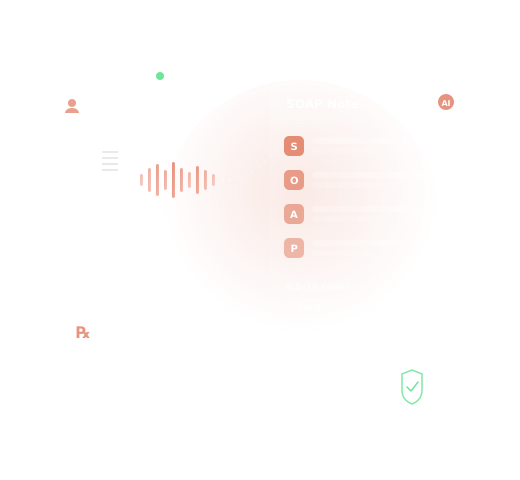
- Capture the consultation conversation: During an OPD visit, counseling session, or follow-up, the clinician starts conversation capture. The system records the interaction and identifies speakers through diarization, helping separate patient statements from clinician explanations and recommendations.
- Transcribe and structure the encounter: The audio is converted into a structured transcript with multilingual handling where needed. Instead of leaving the team with unorganized text, the system prepares the content for clinical documentation workflows.
- Draft a SOAP note automatically: MedScribe converts the encounter into a SOAP-style draft that can include history, concerns, examination details, assessment points, and plan elements relevant to cosmetic surgery consultations and reviews.
- Add coding support cues: The platform provides ICD-10 and CPT suggestions where appropriate, giving staff and clinicians a starting point for review. These are support tools and should be checked against the actual encounter and internal billing processes.
- Review, edit, and sign off: The clinician reviews the draft, makes edits, confirms accuracy, and completes final sign-off before the record is finalized. Human review is a required operational checkpoint, especially for treatment discussions, procedure planning, and follow-up instructions.
- Choose the deployment posture that fits operations: Clinics and hospitals can evaluate private or on-premise deployment options as workflow and governance decisions. This helps teams align documentation operations with their internal infrastructure preferences.
Local context
In India, cosmetic surgery practices often operate across standalone clinics, multispecialty hospitals, and urban day-care centers. Documentation needs can vary by setup, but the common challenge is balancing patient communication with efficient record creation. Consultations may be longer than standard OPD visits because they involve expectation setting, treatment alternatives, and staged planning. That makes a practical AI medical scribe in India relevant for both independent surgeons and larger departments.
Another local consideration is language diversity. Patients may describe concerns in one language and ask procedural questions in another. Staff may also need notes that are easy to review quickly after a busy clinic session. In this setting, AI medical scribe India healthcare adoption is less about novelty and more about reducing repetitive admin work while preserving clinician oversight. For organizations comparing options, it is useful to assess note quality, multilingual handling, review controls, and whether deployment can fit existing hospital or clinic workflows.
Use cases
Cosmetic surgery teams can use MedScribe across several common scenarios. In first consultations, it can help capture patient concerns, prior treatment history, examination points, and treatment options discussed. In procedure counseling visits, it can support structured documentation of indications, expectations, and next-step planning. In follow-up appointments, it can help summarize healing progress, symptom updates, medication advice, and further recommendations.
Mixed practices that include reconstructive work may also benefit from coding support suggestions alongside note drafting. Front-office and coordination teams do not need to create the clinical record themselves, but they can benefit from faster availability of reviewed notes and clearer continuity across visits. For clinics scaling surgeon schedules, an AI medical scribe in India can support more consistent documentation habits without requiring every clinician to type extensive notes during the encounter.
The product value remains reusable across specialties: conversation capture, structured transcription, SOAP drafting, coding support, multilingual capability, and deployment flexibility. The cosmetic surgery variation lies in how these capabilities support counseling-heavy visits, elective treatment planning, and detailed follow-up communication.
FAQ
Can this be used in cosmetic surgery OPD consultations?
Yes. It is designed to support consultation documentation, treatment planning discussions, and follow-up note drafting, with clinician review before finalization.
Does it generate final records automatically?
No. The system creates draft notes and coding suggestions, but the clinician should review, edit, and sign off before the record is finalized.
Is multilingual use supported?
Yes. Multilingual support is useful for clinics where consultations may include English, Hindi, or regional language conversation.
Can hospitals choose private or on-premise deployment?
Deployment options can be evaluated as operational and governance decisions, depending on the organization’s infrastructure preferences.
CTA
If your cosmetic surgery clinic or hospital team wants to reduce manual note-taking and improve documentation consistency, explore how MedScribe can fit your daily workflow. Review the core product at /medscribe, compare capabilities at /medscribe/features, and assess whether an AI medical scribe in India is the right operational fit for your consultations, follow-ups, and documentation review process.