Introduction
Counseling and psychotherapy teams often balance attentive listening, therapeutic rapport, risk documentation, progress tracking, and follow-up planning within limited session time. An AI medical scribe in India can support this workflow by turning consultation conversations into structured draft notes that clinicians can review, edit, and finalize. For psychologists, counselors, psychiatrists, and multidisciplinary mental health clinics, the goal is not to replace clinical judgment. It is to reduce repetitive documentation effort so more attention can stay on the patient interaction and continuity of care.
This page focuses on practical use of an AI documentation copilot for counseling psychotherapy settings in India. The product is designed to convert spoken consultations into usable clinical documentation, including SOAP-style drafts, with coding support where relevant. It also supports multilingual conversations, speaker diarization, and deployment choices such as private or on-premise setups for organizations that want tighter control over workflow and data handling. In day-to-day practice, an AI medical scribe in India is most useful when it fits existing OPD routines, supports clinician review before sign-off, and helps standardize note quality across providers.
Department workflow
Psychotherapy documentation has a different rhythm from many other specialties. Sessions may include long-form narratives, emotional cues, behavioral observations, family context, medication discussion, and safety planning. Clinicians often need to document presenting concerns, mental status observations, interventions used, patient response, homework, and next steps. In busy clinics and hospitals, this can create after-hours charting and inconsistent note structure.
A counseling psychotherapy workflow usually starts with intake or follow-up consultation, followed by note drafting, diagnosis or coding review where applicable, treatment planning, and record finalization. Some organizations also need coordination between psychiatry, psychology, social work, and front-desk scheduling teams. An AI medical scribe in India can support these steps by capturing the conversation, separating speakers, structuring the transcript, and generating a draft note that mirrors how clinicians already document sessions. This is especially useful for repeat visits, therapy progress notes, and multidisciplinary handoffs.
Features mapped to workflow
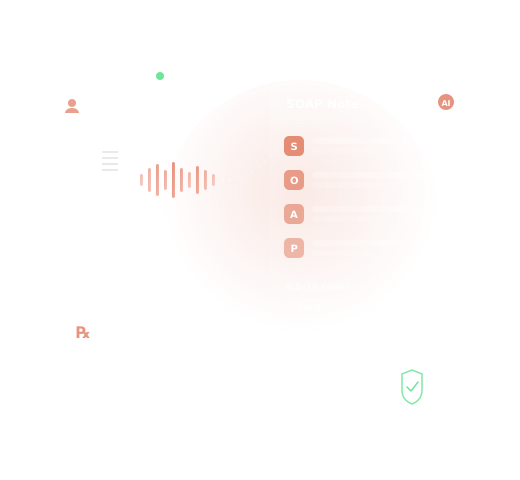
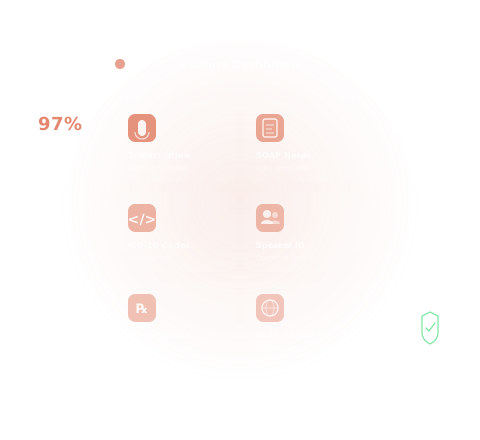
Automatic SOAP note generation: After a session, the system can draft structured notes that help clinicians move from raw conversation to a usable clinical format. For psychotherapy, this can support documentation of subjective concerns, observed findings, assessment themes, and plan items.
Speaker diarization: In counseling sessions, it matters who said what. Speaker separation helps distinguish clinician prompts from patient statements, which can improve note clarity during review.
Multilingual support: Mental health consultations in India may shift between English, Hindi, and regional languages. Multilingual support can help teams document mixed-language sessions more efficiently.
Coding suggestions: Where coding workflows are relevant, the product can provide ICD-10 and CPT suggestions as a support layer. These suggestions still require clinician or billing review before use.
Private or on-premise deployment options: Hospitals and larger mental health networks may prefer deployment choices aligned with internal governance needs. These options are workflow and infrastructure decisions, not guarantees, but they can support organizations that want more control over implementation.
Human review before finalization: Drafts are intended for clinician validation. This checkpoint is essential in psychotherapy, where nuance, context, and wording can affect the quality of the final record.
How It Works
The product follows a practical documentation flow built for real consultations rather than generic dictation. In counseling psychotherapy settings, the process typically works as follows:
- Capture the session conversation: The clinician starts the consultation as usual while the system captures the audio conversation from the visit. This can be used for in-person OPD sessions, follow-ups, or selected teleconsult workflows depending on the clinic setup.
- Transcribe and organize the discussion: The audio is converted into text, with speaker diarization helping separate patient and clinician dialogue. Multilingual support helps when sessions move across English and Indian languages in the same encounter.
- Draft a structured clinical note: The system converts the conversation into a SOAP-style draft note. For psychotherapy, this may include presenting concerns, relevant observations, assessment themes, and plan items such as follow-up, therapy goals, or referrals.
- Add coding support where needed: If the workflow includes coding, the product can surface ICD-10 and CPT suggestions based on the documented encounter. These are support outputs for review, not automatic final coding decisions.
- Clinician reviews and edits the draft: The therapist, psychiatrist, or supervising clinician checks the note, edits wording, adds missing context, and confirms that the documentation reflects the session accurately. This human review step is a core operational checkpoint before the record is finalized.
- Finalize based on governance preferences: Once approved, the note can move into the clinic's documentation workflow. Organizations can choose deployment approaches such as private or on-premise environments based on operational and governance preferences.
Local context
In India, counseling psychotherapy services are delivered across independent practices, multispecialty clinics, hospitals, and mental health centers. Documentation needs can vary widely depending on session length, language preferences, supervision models, and whether the setting includes psychiatry, psychology, or both. A practical AI medical scribe in India should therefore support flexible workflows rather than force a rigid template.
For many teams, the value lies in reducing manual note-writing after sessions, improving consistency across providers, and making follow-up visits easier to review. Multilingual support is particularly relevant in Indian care settings where patients may express symptoms and personal history in more than one language during the same session. Deployment choices also matter for institutions that want implementation options aligned with internal IT and governance processes. This is why an AI medical scribe in India is best evaluated not only on transcription quality, but also on how well it fits review, sign-off, and record management routines.
Use cases
Outpatient psychotherapy sessions: Draft progress notes after individual counseling visits so clinicians can spend less time charting between appointments.
Psychiatry follow-ups: Support documentation of symptom updates, medication discussions, adherence concerns, and next-step planning.
Intake assessments: Help structure long first-visit conversations into organized draft notes for review.
Multidisciplinary mental health clinics: Improve handoffs by creating more consistent documentation across providers.
Hospital-based behavioral health units: Support workflows where documentation volume is high and review checkpoints are important.
Private practices scaling operations: Standardize note structure across multiple clinicians while preserving final editorial control with the treating professional.
FAQ
Can this be used for psychotherapy sessions with long conversations?
Yes. The workflow is designed for consultation conversations and can help convert longer sessions into structured draft notes for clinician review.
Does it replace the therapist's judgment?
No. It is a documentation copilot. Clinicians still review, edit, and sign off on the final note before it becomes part of the record.
Can it handle multilingual sessions common in India?
The product supports multilingual workflows, which can be useful when consultations move between English and Indian languages.
Are coding outputs automatic?
No. ICD-10 and CPT suggestions are support features. They should be checked by the clinician or billing team before use.
What deployment options are available?
Organizations may choose private or on-premise deployment approaches based on workflow, infrastructure, and governance preferences.
CTA
If your counseling or psychotherapy team wants to reduce documentation burden without disrupting clinical review, explore how an AI medical scribe in India can fit your daily workflow. Start by assessing session types, note formats, language needs, and review checkpoints. Then compare how the product supports SOAP drafting, speaker diarization, coding assistance, and deployment flexibility for your setting. For teams evaluating an AI medical scribe in India, the most useful next step is a workflow-focused review of how conversation capture, draft generation, clinician edits, and final sign-off would work in your clinic or hospital.