Introduction
Cardiothoracic and vascular surgery teams manage complex consultations, pre-operative planning, post-operative reviews, and referral communication that can create a heavy documentation load. An AI medical scribe in India can help reduce manual note-taking by turning consultation conversations into structured clinical drafts that clinicians can review and finalize. For CTVS departments, this is especially useful when encounters involve detailed history, imaging discussion, risk explanation, procedure planning, and follow-up instructions.
MedScribe is designed as an AI documentation copilot for hospitals and clinics that want practical support for daily OPD and inpatient workflows. It converts doctor-patient conversations into usable notes, supports SOAP formatting, and provides coding suggestions that can be checked by the care team. Rather than replacing clinical judgment, it supports faster documentation, clearer records, and more consistent capture of key details. For organizations evaluating an AI medical scribe in India, the focus should be on workflow fit, review controls, multilingual usability, and deployment options that align with internal governance preferences.
Department workflow
CTVS documentation often spans multiple touchpoints. A typical workflow may begin with an outpatient consultation for chest pain, valvular disease, aneurysm, peripheral vascular symptoms, or post-surgical follow-up. The clinician gathers history, reviews prior interventions, discusses imaging or lab findings, explains treatment options, and outlines next steps. In many settings, this information must then be documented in the EMR or hospital information system, summarized for referrals, and prepared for billing or coding review.
Because CTVS encounters can be information-dense, manual documentation may interrupt eye contact, slow clinic flow, or leave clinicians finishing notes after hours. An AI medical scribe in India is useful in this setting because it can capture the conversation, separate speakers, structure the transcript, and draft a note that reflects the encounter. This supports surgeons, consulting physicians, residents, and coordinators who need documentation that is readable, editable, and ready for sign-off.
In Indian healthcare environments, teams may also switch between English and regional languages during consultations. That makes multilingual support relevant for practical adoption. For CTVS departments, the value is not only speed but also better organization of history, symptoms, findings discussed, procedure planning, and follow-up instructions in a format clinicians can quickly verify.
Features mapped to workflow
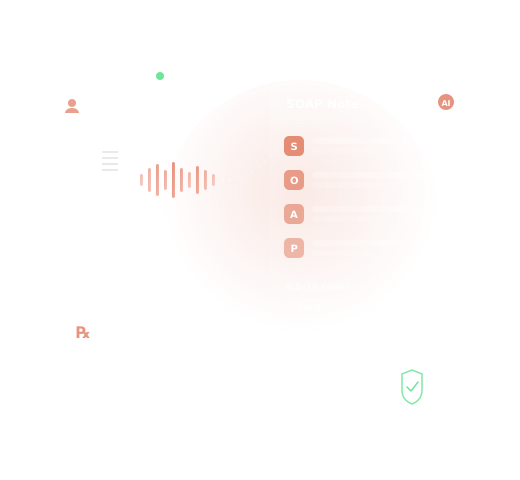
Automatic SOAP note generation: After a consultation, the system drafts Subjective, Objective, Assessment, and Plan sections so clinicians do not have to start from a blank screen. This is useful for pre-op evaluation, post-op review, and longitudinal follow-up.
Speaker diarization: The product distinguishes between speakers in the conversation, helping separate patient statements, clinician questions, and caregiver inputs. In CTVS visits where family members often participate, this can improve note clarity.
ICD-10 and CPT suggestions: Coding support can help teams identify likely documentation-linked codes for review. Suggestions are intended to support workflows aligned with billing processes, while final coding decisions remain with the authorized team.
Multilingual support: Consultations in India often involve mixed-language conversations. Multilingual capabilities help capture clinically relevant details without forcing the encounter into a single language pattern.
On-premise or private deployment options: Hospitals may prefer deployment choices based on IT architecture, data handling preferences, and operational governance. These options should be evaluated as workflow and infrastructure decisions.
Editable clinician review: Drafts are not final records until reviewed, corrected if needed, and signed off by the clinician. This checkpoint is essential for safe use in specialty documentation.
How It Works
The workflow for MedScribe is built around real consultation documentation rather than generic dictation. In a CTVS setting, the process typically follows these steps:
- Capture the consultation conversation: During an OPD or review visit, the consultation audio is captured through the configured workflow. This may include discussion of symptoms, prior cardiac or vascular history, imaging findings, medications, and treatment options.
- Transcribe and structure the encounter: The system converts speech to text and applies speaker diarization to distinguish clinician and patient voices. It then organizes the transcript into clinically relevant sections so the raw conversation becomes easier to review.
- Draft a SOAP note automatically: Based on the structured transcript, MedScribe generates a SOAP-style draft. For CTVS, this may include presenting complaints, relevant history, discussed findings, assessment themes, and the proposed plan for tests, surgery, medication, or follow-up.
- Suggest coding for review: The platform can surface ICD-10 and CPT suggestions linked to the documented encounter. These are support prompts for the team, not final coding decisions, and should be checked against the completed note and internal billing workflow.
- Clinician edits and signs off: The doctor or authorized team member reviews the draft, corrects terminology, adds missing details, and confirms the final note before record finalization. This human review checkpoint is central to safe documentation use.
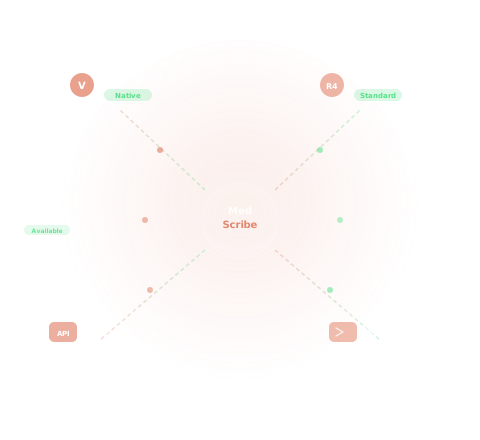
- Route into the chosen deployment environment: Depending on organizational preference, the workflow can be aligned with private or on-premise deployment approaches and connected documentation processes. This helps hospitals choose a setup that fits their IT and governance model.
Local context
Hospitals and clinics in India often balance high patient volumes with variable documentation maturity across departments. In CTVS, where consultations may involve referrals, diagnostics, procedure counseling, and post-discharge follow-up, documentation support needs to be practical rather than theoretical. An AI medical scribe in India should fit into existing OPD routines, support mixed-language conversations, and allow clinicians to retain control over the final record.
For many organizations, adoption decisions also depend on whether the tool can complement existing systems and whether deployment can be planned in line with internal IT preferences. That is why an AI medical scribe in India is best evaluated on usability, review workflow, and operational fit for surgeons, physicians, and documentation teams.
Use cases
Pre-operative consultation notes: Capture history, symptoms, prior interventions, risk discussion, and planned investigations in a structured draft.
Post-operative follow-up: Summarize recovery status, wound or symptom review, medication changes, and next review instructions.
Referral and second-opinion visits: Organize complex prior history and outside records into a cleaner consultation summary.
Vascular clinic encounters: Support documentation for chronic limb symptoms, imaging discussion, and treatment planning.
Resident and consultant workflows: Help teams create editable drafts faster while preserving clinician review before finalization.
These scenarios show why AI medical scribe India healthcare adoption is often driven by workflow efficiency and note consistency rather than by one specialty feature alone. For CTVS teams, the benefit is strongest when the tool supports real consultation patterns and reduces after-hours documentation burden.
FAQ
Can this be used for CTVS OPD consultations?
Yes. It is suited for consultation-heavy workflows where clinicians need structured drafts from detailed patient conversations, including pre-op and follow-up visits.
Does the product finalize notes automatically?
No. It generates drafts and suggestions, but clinician review, edits, and final sign-off are required before the record is finalized.
Can it support multilingual consultations in India?
Yes. Multilingual support is part of the product design, which is useful where clinicians and patients switch between English and regional languages.
Does it help with coding?
It can provide ICD-10 and CPT suggestions for review. Final coding decisions should remain with the appropriate clinical or billing team.
CTA
If your CTVS department is exploring a practical AI medical scribe in India, start by assessing how conversation capture, SOAP drafting, coding support, and clinician review would fit into your current workflow. MedScribe is designed to support specialty documentation without removing clinician control. Explore the product overview, features, integrations, and pricing paths to evaluate whether it matches your hospital or clinic documentation goals.