Introduction
Cytopathology teams handle high-detail clinical documentation across outpatient consultations, procedure discussions, specimen-related notes, and follow-up communication. An AI medical scribe in India can help reduce manual note-taking by turning clinician-patient conversations into structured drafts that are easier to review, edit, and finalize. For hospitals, diagnostic centres, and specialist clinics, the goal is not to replace clinical judgment but to support faster documentation during busy OPD and reporting workflows.
MedScribe is designed as an AI documentation copilot for practical healthcare use. It converts consultation audio into structured clinical text, supports SOAP note drafting, offers coding suggestions such as ICD-10 and CPT, and helps clinicians maintain control through review and sign-off. In cytopathology settings, where documentation often connects consultation context with specimen findings and next-step planning, an AI medical scribe in India can support consistency, reduce repetitive typing, and improve turnaround for routine records.
This page focuses on how the product fits day-to-day cytopathology workflows in India, with attention to multilingual consultations, operational review checkpoints, and deployment choices such as private or on-premise setups for organizations that prefer tighter governance over documentation systems.
Department workflow
Cytopathology documentation often spans more than one interaction. A patient may first discuss symptoms, prior imaging, referral history, or procedure planning. Later, the clinician may need to document specimen collection context, adequacy comments, preliminary impressions, and follow-up advice. In many Indian healthcare settings, these conversations happen in a mix of English and regional languages, and clinicians still spend significant time converting spoken details into typed notes.
Typical workflow steps include patient history capture, indication for cytology or FNAC-related discussion, relevant prior reports, procedural explanation, post-procedure advice, and communication of next actions. Documentation may then need to align with internal templates, billing workflows, and coding practices. An AI medical scribe India healthcare workflow is useful here because it supports structured note creation from real consultations while keeping the clinician in charge of edits and final approval.
For cytopathology departments, the value is especially practical when documentation must be clear, concise, and reusable across OPD records, referral summaries, and internal communication. Instead of starting from a blank screen after every consultation, clinicians can begin with a draft that reflects the conversation and then refine it based on clinical findings and reporting needs.
Features mapped to workflow
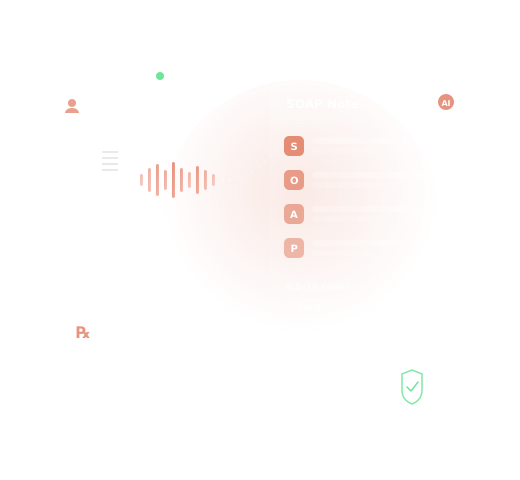
Automatic SOAP note generation: Consultation conversations can be converted into draft SOAP notes, helping clinicians move from raw dialogue to a structured format quickly. This is useful for initial assessment, symptom history, and follow-up planning in cytopathology-linked consultations.
Speaker diarization: The system distinguishes between speakers so the draft better reflects who said what during the encounter. In specialist consultations where patient history, attendant input, and clinician explanation all matter, this can improve note clarity.
Multilingual support: Many consultations in India shift between English and local languages. Multilingual capture supports more natural conversations without forcing the clinician to document everything manually afterward.
ICD-10 and CPT suggestions: Coding support can help teams prepare documentation for downstream administrative workflows. Suggestions are intended to assist review, not replace coding judgment.
Human review and sign-off: Drafts are not final records until the clinician reviews, edits, and approves them. This checkpoint is important in cytopathology, where subtle wording can affect communication and continuity of care.
On-premise or private deployment options: Some hospitals and diagnostic networks prefer deployment models that support workflows aligned with internal governance and IT preferences. Deployment posture should be chosen as an operational decision based on infrastructure, access control, and documentation processes.
How It Works
The workflow below shows how an AI medical scribe in India can fit into a cytopathology consultation from conversation capture to final record completion.
- Capture the consultation conversation: During the patient interaction, the clinician uses the scribe workflow to capture the discussion around symptoms, referral reason, prior reports, procedure explanation, and follow-up advice. This can support multilingual conversations common in Indian OPD settings.
- Transcribe and structure the encounter: The system converts speech into text and applies speaker diarization to separate clinician and patient inputs. It then organizes the transcript into clinically useful sections rather than leaving the team with a raw transcript.
- Draft a SOAP note automatically: Based on the structured conversation, the product generates a draft SOAP note. For cytopathology-related visits, this may include presenting concerns, relevant history, assessment context, and planned next steps or specimen-related instructions.
- Add coding support: The workflow can surface ICD-10 and CPT suggestions to support downstream documentation and billing preparation. These suggestions are meant to assist the clinician or coding team during review.
- Review, edit, and finalize: The clinician checks the draft, corrects terminology, adds findings or clarifications, and confirms that the note reflects the actual encounter. Human review is the operational checkpoint before the record is finalized.
- Choose deployment posture for governance needs: Organizations can evaluate private or on-premise deployment options where needed, based on workflow, infrastructure, and internal governance preferences rather than assuming one model fits every facility.
Local context
In India, cytopathology services often operate across standalone diagnostic centres, multispecialty hospitals, and specialist clinics with varying levels of digital maturity. Some teams need lightweight support for OPD documentation, while others want a documentation layer that can fit into broader IT environments. That is why an AI medical scribe in India should be practical first: easy to use during busy consultations, supportive of multilingual communication, and flexible enough for different deployment preferences.
Hospitals may also want documentation tools that support workflows aligned with internal privacy, access, and record-management practices. Rather than making broad compliance claims, it is more useful to evaluate whether the product fits existing review processes, clinician sign-off requirements, and infrastructure choices. For cytopathology teams, the strongest value usually comes from reducing repetitive documentation effort while preserving clinical oversight.
Use cases
OPD consultation documentation: Create structured notes from specialist consultations involving symptom review, referral history, and next-step planning.
Procedure counselling: Document discussions around FNAC or related specimen collection, including indications, patient questions, and post-procedure advice.
Follow-up visits: Summarize prior findings, patient concerns, and recommended monitoring or referral actions in a consistent format.
Multilingual encounters: Support consultations where clinicians and patients switch between English and regional languages.
Administrative readiness: Use coding suggestions and structured drafts to support downstream billing and record workflows after clinician review.
FAQ
Can this replace clinician documentation completely?
No. The product is designed to generate draft documentation and support review. The clinician remains responsible for checking, editing, and signing off before the record is finalized.
Is this useful only for large hospitals?
No. It can be relevant for specialist clinics, diagnostic centres, and hospital departments that want to reduce manual note-taking and improve documentation consistency.
How does it help in cytopathology specifically?
It supports structured capture of consultation details, procedure discussions, follow-up planning, and coding assistance, which can be useful in cytopathology-linked workflows.
Can teams choose a private or on-premise setup?
Yes. Deployment options can be evaluated based on workflow, IT environment, and governance preferences. These choices should be treated as operational decisions, not blanket guarantees.
CTA
If your cytopathology team wants faster, more consistent consultation documentation, explore how an AI medical scribe in India can fit your daily workflow. Review the product overview at /medscribe, compare capabilities at /medscribe/features, and assess how structured note drafting, coding support, multilingual capture, and clinician review can support practical documentation improvement across clinics and hospitals in India.