Introduction
De addiction services often involve detailed conversations, sensitive histories, relapse patterns, medication reviews, counselling notes, and follow-up planning. That makes documentation important, but also time-consuming for psychiatrists, psychologists, physicians, and clinic teams. An AI medical scribe in India can help reduce manual note-taking by turning consultation conversations into structured draft documentation that clinicians can review and finalize. For de addiction settings, this is useful when visits include substance use history, withdrawal symptoms, co-occurring mental health concerns, family inputs, and longitudinal treatment planning.
This page explains how an AI medical scribe supports practical OPD and clinic workflows for de addiction services in India. The focus is not on replacing clinical judgment. Instead, it is on helping teams capture conversations, organize findings into usable notes, suggest coding support, and keep the clinician in control of edits and sign-off. For hospitals, specialty clinics, and rehabilitation-linked outpatient services, an AI medical scribe in India can support more consistent documentation while fitting into existing operational routines.
Department workflow
De addiction consultations usually follow a conversational and iterative pattern rather than a short symptom-only visit. A typical workflow may include registration, prior record review, intake interview, assessment of substance use pattern, withdrawal or craving review, psychiatric and medical history, medication discussion, counselling inputs, risk assessment, and follow-up planning. In many clinics, the doctor or therapist must document all of this while also maintaining rapport with the patient and family.
That creates common workflow gaps: incomplete notes after a busy OPD, delayed summaries, inconsistent structure across providers, and extra time spent converting free-text conversations into SOAP-style records. In de addiction care, where continuity matters across multiple visits, structured documentation can help teams track progress, relapse triggers, adherence, and care plans more clearly. An AI medical scribe India healthcare workflow is therefore most useful when it supports the real sequence of care: conversation first, structured draft second, clinician review before finalization.
Features mapped to workflow
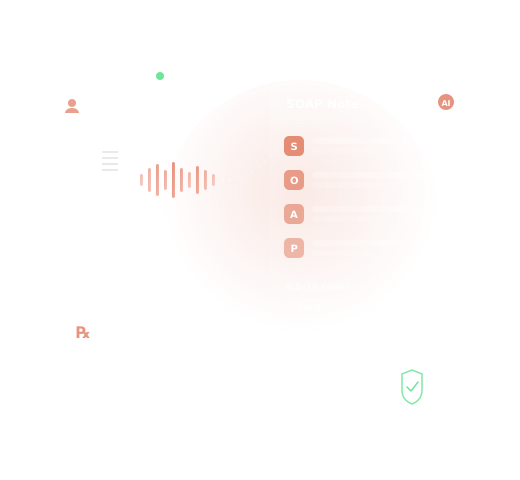
Conversation capture and transcription: During an in-person or virtual consultation, the system captures the clinical conversation and converts speech into text. This is useful for long intake sessions and follow-up reviews where details can otherwise be missed.
Speaker diarization: In de addiction care, more than one person may speak during the visit, including the clinician, patient, and family member. Speaker separation helps organize who said what, making the draft easier to review.
SOAP note drafting: The product is designed to convert the consultation into structured SOAP notes. This helps clinicians move from raw conversation to a usable draft without starting from a blank page.
ICD-10 and CPT suggestions: Coding support can help teams prepare documentation for downstream billing or record workflows. Suggestions remain reviewable and should be validated by the clinician or authorized staff.
Multilingual support: Many Indian clinics work across English and regional language conversations. Multilingual support can help when the patient speaks in one language and the record needs a structured clinical summary.
On-premise or private deployment options: Some organizations prefer deployment choices based on internal IT, governance, or data handling preferences. These options support workflows aligned with institutional requirements rather than forcing a single setup.
Clinician review and sign-off: The final record is not automatic. The clinician reviews, edits, and approves the note before it becomes part of the patient record. This checkpoint is especially important in de addiction services where context and nuance matter.
How It Works
The workflow below reflects how an AI medical scribe in India can be used in day-to-day de addiction consultations.
- Capture the consultation conversation: The clinician starts the session as usual while the system records the interaction from the OPD room or approved virtual setup. This may include patient history, current substance use pattern, withdrawal symptoms, medication adherence, counselling discussion, and family observations.
- Transcribe and structure the interaction: The audio is converted into text with speaker diarization so the draft separates clinician and patient contributions more clearly. The transcript is then organized into clinically relevant sections instead of remaining as raw conversation.
- Generate a SOAP draft: Based on the structured transcript, the system prepares a draft SOAP note. In de addiction services, this can help summarize subjective history, objective observations, assessment themes, and the plan for detox, maintenance, counselling, referral, or follow-up.
- Suggest coding support: The platform can surface ICD-10 and CPT suggestions linked to the documented encounter. These are intended as support for documentation workflows and should be reviewed before use.
- Review, edit, and finalize: The clinician checks the draft, corrects wording, adds missing context, and confirms the final note. Human review is the operational checkpoint before record finalization, ensuring the output reflects clinical judgment.
- Choose deployment posture for operations: Depending on the organization, the workflow can be set up with on-premise or private deployment preferences. This is a governance and IT decision that supports internal processes for documentation handling and access control.
Local context
In India, de addiction services are delivered across psychiatric clinics, multispecialty hospitals, mental health centres, and rehabilitation-linked outpatient programs. Documentation needs can vary by setup, but common realities remain the same: high patient volumes, mixed language consultations, family participation, and the need for clear follow-up records. An AI medical scribe in India is most valuable when it adapts to these practical conditions rather than assuming a uniform workflow.
For example, a clinic may need concise notes for repeat visits, while a hospital department may need more detailed assessment summaries and coding support. Some organizations may also prefer private or on-premise deployment models based on internal governance choices. In this context, an AI medical scribe in India can support documentation quality while allowing each institution to define how review, access, and final record approval should work.
Use cases
Initial assessment visits: Long first consultations often include substance use history, psychiatric history, medical comorbidities, social context, and treatment goals. The scribe helps convert that conversation into a structured draft.
Follow-up medication reviews: For patients on maintenance therapy or withdrawal management plans, the tool can help summarize adherence, side effects, cravings, relapse events, and next steps.
Family-involved consultations: When caregivers provide collateral history, speaker diarization can help organize the discussion more clearly for review.
Multilingual OPD settings: In clinics where patients switch between English, Hindi, or regional languages, multilingual support can help maintain a usable clinical draft.
Hospital documentation support: Departments that need structured notes and coding assistance can use the workflow to reduce repetitive manual drafting while keeping clinicians in control.
Private governance preferences: Organizations evaluating an AI medical scribe India healthcare solution may choose deployment approaches that fit internal IT and documentation handling practices.
FAQ
Can this be used for sensitive de addiction consultations?
Yes, the workflow is designed for clinical documentation support in conversation-heavy specialties. The clinician still reviews and finalizes the note before it becomes part of the record.
Does it replace the doctor or therapist?
No. It is a documentation copilot that helps draft notes and suggest coding support. Clinical judgment, edits, and sign-off remain with the care team.
Can it handle multilingual consultations common in India?
The product includes multilingual support, which can help in clinics where patients and clinicians use more than one language during the visit.
How does it fit into existing workflows?
It is designed around the consultation flow: capture, transcribe, structure, draft SOAP notes, suggest codes, and then route the draft for clinician review and approval.
CTA
If your de addiction team wants to reduce manual documentation burden without changing how clinicians conduct consultations, explore a practical AI medical scribe in India workflow built around conversation capture, SOAP drafting, coding support, and final human review. You can also review related product details on the core MedScribe pages for features, integrations, and deployment options relevant to your clinic or hospital.