Introduction
Dental oral medicine teams manage detailed consultations that often combine pain history, lesion review, medication use, systemic conditions, habits, examination findings, and follow-up planning. An AI medical scribe in India can help reduce the time spent turning these conversations into structured records while keeping the clinician in control of the final note. For dental hospitals, specialty clinics, and multi-chair practices, the goal is practical: capture the consultation, organize the information into a usable draft, and support a smoother documentation workflow without interrupting patient interaction.
MedScribe is designed as an AI documentation copilot for everyday OPD use. It converts consultation conversations into draft clinical notes, supports SOAP formatting, and provides coding suggestions that clinicians can review before finalizing records. In dental oral medicine, this is useful when visits involve recurrent ulcers, oral mucosal lesions, burning mouth symptoms, temporomandibular complaints, medication-related oral findings, or oral manifestations linked to systemic disease. Instead of documenting from memory after the visit, teams can work from a structured draft created from the encounter itself.
The value of an AI medical scribe in India is not only speed. It also supports consistency across clinicians, helps standardize note structure, and makes it easier for front-office and clinical teams to follow the next steps in care. For organizations that prefer tighter control over data handling, deployment choices such as private or on-premise setups can be evaluated as part of workflow and governance planning.
Department workflow
Dental oral medicine consultations are often more narrative than procedure-only visits. A patient may describe symptom duration, triggers, tobacco or areca nut use, prior dental treatment, current medications, and systemic history before the clinician begins focused examination. The clinician then documents extraoral findings, intraoral findings, lesion characteristics, provisional impression, differential considerations, investigations, counseling, and treatment advice. In busy settings, this sequence can create documentation delays, especially when the same doctor is balancing OPD volume, follow-ups, and interdisciplinary referrals.
An AI medical scribe in India fits this workflow by helping capture the consultation in real time or near real time, then organizing the content into a draft note that reflects the visit structure. For oral medicine teams, this can support clearer records for lesion monitoring, habit counseling, medication review, biopsy planning, and communication with oral surgery, pathology, dermatology, ENT, or oncology teams when needed. The result is a more usable first draft for the clinician rather than a blank page at the end of the session.
Features mapped to workflow
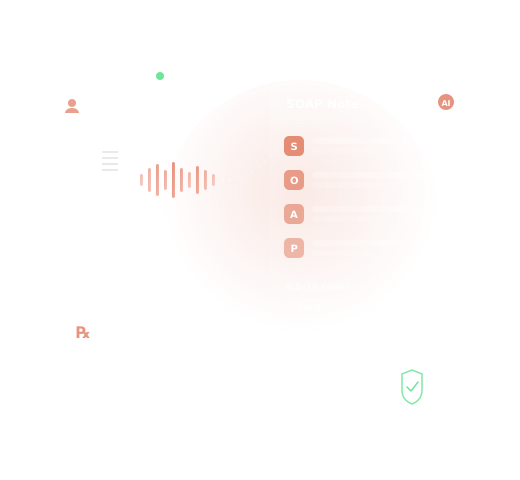
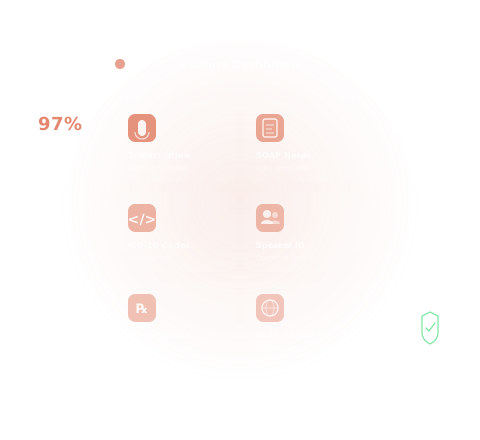
Automatic SOAP note generation: Consultation details can be organized into subjective history, objective findings, assessment, and plan. This is especially helpful in oral medicine where symptom narrative and examination findings both matter.
Speaker diarization: The system distinguishes speakers during the encounter, helping separate patient-reported history from clinician prompts and counseling. That can improve clarity when documenting symptom chronology or habit history.
Multilingual support: Many clinics in India switch between English and regional languages during consultations. Multilingual support helps teams work with natural speech patterns common in OPD settings.
ICD-10 and CPT suggestions: Coding support can help staff prepare records for downstream billing or reporting workflows. Suggestions remain reviewable so the clinician or authorized team member can confirm what is appropriate for the encounter.
On-premise deployment options: Some hospitals and enterprise groups prefer infrastructure choices designed to align with internal IT and governance requirements. Deployment posture can be planned according to operational needs.
Structured drafts for review: Instead of replacing clinician judgment, the product supports a draft-and-review model. This is important in dental oral medicine where subtle wording around lesion description, risk factors, and follow-up advice matters.
How It Works
The workflow is designed around the actual consultation lifecycle in dental oral medicine, from conversation capture to clinician sign-off.
- Capture the encounter: During the consultation, the conversation is recorded through the configured workflow. This may include history taking, symptom discussion, habit review, medication review, and clinician counseling. Speaker diarization helps identify who said what, which is useful when documenting patient-reported symptoms versus clinician recommendations.
- Transcribe and structure the discussion: The audio is converted into text and organized into clinically relevant sections. In oral medicine visits, this can include presenting complaint, duration, associated symptoms, relevant medical history, habit history, and examination-related content. Multilingual support helps when the consultation moves between English and local language usage.
- Draft the SOAP note: The system generates a draft SOAP note from the structured transcript. Subjective content may include pain, burning, ulcer recurrence, or habit history; objective content may include lesion site, size description, mucosal appearance, tenderness, or range-of-motion findings; assessment and plan are drafted for clinician review.
- Add coding support: Based on the documented encounter, the product can surface ICD-10 and CPT suggestions to support downstream workflows. These are suggestions only and should be reviewed by the clinician or authorized staff before use.
- Review, edit, and sign off: The clinician checks the draft, edits wording, confirms findings, and finalizes the record. This human review checkpoint is essential before the note becomes part of the patient chart. If the organization prefers, deployment can be planned in a private or on-premise environment as part of operational governance decisions.
Local context
In India, dental clinics and hospitals often manage high patient throughput with mixed case complexity. Oral medicine consultations may involve referrals from general dentistry, oral surgery, dermatology, oncology, or ENT, and documentation quality affects continuity across these teams. An AI medical scribe in India can support this environment by helping clinicians create more consistent records without adding extra typing during the visit.
Many organizations also need flexibility in how technology is introduced. Some may start with a single specialty clinic, while others may evaluate broader use across departments. For enterprise settings, deployment choices and integration planning should align with internal workflows, IT preferences, and record management practices. The practical focus remains the same: reduce documentation friction while preserving clinician oversight.
Use cases
Oral lesion follow-up: Draft notes can help track symptom changes, lesion description, prior treatment response, and next review plan across repeat visits.
Habit counseling visits: Tobacco, areca nut, and smoking history often require detailed counseling documentation. Structured drafts can help capture advice, risk discussion, and follow-up recommendations.
Burning mouth and pain consultations: These visits often involve nuanced symptom history, medication review, and systemic context. A structured note helps preserve detail.
Interdisciplinary referrals: When patients need pathology, oral surgery, dermatology, or ENT input, clearer notes can support handoff quality.
Hospital OPD standardization: Multi-clinician teams can use a more consistent note framework for oral medicine encounters while still allowing individual review and edits.
FAQ
Can this be used in dental oral medicine clinics?
Yes. The workflow is suitable for consultations that involve detailed history taking, examination findings, counseling, and follow-up planning common in dental oral medicine.
Does it replace clinician documentation judgment?
No. It creates a draft note and coding suggestions, but the clinician reviews, edits, and signs off before the record is finalized.
Can it handle multilingual consultations?
It is designed with multilingual support, which is useful for clinics where conversations shift between English and regional languages.
Does it support coding workflows?
It can provide ICD-10 and CPT suggestions to support documentation and downstream administrative workflows, subject to human review.
Are there deployment options for organizations with specific IT preferences?
Yes. Private or on-premise deployment approaches can be considered for organizations that want infrastructure choices aligned with internal governance and workflow needs.
CTA
If your team is evaluating an AI medical scribe in India for dental oral medicine, focus on the day-to-day workflow: how consultations are captured, how drafts are structured, how coding support is reviewed, and how clinicians complete final sign-off. MedScribe is built to support practical OPD documentation with SOAP drafting, speaker diarization, multilingual support, and deployment flexibility. Explore the product pathways through /medscribe, feature details at /medscribe/features, integration planning at /medscribe/integrations, and commercial options at /medscribe/pricing.