Introduction
An AI medical scribe in India can help dermatology clinics and hospitals reduce time spent on repetitive documentation while keeping the clinician in control of the final record. In a busy dermatology OPD, doctors often move quickly between acne follow-ups, chronic eczema reviews, pigment disorder assessments, procedural counselling, and medication monitoring. Each visit creates documentation work: history, examination findings, assessment, treatment plan, follow-up instructions, and coding support. An AI medical documentation copilot is designed to convert consultation conversations into structured clinical notes that are easier to review, edit, and finalize.
For dermatology teams, the value is practical rather than theoretical. The goal is to support faster note preparation, clearer records, and more consistent workflows across individual practitioners, group practices, and hospital departments. Instead of replacing clinical judgment, the system supports the doctor by drafting SOAP notes, identifying speakers during the conversation, and suggesting ICD-10 or CPT codes for review. This makes an AI medical scribe in India relevant for clinics looking to improve throughput without compromising documentation quality.
The product is designed for day-to-day use in Indian healthcare settings, including multilingual consultations and deployment choices such as private or on-premise environments where organizations prefer tighter operational control.
Department workflow
Dermatology documentation has its own rhythm. A typical visit may begin with the patient describing symptoms such as itching, rash progression, hair fall, pigmentation changes, or lesion evolution. The dermatologist then asks targeted questions about onset, duration, triggers, prior treatment, family history, allergies, cosmetic use, and systemic associations. Examination may include lesion morphology, distribution, severity, body surface area, nail or scalp findings, and photo-linked observations where relevant. The visit ends with diagnosis, differential considerations, treatment planning, counselling, and follow-up instructions.
In many clinics, this workflow creates friction because the doctor must either type during the consultation, dictate after the visit, or complete notes later in the day. That can affect patient interaction and extend administrative work beyond OPD hours. An AI medical scribe in India fits into this workflow by capturing the consultation, structuring the conversation into clinically useful sections, and preparing a draft note for clinician review. For dermatology, this is especially useful when the same visit includes symptom history, visual examination commentary, medication changes, and procedural advice.
The result is a workflow that supports better continuity across follow-ups, easier handover within larger teams, and more consistent note structure for recurring conditions such as psoriasis, acne, urticaria, fungal infections, vitiligo, and dermatitis.
Features mapped to workflow
Conversation capture and transcription: The system listens to the consultation and converts speech into text, helping reduce manual note-taking during the encounter.
Speaker diarization: It separates clinician and patient speech, which is useful in dermatology consultations where symptom descriptions, counselling, and treatment instructions all need clear attribution.
Automatic SOAP note generation: The transcript is organized into subjective, objective, assessment, and plan sections, giving dermatologists a usable draft instead of raw text.
ICD-10 and CPT suggestions: Coding support can help teams review likely codes based on the documented encounter, while keeping final selection with the clinician or billing workflow.
Multilingual support: Indian dermatology practices often switch between English and regional languages during consultations. Multilingual capability supports more natural patient interaction.
On-premise or private deployment options: Organizations that want tighter governance over data handling can choose deployment postures aligned with their internal IT and workflow preferences.
Clinician review and sign-off: Drafts are not the final record by default. The workflow includes edits, verification, and final approval before the note is completed.
How It Works
The product workflow is built around real consultation documentation rather than generic voice transcription. For dermatology teams, the process typically follows these steps:
- Capture the consultation conversation: During the OPD visit, the system records the interaction between dermatologist and patient. It supports multilingual conversations and uses speaker diarization to distinguish who said what, which is helpful when documenting symptom history, treatment adherence, and counselling.
- Convert speech into structured medical text: The recorded conversation is transcribed and organized into clinically meaningful segments. Instead of leaving the doctor with a long transcript, the system identifies relevant details such as presenting complaint, duration, aggravating factors, examination observations, and treatment discussion.
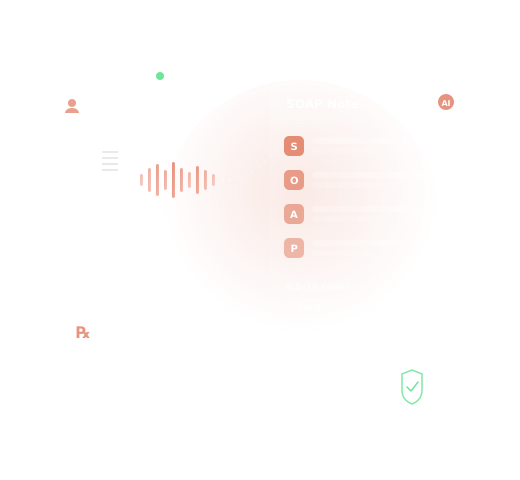
- Draft a SOAP note automatically: Based on the structured transcript, the copilot prepares a SOAP note draft. In dermatology, this may include subjective symptom history, objective lesion findings described during the visit, assessment or differential impression, and a plan covering medications, investigations, procedures, skincare advice, and follow-up.
- Suggest coding for review: The system can surface ICD-10 and CPT suggestions linked to the documented encounter. These suggestions are intended to support clinician or billing review, not replace professional judgment.
- Review, edit, and finalize: The dermatologist reviews the draft note, corrects terminology, adds missing clinical nuance, and confirms the final assessment and plan. Human review is an operational checkpoint before the record is finalized.
- Choose deployment posture that fits governance needs: Depending on the clinic or hospital setup, teams may use private or on-premise deployment options. This is a workflow and governance decision that can support internal data handling preferences and integration planning.
Local context
Dermatology practices in India often manage high patient volumes, mixed payment models, and consultations that move between English and regional languages. In this environment, documentation tools need to be practical, fast to review, and adaptable to different clinic sizes. An AI medical scribe in India is useful when the priority is to reduce after-hours documentation and support more consistent records across OPD sessions.
For standalone clinics, the focus may be on saving doctor time and improving note consistency. For hospitals and larger groups, the focus may include standardization across multiple consultants, coding support, and deployment choices that align with internal IT workflows. The product narrative should stay grounded in these operational realities rather than broad claims. That is why AI medical scribe India healthcare adoption is best framed around workflow efficiency, clinician review, and better documentation support for everyday care delivery.
Use cases
General dermatology OPD: Draft notes for acne, eczema, fungal infections, urticaria, psoriasis, and pigment disorders.
Follow-up visits: Capture interval history, treatment response, side effects, adherence, and plan changes without rebuilding the note from scratch.
Procedural counselling: Support documentation for peels, biopsies, cryotherapy, laser discussions, and post-procedure instructions.
Chronic disease management: Improve consistency in recurring visits where symptom scoring, medication monitoring, and counselling need to be documented clearly.
Multi-doctor practices: Help standardize note structure across consultants while preserving individual review and sign-off.
These use cases show why an AI medical scribe in India can be valuable for dermatology settings that want practical documentation support without changing the core clinical workflow.
FAQ
Can this work for multilingual dermatology consultations?
Yes. The product supports multilingual conversations, which is useful when doctors explain diagnoses or treatment plans in a mix of English and local languages.
Does it create final notes automatically?
It creates draft notes automatically, but clinician review, edits, and final sign-off remain essential before the record is finalized.
Is it useful for coding workflows?
Yes. It can provide ICD-10 and CPT suggestions to support review, helping teams move from documentation to coding more efficiently.
Can hospitals choose different deployment models?
Yes. Private or on-premise deployment options can support organizations that want workflows aligned with internal governance and IT preferences.
CTA
If your dermatology team wants to reduce documentation burden and improve note consistency, explore how an AI medical scribe in India can fit into your OPD workflow. Review the core product at /medscribe, explore capabilities at /medscribe/features, and assess how the workflow can support your clinic or hospital with practical, clinician-reviewed documentation.