Introduction
An AI medical scribe in India can help developmental pediatricians reduce time spent on documentation while keeping the clinician in control of the final record. In developmental pediatrics, consultations often involve long parent narratives, milestone history, school concerns, behavioural observations, therapy updates, and care coordination details. That makes note creation more demanding than a short episodic visit. A practical documentation copilot can capture the conversation, organise it into a structured draft, and support coding review so clinicians can focus more attention on the child and family.
MedScribe is designed for clinics and hospitals that want faster clinical documentation without changing the core consultation process. It converts consultation conversations into usable notes, supports SOAP formatting, suggests ICD-10 and CPT codes for review, and offers multilingual support for real-world OPD settings. For teams evaluating an AI medical scribe in India, the value is not just speed. It is also consistency, easier review, and a workflow that supports clinician sign-off before anything is finalised.
For developmental pediatrics, this matters because visits may include developmental screening discussions, neurodevelopmental history, feeding and sleep concerns, school reports, therapy plans, and follow-up instructions. A documentation tool should help structure complexity rather than add another layer of admin work.
Department workflow
Developmental pediatrics workflows are detail-heavy and often multidisciplinary. A typical visit may begin with caregiver concerns, followed by prenatal and birth history, developmental milestones, behavioural observations, communication patterns, sensory issues, school functioning, prior assessments, and current therapies. The clinician may then document examination findings, impression, differential considerations, referrals, and a longitudinal care plan.
In many Indian clinics and hospitals, these visits also involve mixed-language conversations, variable consultation lengths, and the need to summarise information clearly for future follow-up. Documentation can become fragmented when clinicians switch between listening, asking clarifying questions, and typing. An AI medical scribe in India is most useful when it fits this reality: capturing rich conversations, separating speakers, and turning the encounter into a draft that is easier to review and edit.
For developmental pediatrics, the workflow benefit is especially relevant in OPD settings where repeat visits are common and continuity matters. Structured notes can make it easier to compare progress over time, track therapy recommendations, and prepare for multidisciplinary coordination.
Features mapped to workflow
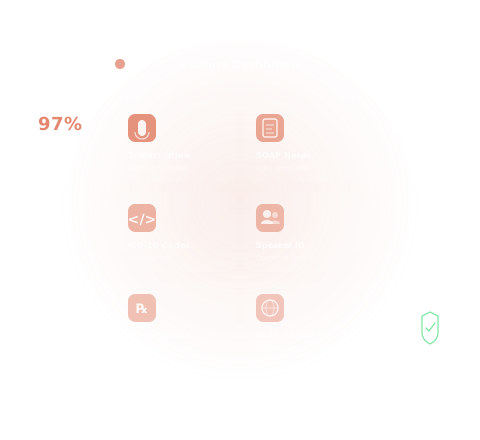
Conversation capture and transcription: The product supports consultation capture and converts speech into text for downstream note creation. This is useful when parent history is long and nuanced.
Speaker diarization: In developmental pediatrics, multiple voices may be present, including the clinician, caregiver, and sometimes the child. Speaker separation helps organise the transcript more clearly for review.
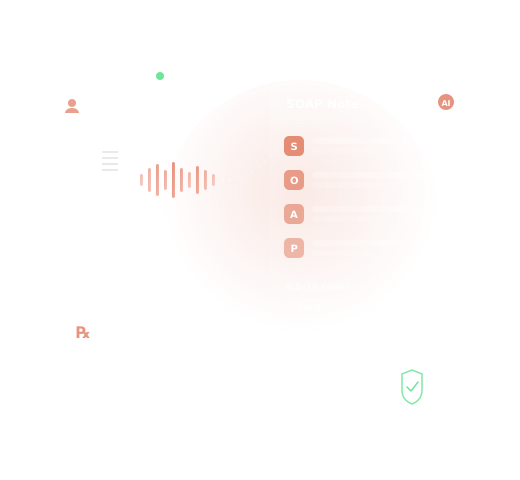
Automatic SOAP note generation: The system drafts structured notes from the encounter, helping clinicians move from raw conversation to a usable clinical format.
ICD-10 and CPT suggestions: Coding support is provided as suggestions for clinician review, which can help streamline documentation and billing workflows without replacing professional judgment.
Multilingual support: Many consultations in India move between English and regional languages. Multilingual capability supports more natural conversations during care delivery.
On-premise deployment options: Some organisations prefer deployment choices that align with internal governance and IT preferences. This can support workflows aligned with local data handling expectations.
These capabilities make AI medical scribe India healthcare adoption more practical when teams need a tool that complements daily documentation rather than forcing a rigid template-first process.
How It Works
The workflow is designed to move from consultation capture to clinician-approved documentation in a clear sequence.
- Capture the consultation conversation: During the visit, the clinician starts the documentation session so the conversation can be captured. This may include caregiver history, developmental concerns, behavioural observations, and treatment discussions. Multilingual speech support helps when the consultation shifts between English and local language usage.
- Transcribe and structure the encounter: The system converts the conversation into text and applies speaker diarization to distinguish the clinician from the caregiver or other participants. This is especially useful in developmental pediatrics where history often comes from parents and may include long descriptive narratives.
- Draft a SOAP note automatically: Based on the structured transcript, the product generates a draft SOAP note. Subjective content may include caregiver concerns and developmental history, while objective content can be organised around examination findings and observed behaviours. The draft is meant to save time, not replace clinician review.
- Suggest coding for review: The system provides ICD-10 and CPT suggestions linked to the documented encounter. These suggestions are intended to support the clinician or billing workflow and should be reviewed before use.
- Review, edit, and sign off: The clinician checks the draft note, edits wording, adds missing context, confirms coding relevance, and finalises the record. Human review is the operational checkpoint before the note becomes part of the clinical workflow.
- Choose deployment posture based on workflow needs: Clinics and hospitals can evaluate deployment options such as private or on-premise setups based on internal IT, governance, and operational preferences. This is a workflow and infrastructure decision, not a guarantee of compliance.
Local context
In India, developmental pediatrics practices often manage high documentation complexity across private clinics, hospital OPDs, and multidisciplinary centres. Parents may arrive with school notes, therapy updates, prior assessments, and questions that require careful summarisation. A practical AI medical scribe in India should support this environment by helping clinicians document efficiently without disrupting rapport during sensitive conversations.
Local relevance also includes multilingual communication, variable digital maturity across organisations, and different preferences for deployment. Some teams may want a cloud-based workflow, while others may prefer private infrastructure or on-premise deployment. For organisations comparing options, an AI medical scribe in India is most useful when it supports existing documentation habits, review checkpoints, and governance expectations.
Use cases
Initial developmental assessment: Capture detailed caregiver history and convert it into a structured draft note.
Autism and neurodevelopment follow-up visits: Summarise interval changes, therapy progress, behavioural concerns, and next-step plans.
School and learning concern consultations: Organise parent concerns, teacher feedback, and referral recommendations into a usable record.
Multidisciplinary coordination: Create clearer notes that can support communication across pediatrics, psychology, speech therapy, occupational therapy, and rehabilitation teams.
Busy OPD documentation: Reduce after-hours note writing by generating a draft during or soon after the consultation.
These scenarios show why an AI medical scribe in India can be relevant for developmental pediatrics teams that need practical support for long-form clinical conversations.
FAQ
Can this replace clinician judgment?
No. The tool is designed to assist with documentation and coding suggestions, while the clinician reviews, edits, and signs off on the final note.
Is it useful for long parent-led consultations?
Yes. Developmental pediatrics often involves detailed caregiver narratives, and structured drafting can help convert those conversations into clearer notes.
Does it support multilingual consultations?
The product includes multilingual support, which can help in clinics where conversations move between English and regional languages.
Can hospitals consider private or on-premise deployment?
Yes. Deployment posture can be evaluated based on workflow, IT, and governance preferences.
CTA
If your team is evaluating an AI medical scribe in India for developmental pediatrics, focus on workflow fit: conversation capture, structured SOAP drafting, coding support, multilingual usability, and clinician-controlled sign-off. Explore how the product can complement daily OPD documentation, and review related pages for MedScribe overview, features, integrations, and pricing.