Introduction
Diabetology practices in India often manage high OPD volumes, repeat follow-ups, medication adjustments, lab review, lifestyle counselling, and long-term documentation needs. An AI medical scribe in India can help reduce the time clinicians spend typing routine notes while keeping the doctor in control of the final record. For diabetologists, the value is practical: capture the consultation conversation, structure it into a usable clinical draft, and support coding and documentation workflows without disrupting patient interaction.
MedScribe is designed as an AI documentation copilot for clinics and hospitals that want faster note creation from real consultations. Instead of replacing clinical judgment, it supports the doctor with draft SOAP notes, coding suggestions, speaker diarization, multilingual support, and deployment options such as on-premise or private environments. This makes it relevant for diabetes care settings where continuity, follow-up clarity, and consistent documentation matter across in-person visits, counselling sessions, and chronic disease management programs.
For teams evaluating an AI medical scribe in India, the key question is not just transcription accuracy. It is whether the tool fits daily OPD reality: mixed-language conversations, medication titration, repeat visits, foot care advice, insulin counselling, and the need for clinician review before final sign-off. That is where a workflow-oriented approach becomes useful.
Department workflow
Diabetology documentation usually follows a repeatable but detail-heavy pattern. A patient may arrive for first diagnosis, routine glycaemic review, insulin initiation, complication screening, or co-management of hypertension, obesity, dyslipidaemia, or thyroid issues. During the consultation, the doctor reviews symptoms, home glucose trends, HbA1c history, diet adherence, exercise patterns, medication tolerance, hypoglycaemia episodes, and lab findings. Many visits also include counselling on lifestyle, foot care, renal risk, retinal screening, and follow-up intervals.
In a busy clinic, these conversations are clinically rich but time-consuming to document. Notes need to capture history, examination findings, assessment, treatment changes, investigations advised, and patient instructions. Repeated manual typing can slow down throughput and create after-hours documentation burden. An AI medical scribe India healthcare workflow is useful when it can convert these interactions into structured drafts that are easy to review, edit, and finalize.
For diabetology teams, the ideal workflow support includes clear separation of doctor and patient speech, recognition of medication names and dosage changes, structured SOAP formatting, and support for coding suggestions that can be reviewed by the clinician. This is especially helpful in settings where consultations may switch between English and Indian languages during the same visit.
Features mapped to workflow
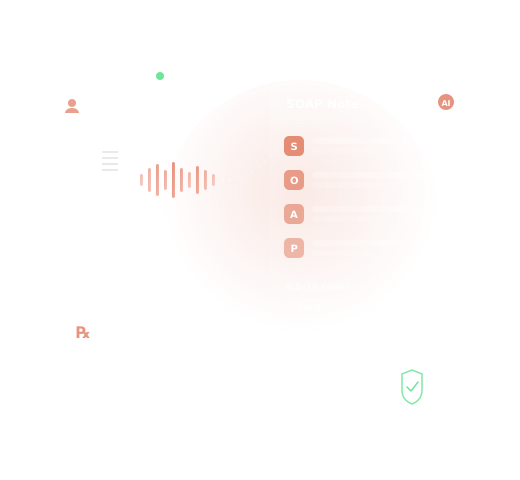
Automatic SOAP note generation: Diabetology visits often follow a predictable clinical structure. Automatic SOAP drafting helps convert conversation into Subjective, Objective, Assessment, and Plan sections that clinicians can quickly refine.
Speaker diarization: In diabetes consultations, distinguishing what the patient reports versus what the doctor advises is important. Speaker diarization helps separate voices so the draft note is easier to validate.
ICD-10 and CPT suggestions: Coding support can assist teams that want a starting point for documentation and billing workflows. Suggestions remain reviewable and should be confirmed by the clinician or authorized staff.
Multilingual support: Many diabetology consultations in India involve English mixed with Hindi or regional languages. Multilingual capture supports more natural doctor-patient interaction without forcing rigid documentation habits.
On-premise deployment options: Some hospitals and larger clinics prefer infrastructure choices that support internal governance preferences. Deployment posture can be selected as an operational decision based on workflow, IT, and data handling needs.
Review-first workflow: The product is designed to support clinician review, edits, and final sign-off before the record is finalized. This is important for chronic care documentation where small wording changes can affect continuity.
How It Works
The workflow for an AI medical scribe in India should be easy to understand for doctors, administrators, and IT teams. MedScribe follows a practical consultation-to-note process:
- Capture the consultation conversation: During the OPD visit, the doctor-patient interaction is captured through the configured workflow. This may include multilingual speech and natural back-and-forth discussion about symptoms, glucose logs, medications, diet, and follow-up concerns.
- Transcribe and structure the interaction: The system converts speech into text and uses speaker diarization to distinguish clinician and patient contributions. It then organizes the content into clinically relevant segments so the raw transcript is easier to use.
- Draft a SOAP note automatically: Based on the structured conversation, MedScribe generates a draft SOAP note. In diabetology, this can help summarize history, current treatment, assessment of control, and the care plan discussed during the visit.
- Suggest coding support: The platform can provide ICD-10 and CPT suggestions as a documentation aid. These are intended to support staff and clinicians with a starting point, not replace professional review.
- Enable clinician review and edits: Before anything becomes part of the final record, the doctor reviews the draft, corrects wording, adds missing findings, and confirms medication or investigation details. Human review is an operational checkpoint built into the workflow.
- Finalize based on deployment choice: After sign-off, the note can move into the clinic or hospital documentation process according to the selected setup, including private or on-premise deployment preferences where required by the organization.
Local context
In India, diabetology services span independent clinics, multispecialty hospitals, endocrine centers, and chronic care programs. Documentation needs vary by setup, but common pressures remain the same: high patient volumes, repeat follow-ups, mixed-language consultations, and the need for consistent records across visits. An AI medical scribe in India is most useful when it adapts to these realities rather than forcing a generic workflow.
For smaller clinics, the value may be reduced typing and faster note completion during OPD hours. For hospitals, the focus may be standardization, review checkpoints, and deployment choices that align with internal IT preferences. In either case, the goal is practical support for doctors and care teams. The product is designed to align with real documentation workflows in India healthcare settings without making compliance or legal guarantees.
Use cases
Routine diabetes follow-up: Capture medication adherence, glucose trends, HbA1c review, and plan changes in a structured note.
New patient assessment: Summarize presenting symptoms, risk factors, family history, baseline investigations, and initial treatment planning.
Insulin counselling visits: Document dose discussions, injection technique guidance, hypoglycaemia education, and monitoring instructions.
Complication review: Record foot symptoms, renal concerns, neuropathy complaints, retinal screening advice, and referral recommendations.
Multidisciplinary chronic care: Support documentation when diabetes care overlaps with obesity, hypertension, lipid disorders, or thyroid management.
High-volume OPD operations: Help clinicians create usable drafts faster so more time can stay focused on patient communication and decision-making.
FAQ
Can this work for mixed-language consultations?
Yes. MedScribe supports multilingual workflows, which is useful for diabetology consultations in India where doctors and patients may switch between English and regional languages.
Does the tool replace clinician documentation review?
No. The workflow is designed around clinician review, edits, and final sign-off before the record is finalized.
Can it support coding workflows?
It can provide ICD-10 and CPT suggestions as documentation support. These suggestions should be reviewed and confirmed by the appropriate clinician or staff member.
Is deployment flexible for hospitals and larger groups?
Yes. Deployment options can include private or on-premise approaches, depending on organizational workflow and governance preferences.
CTA
If your diabetology clinic or hospital is evaluating an AI medical scribe in India, focus on workflow fit: consultation capture, structured SOAP drafting, coding support, multilingual usability, and a clear review-first process. MedScribe is built to support practical OPD documentation for India healthcare teams that want faster note creation without losing clinician oversight. Explore the product, review features, and assess how it can fit your daily diabetes care workflow.