Introduction
An AI medical scribe in India can help diagnostic radiology teams reduce documentation load around imaging referrals, patient history capture, reporting support, and follow-up communication. In busy hospitals and clinics, radiologists often balance high study volumes with the need for clear, structured records. A practical documentation copilot can support this work by turning consultation or discussion audio into draft clinical notes, structured summaries, and coding suggestions that clinicians can review before final sign-off.
MedScribe is designed as an AI medical documentation copilot for doctors and clinics. For radiology settings, it supports workflows where patient interactions, referring physician discussions, and pre- or post-imaging consultations need to be documented quickly and consistently. Rather than replacing clinical judgment, the system is built to assist with note preparation, speaker separation, multilingual capture, and draft SOAP formatting so teams can spend more time on interpretation and patient care.
This page focuses on how an AI medical scribe in India fits into daily diagnostic radiology operations, especially in OPD-linked imaging centers, multispecialty hospitals, and private practices that want practical documentation support without adding unnecessary complexity.
Department workflow
Diagnostic radiology documentation is different from many other specialties because the workflow often spans multiple touchpoints. A patient may arrive with a referral, share symptoms and prior history, undergo imaging, and then receive a summary discussion or next-step recommendation. In parallel, radiologists and reporting teams may coordinate with technicians, front-desk staff, and referring clinicians.
Common documentation tasks include capturing the reason for study, relevant history, prior imaging references, contrast-related notes, structured findings discussions, impression summaries, and follow-up recommendations. In some settings, radiologists also need concise records of patient-facing conversations, especially for ultrasound, interventional radiology, or consultation-heavy imaging workflows.
An AI medical scribe India healthcare workflow is most useful when it supports these operational realities: variable case complexity, mixed English and regional language conversations, the need for fast turnaround, and the importance of clinician review before anything becomes part of the final record. For radiology teams, the value is not only speed, but also more consistent note structure across shifts, locations, and clinicians.
Features mapped to workflow
Conversation capture and transcription: MedScribe can capture consultation audio and convert it into text for downstream documentation. This is useful for patient history intake, pre-scan discussions, and post-report explanation notes.
Speaker diarization: In radiology settings where both clinician and patient speak during a consultation, speaker diarization helps separate who said what. This can make draft notes easier to review and edit.
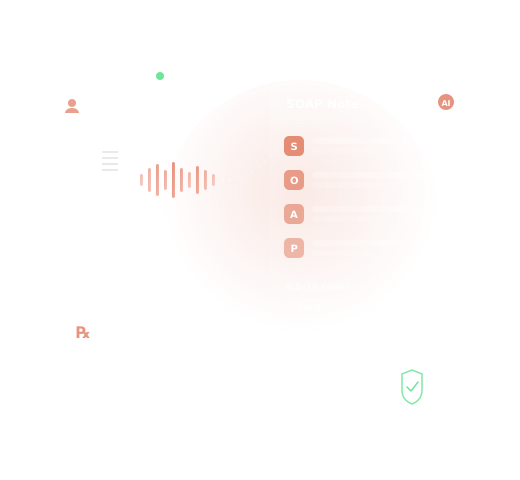
Automatic SOAP note generation: The platform emphasizes automatic SOAP drafting from captured conversations. For radiology, this can help structure subjective history, objective context, assessment framing, and plan or follow-up instructions in a usable format.
ICD-10 and CPT suggestions: Coding support can assist teams that want draft suggestions linked to the documented encounter. These suggestions still require human review, but they can reduce repetitive manual lookup.
Multilingual support: Many imaging centers in India handle consultations in English plus Hindi or regional languages. Multilingual support helps teams document more naturally without forcing every interaction into one language pattern.
On-premise deployment options: Some hospitals prefer private or on-premise deployment based on internal governance, IT architecture, or data handling preferences. MedScribe supports workflow choices aligned with those operational needs.
For organizations evaluating an AI medical scribe in India, these features matter most when they map cleanly to real radiology tasks rather than generic automation promises.
How It Works
The workflow below reflects how the product is typically used as a documentation copilot in diagnostic radiology.
- Capture the consultation or discussion: During a patient interaction, referral review, or follow-up explanation, the clinician starts audio capture. The system records the conversation for documentation support, including multilingual exchanges where relevant.
- Transcribe and structure the interaction: MedScribe converts speech to text and applies speaker diarization to distinguish patient and clinician contributions. This helps organize history details, symptoms, prior imaging references, and care instructions into a clearer draft.
- Generate a draft SOAP note: Based on the transcript, the platform prepares a structured SOAP-style draft. In radiology workflows, this can support concise documentation around indication, relevant history, assessment context, and next steps tied to imaging or follow-up.
- Add coding suggestions: The system can surface ICD-10 and CPT suggestions from the documented encounter. These are intended as draft support for staff or clinicians, not as final coding decisions.
- Review, edit, and sign off: The clinician reviews the generated note, corrects wording, removes irrelevant details, and confirms the final version before record finalization. Human review is the operational checkpoint that keeps the documentation clinically usable.
- Choose deployment posture for workflow governance: Depending on the organization, teams may use private or on-premise deployment options to fit internal IT and governance preferences. This is a workflow and infrastructure decision, not a guarantee claim.
Local context
Radiology practices in India often operate across mixed care environments: standalone diagnostic centers, hospital-based imaging departments, and multisite groups. Documentation needs can vary by modality, patient volume, and whether the radiologist is directly interacting with patients or primarily coordinating with referring doctors. That is why an AI medical scribe in India should be practical for OPD-linked workflows, adaptable to multilingual communication, and easy to review within existing clinical routines.
In many settings, teams are not looking for a dramatic process overhaul. They want support for faster note preparation, more consistent structure, and less repetitive typing. A useful implementation approach is to start with consultation-heavy radiology scenarios such as ultrasound, interventional radiology, women’s imaging discussions, or patient counseling after findings review. From there, teams can expand usage based on comfort, governance preferences, and workflow fit.
For hospitals and clinics comparing options, the key question is whether the tool supports day-to-day radiology documentation without creating extra review burden. That is where a focused AI medical scribe India healthcare solution can add value.
Use cases
Ultrasound and consultation-led imaging: Capture patient history and clinician discussion, then generate a draft note for review.
Interventional radiology: Support documentation of pre-procedure counseling, consent discussions, and post-procedure instructions in a structured format.
Hospital imaging departments: Help standardize consultation notes across multiple radiologists and shifts.
Referring physician coordination: Summarize key discussion points and follow-up plans after imaging review conversations.
Multilingual patient interactions: Document consultations where patients switch between English and regional languages during history sharing or clarification.
These are practical examples of where an AI medical scribe in India can support radiology teams without changing the clinician’s responsibility for final documentation quality.
FAQ
Below are common implementation questions from radiology clinics and hospitals evaluating documentation support tools.
Can this replace radiology reporting software?
No. It is better understood as a documentation copilot for consultation and note workflows. It can complement existing systems rather than replace core reporting tools.
Does the system finalize notes automatically?
No. Drafts should be reviewed, edited, and approved by the clinician before they are added to the final record.
Is it useful only for patient-facing radiologists?
No. It can also support workflows involving referring physician discussions, procedure counseling, and follow-up communication where documentation is needed.
Can hospitals choose a private deployment model?
Yes. On-premise or private deployment options can be considered based on internal workflow, IT, and governance preferences.
CTA
If your imaging center or hospital is exploring a practical AI medical scribe in India for diagnostic radiology, MedScribe can support consultation documentation, SOAP drafting, coding suggestions, and clinician review workflows. Explore the product overview, features, integrations, and pricing to assess fit for your department’s daily operations and documentation goals.