Introduction
Electrophysiology teams manage detailed consultations, rhythm histories, procedure planning, device follow-up, and longitudinal documentation that can quickly add to clinician workload. An AI medical scribe in India can help reduce manual note-taking by turning consultation conversations into structured clinical drafts that are easier to review, edit, and finalize. For hospitals, specialty clinics, and cardiac centres, the goal is practical support during busy OPD sessions rather than adding another layer of software complexity.
MedScribe is designed as an AI documentation copilot for doctors and care teams. It converts consultation audio or conversation inputs into usable clinical notes, supports SOAP-style drafting, and provides coding suggestions that clinicians can verify before sign-off. For electrophysiology, this is useful when documenting palpitations, syncope evaluation, arrhythmia follow-up, ablation counselling, device checks, and medication adjustments. The product is designed to align with real-world documentation workflows in India, where speed, clarity, and review control matter across both outpatient and hospital settings.
Department workflow
Electrophysiology documentation often starts with a focused but information-dense interaction. The clinician may review symptoms such as dizziness, skipped beats, tachycardia episodes, chest discomfort, or prior emergency visits. The conversation may also include prior ECG findings, Holter summaries, medication history, anticoagulation status, device details, and procedure planning for studies or ablation. Capturing all of this accurately while maintaining patient attention is difficult in a high-volume clinic.
An AI medical scribe in India can support this workflow by helping convert the conversation into a structured draft that reflects the subjective history, objective findings discussed, assessment themes, and plan. In electrophysiology, this may include documenting rhythm-related complaints, prior interventions, device interrogation context, risk discussions, and follow-up instructions. Instead of relying only on memory after the visit, clinicians get a draft that can be reviewed immediately and refined before the record is finalized.
For administrators and department leads, the value is operational as well as clinical. More consistent note structure can support handoffs, improve readability for referring cardiologists, and reduce time spent on repetitive documentation tasks. This is especially relevant in India healthcare environments where specialists often balance OPD, procedures, and inpatient reviews in the same day.
Features mapped to workflow
MedScribe includes capabilities that map well to electrophysiology documentation needs:
- Automatic SOAP note generation: Converts consultation content into a structured draft, helping clinicians move from conversation to usable documentation faster.
- Speaker diarization: Distinguishes between clinician and patient speech, which is useful in complex consultations involving symptom timelines, counselling, and shared decision-making.
- Multilingual support: Helpful for clinics where patient interactions may shift between English and Indian languages during the same visit.
- ICD-10 and CPT suggestions: Provides coding support based on the documented encounter, with clinician review before use.
- On-premise or private deployment options: Supports organizations that prefer tighter control over infrastructure and workflow governance.
These features are not meant to replace clinical judgment. They are designed to reduce repetitive typing, improve note completeness, and support workflows aligned with existing documentation practices. For an electrophysiology department, that means the clinician remains in control of the final record while the system assists with first-pass drafting and organization.
How It Works
The product workflow is built around practical documentation support from consultation capture to final sign-off:
- Capture the consultation conversation: During an electrophysiology OPD visit, the clinician-patient discussion is captured through the configured workflow. This may include symptom history, prior rhythm events, medication review, device-related discussion, and treatment planning.
- Transcribe and structure the interaction: MedScribe converts the conversation into text and uses speaker diarization to separate patient and clinician inputs. This helps organize the encounter into a clearer clinical sequence rather than a raw transcript.
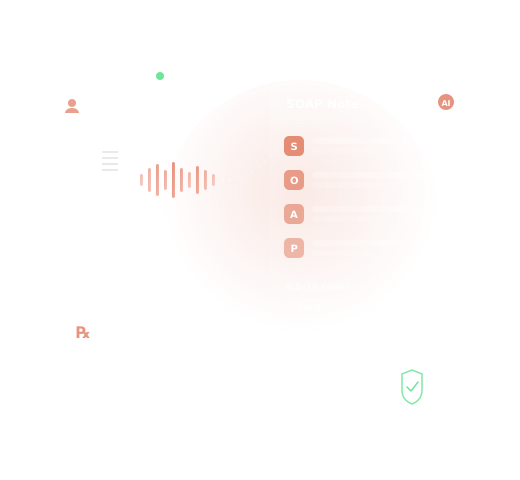
- Draft a SOAP-style note: The system generates a structured note draft with subjective history, objective context discussed during the visit, assessment themes, and plan items. In electrophysiology, this can help organize arrhythmia history, prior investigations, counselling points, and follow-up recommendations.
- Suggest coding support: Based on the drafted documentation, the product can surface ICD-10 and CPT suggestions for clinician review. These suggestions are intended to support documentation workflows, not replace coding validation by the care team.
- Review, edit, and sign off: The clinician reviews the draft, corrects details, adds findings or interpretations as needed, and approves the final note before it becomes part of the record. Human review is an operational checkpoint built into the workflow.
- Choose deployment posture for governance needs: Hospitals and larger groups can evaluate on-premise or private deployment options based on internal IT, data handling preferences, and workflow governance decisions.
This stepwise approach makes an AI medical scribe in India useful for daily practice because it supports the real sequence of work: listen, document, review, and finalize. It is especially relevant in specialty settings where note quality matters but time is limited.
Local context
In India, electrophysiology services are delivered across standalone specialty clinics, multispecialty hospitals, and tertiary cardiac centres. Documentation needs can vary by setup, but common challenges remain the same: high patient throughput, mixed-language consultations, referral-driven care, and the need for clear records that support continuity. An AI medical scribe in India should therefore be practical, adaptable, and easy to fit into existing OPD routines.
For many organizations, deployment posture is also an important consideration. Some may prefer private or on-premise setups based on internal IT policies and workflow governance preferences. MedScribe supports these discussions as implementation choices rather than one-size-fits-all assumptions. This makes it relevant for India healthcare teams that want documentation support while retaining operational control over how the system is introduced.
The broader value of AI medical scribe India healthcare adoption is not about replacing clinicians. It is about helping specialists spend less time reconstructing the encounter after the patient leaves and more time reviewing a structured draft that can be finalized efficiently.
Use cases
- Arrhythmia evaluation OPD: Document symptom onset, triggers, prior ECG or Holter references, medication history, and next-step investigations.
- Ablation counselling visits: Capture discussion around indications, alternatives, expected workflow, and follow-up planning in a structured note.
- Device follow-up: Support documentation for pacemaker or ICD review conversations, symptom updates, and care plan changes.
- Second-opinion consultations: Organize long histories into readable SOAP drafts that are easier to verify and share internally.
- Busy multispecialty cardiac centres: Help standardize note drafting across clinicians while preserving individual review and sign-off.
These use cases show why an AI medical scribe in India can be valuable in electrophysiology: the documentation burden is repetitive, but the clinical nuance remains high. A drafting copilot helps bridge that gap without removing clinician oversight.
FAQ
Below are common implementation questions from electrophysiology clinics and hospitals evaluating documentation support tools.
Can this be used during electrophysiology OPD consultations?
Yes. It is designed to support consultation documentation by converting conversation inputs into structured drafts that clinicians can review and finalize.
Does it create final notes automatically without review?
No. The workflow is built around clinician review, edits, and final sign-off before the record is finalized.
Can it support coding workflows?
It can provide ICD-10 and CPT suggestions based on the drafted note, which clinicians or authorized staff can verify before use.
Is it suitable for multilingual consultations in India?
Yes. Multilingual support is useful for clinics where patient conversations may move between English and Indian languages.
Are there deployment options for hospitals with internal IT preferences?
Yes. On-premise or private deployment options can be considered based on workflow, infrastructure, and governance needs.
CTA
If your electrophysiology team wants faster documentation without losing review control, MedScribe offers a practical path. Explore how an AI medical scribe in India can fit into your OPD and specialty workflow, then review related product details on /medscribe, feature capabilities on /medscribe/features, integration considerations, and pricing options based on your setup. For clinics and hospitals looking for a consultative, workflow-first approach, this is a practical starting point for evaluating AI-assisted documentation in India healthcare.