Introduction
ENT consultations often move quickly between symptoms, examination findings, procedures, follow-up advice, and medication changes. That pace can make documentation feel repetitive and time-consuming, especially in busy OPD settings. An AI medical scribe in India can help ENT doctors and care teams turn consultation conversations into structured clinical notes without disrupting the patient interaction. MedScribe is designed as an AI documentation copilot that supports conversation capture, transcription, SOAP note drafting, and coding suggestions, while keeping the clinician in control of review and final sign-off.
For clinics and hospitals looking to improve documentation consistency, an AI medical scribe can support day-to-day workflows such as first visits, follow-ups, procedure counselling, and post-operative reviews. The goal is practical: reduce manual note-taking effort, make records easier to complete, and help teams maintain usable documentation across high-volume ENT practice in India.
Department workflow
ENT workflows usually involve a mix of history taking, symptom duration, prior treatment review, examination findings, and treatment planning. A typical visit may include complaints such as ear pain, hearing loss, nasal obstruction, sinus symptoms, throat discomfort, vertigo, allergy-related issues, or voice changes. Documentation needs to capture the patient narrative, relevant negatives, examination details, assessment, and plan in a format that is easy to review later.
In many settings, doctors either type during the consultation, dictate after the visit, or rely on assistants to complete notes. Each approach can create delays or inconsistencies. An AI medical scribe in India fits into this workflow by helping convert the consultation into a draft note that the clinician can edit and approve. For ENT departments, this is useful when the same visit includes symptom review, endoscopy discussion, medication advice, and follow-up instructions that need to be documented clearly.
Because ENT care often includes repeat visits and procedure-linked documentation, teams also benefit from structured outputs that are easier to standardize across clinicians. This supports smoother handoffs, clearer records, and more predictable documentation routines in OPD and hospital environments.
Features mapped to workflow
MedScribe is built around the practical steps of clinical documentation rather than generic transcription alone. For ENT workflows, the product value comes from features that map directly to what happens during and after a consultation.
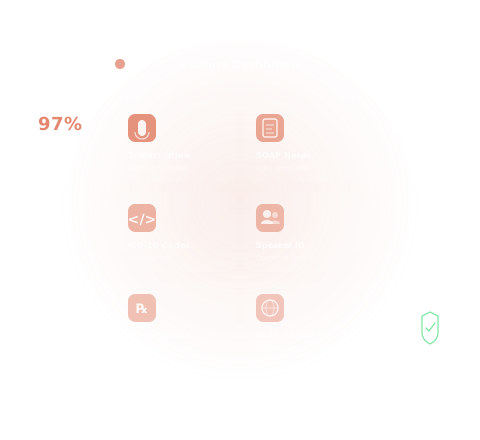
- Conversation capture and transcription: Records the consultation audio and converts it into text for downstream note creation.
- Speaker diarization: Separates doctor and patient speech to improve readability and help structure the clinical narrative.
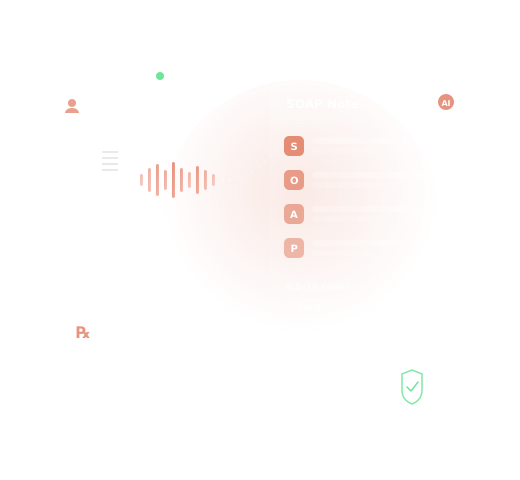
- Automatic SOAP note generation: Drafts subjective, objective, assessment, and plan sections from the consultation context.
- ICD-10 and CPT suggestions: Provides coding support based on the documented encounter, helping teams review likely coding options.
- Multilingual support: Useful in Indian care settings where consultations may shift between English and regional language usage.
- On-premise or private deployment options: Supports organizations that prefer deployment choices aligned with internal governance and IT workflow decisions.
These capabilities make an AI medical scribe in India relevant not only for individual doctors but also for multi-doctor ENT clinics and hospitals that want a more consistent documentation process. The product is designed to complement broader product information available on related MedScribe pages such as features and integrations, while staying focused here on practical ENT use.
How It Works
The workflow is designed to move from live consultation capture to clinician-approved documentation in a clear sequence.
- Capture the consultation conversation: During the ENT visit, the consultation audio is captured through the configured workflow. This may include history taking, symptom discussion, examination commentary, and treatment planning.
- Transcribe and structure the interaction: The system converts speech to text and applies speaker diarization to distinguish clinician and patient dialogue. This helps organize the encounter into a usable draft rather than a raw transcript.
- Generate a SOAP draft: Based on the structured conversation, MedScribe creates a draft SOAP note with key clinical details arranged into subjective, objective, assessment, and plan sections for review.
- Add coding support: The workflow can surface ICD-10 and CPT suggestions linked to the documented encounter, giving the clinician or billing team a starting point for coding review.
- Review, edit, and sign off: The clinician checks the draft, corrects wording, adds missing findings if needed, and approves the final note before it becomes part of the record. Human review is an operational checkpoint, not an optional extra.
- Choose deployment posture for operations: Depending on organizational needs, teams can evaluate on-premise or private deployment approaches as part of workflow and governance planning, especially where internal IT policies shape documentation systems.
Local context
In India, ENT practices often manage high patient volumes, multilingual conversations, and a mix of standalone clinics, day-care centres, and hospital OPDs. Documentation tools need to be practical in these environments rather than overly complex. An AI medical scribe in India can be useful where doctors want to spend less time typing and more time focusing on patient communication, examination, and treatment decisions.
Multilingual support matters in Indian healthcare because consultations may include English medical terminology alongside Hindi or other regional language phrases. Deployment flexibility also matters for organizations that prefer infrastructure choices aligned with internal data handling and IT workflows. In this context, AI medical scribe India healthcare adoption is often less about novelty and more about making documentation manageable in real clinical settings.
Use cases
- General ENT OPD: Draft notes for common complaints such as sinusitis, otitis, allergic rhinitis, sore throat, vertigo, and hearing concerns.
- Follow-up visits: Capture symptom progression, response to medication, and next-step plans without rebuilding the note from scratch each time.
- Procedure counselling: Document discussions around endoscopy, surgery planning, risks, benefits, and follow-up instructions.
- Post-operative reviews: Summarize recovery status, wound or symptom review, medication changes, and advice for the next visit.
- Multi-clinician departments: Support more standardized note structure across consultants, junior doctors, and support staff.
These use cases show why an AI medical scribe in India is relevant for both independent ENT specialists and larger institutions seeking more consistent documentation workflows.
FAQ
Below are common implementation questions from clinics and hospitals evaluating AI-assisted documentation for ENT workflows in India.
CTA
If your ENT clinic or hospital wants a more efficient way to turn consultations into structured notes, MedScribe offers a practical documentation workflow built around capture, transcription, SOAP drafting, coding support, and clinician review. Explore the product in more detail through the main MedScribe pages, or evaluate how an AI medical scribe in India can fit your OPD documentation process with the right deployment and review model for your team.