Introduction
Epilepsy clinics manage detailed, repeat-visit consultations where history, seizure descriptions, medication changes, triggers, adverse effects, and follow-up plans all need clear documentation. An AI medical scribe in India can help clinicians reduce manual note-taking during OPD sessions by turning consultation conversations into structured draft notes for review. For neurology and epilepsy teams, this is especially useful when visits involve caregiver input, longitudinal treatment tracking, and frequent medication titration.
MedScribe is designed as an AI documentation copilot for doctors and clinics. It supports conversation capture, transcription, SOAP note drafting, coding suggestions, and clinician review before final sign-off. Rather than replacing clinical judgment, it supports a more consistent documentation workflow that fits busy outpatient settings. For hospitals and specialty centres evaluating an AI medical scribe in India, the practical value is in faster first drafts, clearer records, and a more standardized path from consultation to finalized note.
In epilepsy practice, documentation often includes event semiology, duration, frequency, aura, post-ictal symptoms, medication adherence, rescue therapy instructions, and counselling points. An AI medical scribe India healthcare workflow can help organize these details into usable drafts while keeping the clinician in control of edits and approval.
Department workflow
Epilepsy clinic workflows are documentation-heavy because each visit may combine patient history, caregiver observations, prior episode review, medication reconciliation, and future management planning. In a typical OPD setting, the clinician listens to the patient and family, asks targeted questions, reviews prior records, and then documents findings in the chart. This can create a split focus between patient interaction and note completion.
An AI medical scribe in India fits into this workflow by supporting documentation at the point of care. During the consultation, the system captures the conversation and separates speakers where possible. It then structures the transcript into clinically relevant sections such as subjective history, observed findings, assessment points, and plan items. For epilepsy clinics, this can help organize recurring elements like seizure frequency since last visit, breakthrough episodes, medication side effects, sleep-related triggers, school or work impact, and counselling on safety precautions.
The result is not an auto-finalized record. Instead, the clinician receives a draft that can be checked, corrected, and signed off. This is important in specialty care, where nuanced interpretation matters. For teams comparing options for an AI medical scribe in India, the key workflow question is whether the tool supports real OPD habits without forcing extra clicks or duplicate entry.
Features mapped to workflow
Conversation capture and transcription: Supports the first step of documentation by converting spoken consultation content into text. This is useful when both patient and caregiver contribute to the history.
Speaker diarization: Helps distinguish between clinician and patient voices, which can improve draft structure in multi-speaker consultations common in epilepsy care.
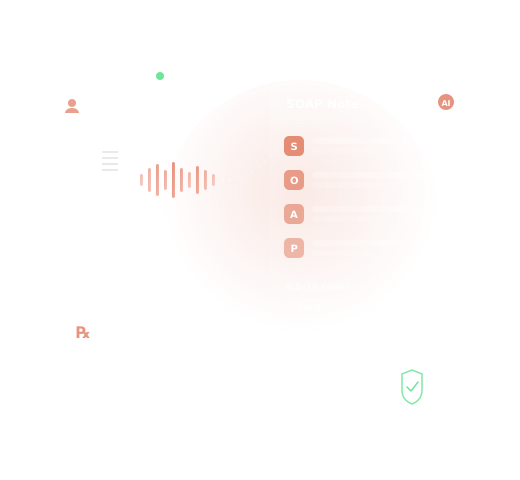
Automatic SOAP note generation: Converts the consultation into a structured draft note, helping clinicians move from raw conversation to a usable clinical format.
ICD-10 and CPT suggestions: Provides coding support based on the documented encounter, giving teams a starting point for review rather than a final coding decision.
Multilingual support: Useful in Indian healthcare settings where consultations may shift between English and regional languages.
On-premise deployment options: Supports organizations that prefer private or on-premise deployment as part of their internal governance and IT workflow decisions.
Clinician review before finalization: Keeps the doctor in control of edits, additions, and sign-off before the record is stored or shared downstream.
How It Works
The workflow for this AI medical scribe is designed around real consultation steps, from conversation capture to clinician-approved documentation.
- Capture the consultation conversation: During the epilepsy OPD visit, the system records or ingests the consultation audio. This may include patient history, caregiver observations, medication review, and clinician questions about seizure pattern, triggers, and recovery.
- Transcribe and structure the interaction: The audio is converted into text, with speaker diarization helping separate clinician and patient voices. The transcript is then organized into clinically relevant segments so the raw conversation is easier to review.
- Draft a SOAP note automatically: Based on the structured transcript, the system generates a draft SOAP note. In epilepsy clinics, this can include subjective history of episodes, relevant observations, assessment themes, and the treatment or follow-up plan discussed during the visit.
- Suggest coding support: The platform surfaces ICD-10 and CPT suggestions linked to the documented encounter. These suggestions are intended to support workflow efficiency and still require clinician or billing review before use.
- Review, edit, and sign off: The clinician checks the draft note, corrects terminology, adds missing context such as EEG or imaging references if needed, and approves the final version. Human review is the operational checkpoint before record finalization.
- Choose deployment posture for operations: Clinics and hospitals can evaluate cloud, private, or on-premise deployment approaches based on internal IT preferences, workflow design, and data governance expectations. This supports workflows aligned with organizational requirements rather than offering blanket guarantees.
Local context
In India, epilepsy clinics often work across high patient volumes, mixed digital maturity, and multilingual consultations. Some centres may already use hospital information systems or specialty EMRs, while others rely on a combination of digital records and manual processes. An AI medical scribe in India is most useful when it adapts to these realities instead of assuming a single workflow model.
For example, a neurologist may conduct part of the consultation in English, switch to Hindi or another regional language for counselling, and receive caregiver input in a different speaking style. Documentation tools need to support this practical environment. An AI medical scribe India healthcare solution should also fit OPD routines where clinicians need quick review, not long post-visit cleanup. For larger hospitals, deployment posture may also matter, especially when IT teams prefer private infrastructure choices as part of internal governance planning.
Use cases
New epilepsy evaluation: Capture detailed symptom history, event description, prior treatment, and family observations into a structured first draft.
Follow-up visits: Document seizure frequency changes, medication adherence, side effects, and response to treatment adjustments.
Caregiver-led consultations: Organize multi-speaker conversations where parents or family members provide much of the history.
Medication counselling: Draft plan sections covering dose changes, rescue medication instructions, and follow-up timing.
High-volume OPD sessions: Reduce the burden of writing repetitive note sections manually while preserving clinician review.
Specialty clinic standardization: Support more consistent note structure across consultants, fellows, and clinic locations.
For providers assessing an AI medical scribe in India, these use cases matter because they reflect everyday documentation pressure rather than abstract automation goals. The value is practical: better first drafts, less repetitive typing, and a clearer review path before the note becomes part of the patient record.
FAQ
Can this be used in epilepsy follow-up consultations?
Yes. It is suited to repeat visits where clinicians need to document seizure frequency, medication response, side effects, and follow-up plans in a structured way.
Does the system finalize notes automatically?
No. It creates draft documentation and coding suggestions, but clinician review, edits, and final sign-off remain essential before the record is finalized.
Can it handle multilingual consultations common in India?
The product supports multilingual workflows, which can be helpful when consultations include English and regional language usage in the same visit.
Is deployment limited to one model?
No. Teams can evaluate deployment options such as private or on-premise setups based on operational and governance preferences.
CTA
If your neurology or epilepsy team wants to reduce documentation load without losing control over clinical review, explore how an AI medical scribe in India can fit your OPD workflow. Review the core product at /medscribe, compare capabilities at /medscribe/features, and assess how draft notes, coding support, multilingual capture, and deployment choices can support your clinic's day-to-day documentation process.