Introduction
Family medicine teams manage a wide mix of visits every day, from acute fever and cough to diabetes follow-up, hypertension review, preventive counselling, medication refills, and chronic care coordination. That variety creates a documentation burden that can slow consultations, extend OPD queues, and add after-hours charting. An AI medical scribe in India can help reduce that load by turning consultation conversations into structured clinical drafts that clinicians can review, edit, and finalize. For clinics and hospitals, the goal is practical: support faster note completion, improve consistency in records, and keep the doctor focused on the patient interaction rather than typing throughout the visit.
MedScribe is designed as an AI documentation copilot for daily practice. It supports automatic SOAP note generation, coding suggestions, speaker diarization, multilingual conversations, and deployment choices such as on-premise or private environments depending on workflow and governance needs. In family medicine, where one doctor may see a broad spectrum of conditions in a single session, this kind of support can help standardize documentation without forcing a rigid template on every encounter. The result is a more usable draft note that still depends on clinician judgment and final sign-off.
Department workflow
Family medicine workflows in India often involve high-volume OPD schedules, repeat visits, mixed language conversations, and a need to document both immediate symptoms and long-term care plans. A typical visit may include patient history, current complaints, medication adherence review, examination findings, counselling, investigations, and follow-up advice. Doctors may also need to capture comorbidities, family history, lifestyle factors, and referral decisions in a short time window.
In this setting, an AI medical scribe in India is most useful when it fits the natural consultation flow. Instead of asking clinicians to stop and enter every detail manually, the system can capture the conversation, separate speakers, structure the transcript, and prepare a draft SOAP note. This is especially relevant in family medicine because visits are often conversational and longitudinal. The same patient may return multiple times, so clear and consistent notes matter for continuity of care, medication review, and follow-up planning.
Features mapped to workflow
For family medicine teams, product value comes from how features map to real OPD tasks. Automatic SOAP note generation helps convert a broad conversation into a familiar clinical format with subjective history, objective findings, assessment, and plan. Speaker diarization helps distinguish doctor and patient speech, which is useful in busy rooms where history-taking is detailed and nuanced. Multilingual support matters because many consultations shift between English and regional languages, and documentation still needs to remain clinically usable.
Coding suggestions such as ICD-10 and CPT support can help clinicians or administrative teams prepare more complete records and billing-ready documentation where relevant, while still keeping the clinician in control of what is accepted. Deployment options such as on-premise or private setups can support organizations that prefer tighter control over where documentation workflows run. For hospitals and clinics evaluating an AI medical scribe in India, these capabilities are most valuable when they reduce repetitive work without interrupting the consultation itself.
The product also complements broader product pages such as feature and integration hubs by focusing here on day-to-day family medicine use: recurring chronic disease visits, preventive care, minor illness consultations, medication counselling, and referral documentation. That practical fit is often what determines adoption.
How It Works
The workflow is designed to move from conversation capture to clinician-approved documentation in a clear sequence:
- Capture the consultation conversation: During the visit, the system records the doctor-patient interaction through the configured setup. This can support multilingual conversations common in family medicine OPDs and prepares the input for downstream processing.
- Transcribe and separate speakers: The audio is converted into text, and speaker diarization helps identify who said what. This is useful when the doctor asks structured questions, the patient describes symptoms in detail, and attendants add context.
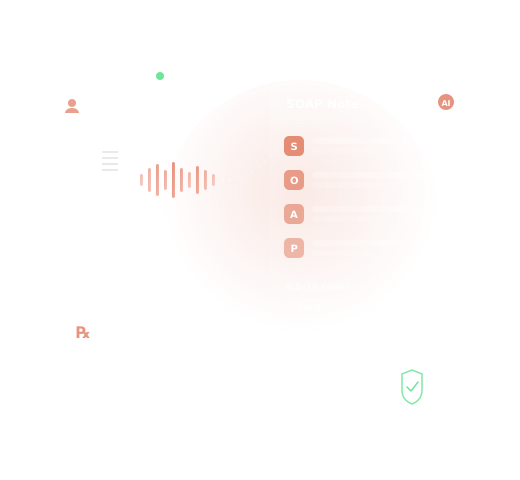
- Structure the encounter into a draft SOAP note: The transcript is organized into clinically relevant sections such as history, findings, assessment, and plan. Instead of a raw transcript, the clinician gets a usable draft aligned to routine documentation habits in family medicine.
- Generate coding support and visit-ready details: Based on the documented encounter, the system can suggest ICD-10 and CPT codes for clinician review. These suggestions are intended to support documentation workflows, not replace clinical or administrative judgment.
- Review, edit, and sign off: The clinician checks the draft note, corrects wording, adds missing findings, confirms coding choices if used, and finalizes the record. Human review is the operational checkpoint before any note becomes part of the patient chart.
- Choose deployment posture for workflow governance: Clinics and hospitals can evaluate on-premise or private deployment options based on internal IT preferences, data handling expectations, and operational processes. This is a workflow and governance decision, not a guarantee claim.
Local context
In India, family medicine settings range from independent clinics to multispecialty hospitals and community-focused outpatient centers. Documentation needs can vary by organization, but common challenges include high patient throughput, mixed digital maturity, and the need to maintain clear records across repeat visits. An AI medical scribe in India should therefore be practical, flexible, and easy to evaluate against existing OPD routines rather than positioned as a one-size-fits-all replacement for clinical documentation processes.
For many teams, multilingual support is not a nice-to-have but a daily requirement. Doctors may counsel in English, Hindi, or regional languages within the same encounter. Family medicine also involves preventive advice, chronic disease education, and follow-up planning, which can create long conversational notes. A tool that helps convert those interactions into structured drafts can support more consistent records while keeping the clinician responsible for final accuracy.
Use cases
Common family medicine use cases include acute symptom visits such as fever, cough, sore throat, gastritis, or body ache; chronic disease follow-ups for diabetes, hypertension, thyroid disorders, and asthma; preventive care visits involving screening and lifestyle counselling; medication refill consultations; and post-discharge follow-up where continuity notes matter. In each of these scenarios, the documentation burden can be repetitive even when the clinical details differ.
An AI medical scribe India healthcare workflow can also help when doctors need to document counselling around diet, exercise, medication adherence, warning signs, and return precautions. These details are important but often time-consuming to type in full. By preparing a draft note from the consultation itself, the system supports more complete records while preserving clinician oversight. This makes an AI medical scribe in India relevant not only for large hospitals but also for growing clinics that want better documentation discipline without adding friction to every encounter.
FAQ
Can this be used for routine OPD consultations in family medicine?
Yes. It is designed to support everyday outpatient workflows such as acute visits, chronic care follow-ups, counselling, and medication review by preparing draft notes from the consultation conversation.
Does the system replace clinician documentation review?
No. The draft note and coding suggestions should be reviewed, edited where needed, and approved by the clinician before the record is finalized.
How does multilingual support help in India?
Many consultations involve a mix of English and local languages. Multilingual support can help capture the encounter more naturally and turn it into a structured draft note for review.
Are deployment options available for organizations with specific IT preferences?
Yes. On-premise or private deployment options can be evaluated as part of workflow and governance planning, depending on the clinic or hospital environment.
CTA
If your team is evaluating an AI medical scribe in India for family medicine, focus on fit with real OPD workflows: conversation capture, structured SOAP drafting, coding support, multilingual use, and clinician sign-off. Explore the product overview, features, integrations, and pricing paths to assess how the workflow can support your clinic or hospital documentation process in a practical way.