Introduction
Front office teams set the pace for the entire outpatient journey. When registration is slow, incomplete, or disconnected from the consultation, doctors lose time and patients repeat information. An AI medical scribe in India can help clinics and hospitals reduce manual documentation effort by turning consultation conversations into structured notes that are easier to review, complete, and carry forward into downstream workflows. For registration and front office teams, the value is not that they replace clinical judgment, but that they support cleaner intake, better handoffs, and more consistent records from the first patient interaction onward.
In Indian OPD settings, front office staff often manage high patient volumes, multilingual interactions, repeat visits, and varying documentation habits across departments. A practical AI medical documentation copilot can support these realities by capturing the consultation, structuring the transcript, drafting SOAP notes, and suggesting coding support for clinician review. This helps registration teams prepare more complete patient context for the doctor while keeping the final sign-off with the clinician. The result is a workflow that is more usable for daily operations, not just a technology layer added on top.
Department workflow
In front office registration, the workflow usually begins with patient arrival, identity confirmation, visit reason capture, and routing to the right doctor or service line. In many clinics, this process still depends on handwritten notes, fragmented software screens, or verbal relays between reception, nursing, and the doctor. That creates avoidable delays and increases the chance of missing details such as prior complaints, repeat visit context, or language preferences.
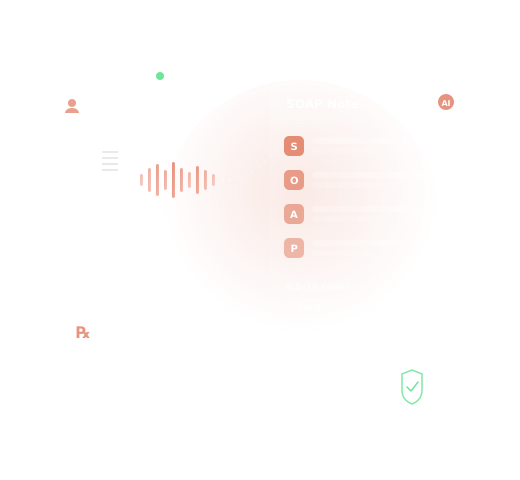
With an AI medical scribe in India, the front office can support a more connected workflow. Registration captures the basic visit context and patient identifiers. During the consultation, the conversation is recorded with appropriate operational consent processes defined by the provider. The system then transcribes and structures the interaction into a draft note that the clinician can review. This means the front office does not need to create clinical notes, but it can help ensure that the patient journey starts with cleaner data and ends with more complete documentation for billing, follow-up, and future visits.
For hospitals and multispecialty clinics, this is especially useful where registration teams coordinate with multiple doctors and OPD desks. A standardized documentation flow can reduce back-and-forth, support better appointment closure, and improve handoffs to billing or medical records teams.
Features mapped to workflow
Conversation capture: Supports the consultation workflow by capturing doctor-patient dialogue that would otherwise need manual note-taking.
Speaker diarization: Helps distinguish between speakers so the transcript is easier to interpret during review, especially in busy OPD environments where multiple participants may be present.
Automatic SOAP note generation: Converts the conversation into a structured draft note, giving clinicians a usable starting point instead of a blank screen.
ICD-10 and CPT suggestions: Provides coding support based on the documented interaction, helping teams prepare records for downstream administrative workflows. Suggestions still require human validation.
Multilingual support: Useful for Indian healthcare settings where patients and staff may switch between English and regional languages during registration and consultation.
On-premise deployment options: Supports organizations that prefer private or on-premise setups as part of their internal governance and IT workflow decisions.
Review and edit controls: Keeps the clinician in charge of edits, approval, and final sign-off before the record is finalized.
How It Works
The product workflow is designed around real consultation and documentation steps rather than generic automation.
- Capture the consultation conversation: Once the patient is registered and routed, the consultation audio is captured within the provider's chosen workflow. Front office teams can help ensure the visit is correctly linked to the patient record and appointment context before the encounter begins.
- Transcribe and structure the interaction: The system converts speech into text and uses speaker diarization to separate doctor and patient dialogue. This creates a structured transcript that is easier to navigate than raw audio and supports multilingual conversations common in Indian OPD settings.
- Draft a SOAP note automatically: Based on the structured transcript, the system prepares a draft SOAP note. This gives the clinician a usable summary of subjective history, objective details, assessment, and plan, reducing the need to document everything manually after the visit.
- Suggest coding support: The platform can surface ICD-10 and CPT suggestions from the documented encounter. These are intended to support administrative and billing workflows, not replace clinician or coding team review.
- Review, edit, and sign off: The clinician reviews the draft note, makes edits where needed, validates coding suggestions, and completes final sign-off before the record is finalized. This human checkpoint is essential for accuracy and workflow accountability.
- Choose deployment posture for operations: Depending on the organization's IT and governance preferences, teams can evaluate private or on-premise deployment approaches. This is a workflow and infrastructure choice that can support internal data handling practices.
Local context
Healthcare providers in India often manage a mix of walk-ins, scheduled OPD visits, repeat patients, and multilingual communication across front office and clinical teams. That makes documentation consistency difficult, especially when doctors are balancing patient volume with administrative work. An AI medical scribe in India is most useful when it fits these practical realities: quick patient throughput, variable documentation styles, and the need for better continuity between registration, consultation, and follow-up.
For smaller clinics, the focus may be on reducing after-hours documentation and improving visit summaries. For larger hospitals, the focus may be on standardizing note quality across departments and supporting more reliable handoffs to coding, billing, and records teams. In both cases, the goal is not to automate away clinical responsibility, but to make documentation more manageable and more consistent. That is why an AI medical scribe in India should be evaluated on workflow fit, review controls, multilingual usability, and deployment flexibility.
Use cases
High-volume OPD registration: Front office teams can link patient visit context to the consultation workflow so documentation starts with the right encounter details.
Repeat patient visits: Draft notes can help clinicians quickly review the current complaint and update the record with less manual effort.
Multispecialty clinics: Standardized note drafting supports more consistent documentation across doctors with different styles.
Multilingual consultations: Useful where patients speak in a regional language while staff document in English.
Billing and coding preparation: Coding suggestions can support downstream teams after clinician review and approval.
Private deployment needs: Organizations with internal IT preferences can assess on-premise or private deployment models as part of operational planning.
Across these scenarios, AI medical scribe India healthcare adoption works best when the product supports existing OPD routines instead of forcing teams into a rigid process. A practical AI medical scribe in India should help registration and clinical teams move from fragmented notes to a more reviewable, structured documentation flow.
FAQ
Can front office staff use this without creating clinical notes?
Yes. Front office teams mainly support patient registration, encounter linking, and smoother handoffs. The clinical note draft is reviewed and finalized by the clinician.
Does it replace doctor review?
No. The workflow is designed to support documentation efficiency, but the clinician reviews, edits, and signs off before the record is finalized.
Is it useful for multilingual consultations in India?
Yes, multilingual support can help in settings where patients and providers switch between English and regional languages during the visit.
Can it support coding workflows?
It can provide ICD-10 and CPT suggestions based on the documented encounter, which can help downstream workflows after human validation.
What deployment options are relevant for hospitals?
Some providers may prefer private or on-premise deployment approaches based on internal governance, IT architecture, and workflow needs.
CTA
If your clinic or hospital wants to reduce documentation burden and improve front office to consultation handoffs, explore how an AI medical scribe in India can fit your OPD workflow. Review the core product, feature details, integration approach, and pricing path based on your operational needs. The right setup should support faster documentation, clearer review steps, and better continuity across registration, consultation, and follow-up.