Introduction
Gastroenterology consultations often involve detailed symptom histories, prior investigations, medication changes, diet discussions, and follow-up planning. That makes documentation important but time-consuming in busy OPD and hospital settings. An AI medical scribe in India can help gastroenterologists and care teams turn consultation conversations into structured clinical notes that are easier to review, edit, and finalize. Instead of relying only on manual typing after every visit, clinics can support faster note preparation while keeping the clinician in control of the final record.
For gastroenterology practices, the value is practical: capture relevant history, organize findings into a SOAP format, support coding suggestions, and reduce repetitive documentation work across routine and complex visits. MedScribe is designed as an AI documentation copilot for doctors and clinics, helping convert consultation dialogue into usable notes for daily workflows in India healthcare environments.
Department workflow
Gastroenterology workflows usually include high-volume OPD visits, procedure-related documentation, chronic disease follow-up, and coordination with diagnostics. A typical visit may cover abdominal pain, reflux, IBS, IBD, liver disease, GI bleeding, constipation, diarrhea, endoscopy planning, medication adherence, and review of lab or imaging results. Clinicians often need to document symptom duration, red-flag signs, prior treatment response, comorbidities, and next-step advice in a consistent format.
In many clinics, this creates a familiar bottleneck: the consultation moves quickly, but note completion lags behind. Doctors may switch between listening, asking questions, reviewing prior records, and typing. An AI medical scribe in India supports this workflow by helping structure the conversation into draft documentation that reflects the visit flow. This is useful for solo specialists, multispecialty clinics, and hospitals where gastroenterology teams need cleaner handoffs, more consistent notes, and less after-hours charting.
The workflow fit is especially relevant when visits involve multilingual conversations, family attendants, and repeated follow-ups. Speaker separation, structured summaries, and editable drafts can help teams maintain clarity without changing how the clinician conducts the consultation.
Features mapped to workflow
For gastroenterology, documentation support should map to what actually happens in the room. MedScribe focuses on capabilities that align with day-to-day clinical use:
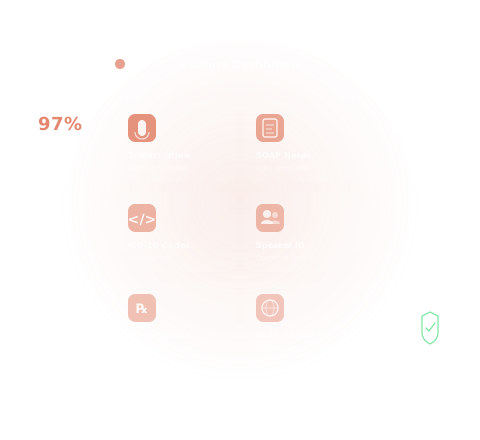
- Conversation capture and transcription: Supports turning doctor-patient dialogue into text for note preparation.
- Speaker diarization: Helps distinguish speakers during consultations, useful when both patient and clinician contribute detailed histories.
- Automatic SOAP note generation: Organizes the encounter into subjective, objective, assessment, and plan sections for easier review.
- ICD-10 and CPT suggestions: Provides coding support based on documented content, with clinician review before use.
- Multilingual support: Useful in India healthcare settings where consultations may shift between English and regional languages.
- On-premise deployment options: Supports organizations that prefer private or on-premise setups as part of their governance and workflow decisions.
These features are not meant to replace clinical judgment. They are designed to reduce repetitive documentation effort and support workflows aligned with how gastroenterology teams already work.
How It Works
The product workflow is built around end-to-end clinical documentation support, from consultation capture to final sign-off:
- Capture the consultation conversation: During the OPD visit or inpatient review, the discussion is captured for transcription. This may include symptom history, prior investigations, medication use, diet advice, and follow-up planning relevant to gastroenterology.
- Transcribe and structure the encounter: The system converts the conversation into text and applies speaker diarization to separate clinician and patient contributions. This helps organize long GI histories into a more readable draft.
- Generate a SOAP draft: Based on the structured transcript, the platform prepares a draft SOAP note. For gastroenterology, this can help summarize presenting complaints, relevant findings, assessment themes, and plan items such as tests, medication changes, or procedure advice.
- Add coding support: The draft can include ICD-10 and CPT suggestions derived from the documented encounter. These are support tools for review, not automatic final coding decisions.
- Clinician review and edit: The doctor or authorized team member reviews the draft, corrects details, refines the assessment, and confirms the plan. Human review is a required checkpoint before record finalization.
- Finalize based on deployment choice: After edits and sign-off, the note can move into the clinic workflow according to the organization’s setup, including private or on-premise deployment preferences where needed.

This workflow makes an AI medical scribe in India practical for real clinical operations because it keeps the doctor in control while reducing manual note preparation steps.
Local context
India healthcare environments often combine high patient volumes, mixed digital maturity, multilingual communication, and varied infrastructure across clinics and hospitals. In gastroenterology, this can mean short consultation windows but documentation that still needs to be detailed and clinically useful. An AI medical scribe in India should therefore be practical, flexible, and easy to fit into existing OPD routines rather than requiring major workflow changes.
For some organizations, deployment posture matters as much as note quality. Private or on-premise options may be considered as part of internal IT, governance, and data-handling preferences. The goal is not to promise a legal outcome, but to support workflows aligned with organizational requirements and documentation practices. In this context, AI medical scribe India healthcare adoption is often driven by usability, review controls, and the ability to support clinicians without adding operational friction.
Use cases
- Busy OPD clinics: Prepare draft notes for reflux, dyspepsia, constipation, diarrhea, and abdominal pain visits.
- Chronic follow-up care: Support repeat documentation for IBD, liver disease, pancreatitis, and long-term medication management.
- Procedure counseling: Summarize discussions around endoscopy, colonoscopy, preparation instructions, and consent-related counseling notes.
- Hospital-based GI teams: Improve consistency in documentation across consultants, residents, and support staff workflows.
- Multilingual consultations: Help structure encounters where patients switch between English and regional languages during history taking.
These use cases show how an AI medical scribe in India can support both routine and complex gastroenterology documentation while preserving clinician oversight.
FAQ
Common questions from gastroenterology clinics and hospitals are answered below.
CTA
If your gastroenterology team wants to reduce manual charting and improve note readiness after consultations, MedScribe offers a practical documentation workflow for India healthcare settings. Explore how conversation capture, SOAP drafting, coding support, multilingual handling, and review checkpoints can fit your OPD or hospital process. Visit /medscribe to see the product overview, review capabilities on /medscribe/features, and assess whether an AI medical scribe in India fits your documentation workflow.