Introduction
An AI medical scribe in India can help general cardiology teams reduce documentation burden during busy OPD sessions, follow-up visits, and inpatient reviews. For cardiologists, the challenge is rarely just note-taking. It is capturing symptoms, risk factors, medication history, examination findings, investigations, and treatment plans in a format that is clinically usable and easy to review. MedScribe is designed as an AI documentation copilot that converts consultation conversations into structured draft notes and coding support, while keeping the clinician in control of edits and final sign-off.
For hospitals and clinics in India, documentation needs are practical: faster note completion, clearer records, and less after-hours typing. An AI medical scribe in India fits this need by supporting SOAP note generation, speaker diarization, multilingual conversations, and workflow choices such as private or on-premise deployment. The goal is not to replace clinical judgment. It is to support cardiology teams with a more consistent documentation process that aligns with day-to-day care delivery.
Department workflow
General cardiology workflows often involve high patient volumes and repeated documentation patterns. A typical visit may include chest pain assessment, hypertension review, dyslipidemia management, palpitations, heart failure follow-up, medication titration, and interpretation of prior ECG or echo findings. In many settings, the doctor must listen carefully, ask focused questions, examine the patient, explain the plan, and still complete a detailed note before moving to the next consultation.
This creates friction at multiple points: incomplete histories, delayed note closure, inconsistent structure across clinicians, and extra time spent summarizing the same recurring information. In cardiology, where longitudinal follow-up matters, note quality affects continuity of care. An AI documentation layer can support this workflow by capturing the consultation, separating speakers, structuring the conversation into clinically relevant sections, and preparing a draft that the clinician can quickly verify.
For Indian cardiology practices, this is especially useful in mixed-language consultations where patients may speak in English, Hindi, or regional languages while the final record needs to remain clear and standardized. An AI medical scribe in India is most valuable when it adapts to these practical realities rather than forcing a rigid template.
Features mapped to workflow
MedScribe maps core product capabilities to the way cardiology teams actually work:
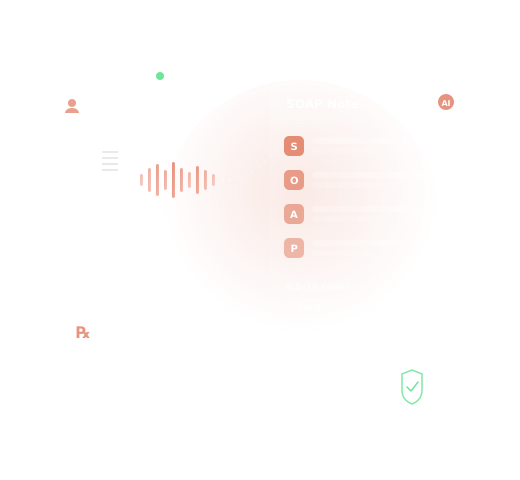
- Automatic SOAP note drafting: Converts consultation dialogue into structured subjective, objective, assessment, and plan sections for faster review.
- Speaker diarization: Distinguishes clinician and patient speech, helping preserve context in symptom history and counselling discussions.
- Multilingual support: Useful for consultations where patients switch between English and Indian languages during history taking.
- ICD-10 and CPT suggestions: Supports coding workflows by surfacing likely codes based on the documented encounter, subject to clinician review.
- Human review before finalization: Drafts are meant to be checked, edited, and approved by the treating clinician before becoming part of the record.
- Private or on-premise deployment options: Supports organizations that prefer tighter control over infrastructure and governance decisions.
These features are relevant across new consultations, chronic disease follow-ups, preventive cardiology visits, and post-procedure reviews. Instead of asking doctors to change their consultation style, the product is designed to support workflows already common in cardiology OPD and hospital practice.
How It Works
The workflow of this AI medical scribe is built around real clinical documentation steps rather than generic voice dictation.
- Conversation capture during the consultation: The clinician conducts the visit as usual while the system captures the interaction. This may include symptom discussion, past history, medication review, examination commentary, and treatment counselling. Speaker diarization helps separate patient and clinician contributions.
- Transcription and clinical structuring: The captured conversation is transcribed and organized into medically relevant segments. Instead of leaving the output as raw text, the system identifies likely history elements, findings, and plan-related statements that can be used in a structured note.
- SOAP draft generation: Based on the structured transcript, MedScribe prepares a draft SOAP note. In cardiology, this can help organize complaints such as chest discomfort, dyspnea, edema, blood pressure review, medication adherence, and follow-up recommendations into a readable clinical format.
- Coding support suggestions: The platform can surface ICD-10 and CPT suggestions linked to the documented encounter. These are intended to support administrative and billing workflows, with clinician or authorized staff review before use.
- Clinician review, edits, and sign-off: The doctor reviews the draft, corrects nuances, adds missing findings, and confirms the final assessment and plan. This human checkpoint is essential before the note is finalized in the patient record.
- Workflow and deployment choice: Organizations can evaluate whether a private or on-premise setup better suits their operational and governance preferences. This is presented as a workflow decision to support internal processes, not as a blanket compliance claim.
Local context
In India, cardiology documentation often happens under time pressure across standalone clinics, multispecialty hospitals, and growing outpatient networks. Teams may need to balance patient throughput with complete records, especially when follow-up care depends on prior medication changes, risk factor trends, and test recommendations. An AI medical scribe in India can support these settings by reducing repetitive typing and helping standardize note structure without disrupting the consultation.
The local context also includes multilingual communication, variable digital maturity, and different infrastructure preferences across organizations. Some providers may want cloud-based convenience, while others may prefer private or on-premise deployment aligned with internal IT and governance workflows. This is where an AI medical scribe India healthcare solution should remain flexible and practical rather than overly theoretical.
Use cases
- High-volume OPD clinics: Draft notes faster for hypertension, lipid disorder, chest pain, and routine follow-up visits.
- Heart failure follow-up: Capture symptom progression, medication adjustments, and counselling points in a structured format.
- Preventive cardiology: Document risk factors, lifestyle advice, and longitudinal care plans more consistently.
- Mixed-language consultations: Support note creation when patient conversations move between English and local languages.
- Hospital-based cardiology teams: Improve documentation flow for consults and reviews where multiple clinicians contribute to care.
Across these scenarios, the value comes from making documentation easier to review and finalize, not from bypassing clinician oversight. That is why the final note remains under doctor control.
FAQ
Can this be used during a live cardiology consultation?
Yes. The workflow is designed around live consultation capture, transcription, note drafting, and clinician review before final sign-off.
Does it only create transcripts?
No. It goes beyond raw transcription by structuring the conversation into draft SOAP notes and surfacing coding suggestions for review.
Is it useful for multilingual consultations in India?
Yes. Multilingual support can help in settings where patients and clinicians switch between English and Indian languages during the visit.
Can hospitals choose how it is deployed?
Yes. Private or on-premise deployment options can support organizations that want deployment choices aligned with internal workflow and governance needs.
CTA
If your cardiology clinic or hospital wants a more efficient documentation process, explore how an AI medical scribe in India can support consultation capture, SOAP drafting, coding assistance, and clinician-reviewed final notes. Review the product pathways for MedScribe, compare capabilities on features, and assess fit for your OPD or hospital workflow.