Introduction
An AI medical scribe in India can help general medicine teams reduce time spent on routine documentation while keeping the clinician in control of the final record. In busy OPD settings, doctors often move quickly between history taking, examination, assessment, treatment planning, and follow-up instructions. That pace can make note completion inconsistent, especially when patient volumes are high and documentation standards vary across clinics and hospitals. An AI medical documentation copilot supports this workflow by turning consultation conversations into structured draft notes that are easier to review, edit, and finalize.
For general medicine, the value is practical: less manual typing during or after consultations, more consistent SOAP formatting, and support for coding suggestions that can be reviewed before submission or record closure. This page explains how an AI medical scribe in India fits into everyday physician workflows, what features matter most for general medicine, and how teams can evaluate deployment choices such as private or on-premise setups based on operational needs. The focus is not on replacing clinical judgment, but on helping doctors document faster and more consistently.
Department workflow
General medicine consultations often involve a broad mix of symptoms, chronic disease follow-ups, medication reviews, preventive advice, and referrals. A typical workflow starts with patient history, current complaints, and prior treatment context. The doctor then performs an examination, forms a differential or working diagnosis, discusses investigations or treatment, and closes with instructions for medicines, lifestyle changes, and follow-up timing. Documentation must capture all of this clearly enough for continuity of care.
In many Indian clinics and hospitals, this workflow is further shaped by multilingual conversations, variable consultation lengths, and the need to maintain throughput during peak OPD hours. Doctors may switch between English medical terminology and patient-friendly explanations in Hindi or other regional languages. An AI medical scribe in India is useful in this setting because it can support conversation capture, speaker separation, and structured note drafting without forcing the clinician to change the natural flow of the visit.
For general medicine teams, the documentation burden usually appears in three places: writing complete notes, standardizing SOAP structure, and preparing diagnosis or procedure coding suggestions for review. A documentation copilot can support each of these steps while preserving a human review checkpoint before the note becomes part of the final record.
Features mapped to workflow
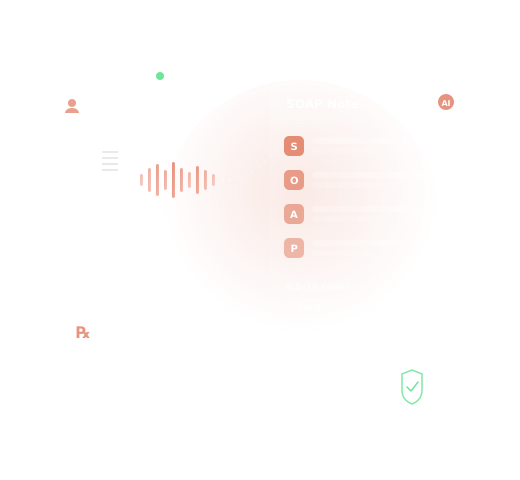
Automatic SOAP note generation: After a consultation, the system can draft Subjective, Objective, Assessment, and Plan sections from the captured conversation. This helps general physicians move from raw dialogue to a usable clinical note faster.
Speaker diarization: In a real consultation, both doctor and patient speak, and sometimes an attendant contributes as well. Speaker diarization helps separate who said what, making the draft easier to review and reducing confusion in the note.
Multilingual support: General medicine in India often involves mixed-language consultations. Multilingual support can help capture the conversation more naturally and convert it into a structured English clinical draft where needed.
ICD-10 and CPT suggestions: Coding support can assist teams by surfacing likely codes based on the documented encounter. These are suggestions for clinician or billing review, not automatic final coding decisions.
On-premise deployment options: Some hospitals and larger groups prefer infrastructure choices that align with internal governance and IT policies. Deployment posture can be evaluated as an operational decision based on workflow, data handling preferences, and integration needs.
Workflow-aligned review: The product is designed to support workflows where the clinician reviews, edits, and signs off before the record is finalized. That keeps the doctor in control of accuracy and completeness.
How It Works
The workflow of this AI medical documentation copilot is built around the actual consultation lifecycle in general medicine.
- Capture the consultation conversation: The doctor starts with a normal patient interaction in the OPD or clinic room. The system captures the conversation audio from the visit and prepares it for processing. This step is designed to fit routine consultations rather than requiring a separate dictation session.
- Transcribe and structure the interaction: The captured conversation is transcribed, with speaker diarization used to distinguish clinician and patient speech. The transcript is then organized into clinically relevant segments such as symptoms, history, examination details, and treatment discussion.
- Draft a SOAP note automatically: Based on the structured transcript, the system generates a draft SOAP note. For general medicine, this can include presenting complaints, relevant history, objective findings discussed during the visit, assessment summary, and plan elements such as medicines, tests, and follow-up advice.
- Surface coding suggestions for review: The draft note can be paired with ICD-10 and CPT suggestions derived from the documented encounter. These suggestions support downstream documentation and billing workflows, but they remain reviewable rather than final by default.
- Clinician review, edit, and sign-off: The doctor reviews the generated note, corrects details, adds missing clinical nuance, and confirms the final version before record completion. This human checkpoint is essential because the clinician remains responsible for the final documentation.
- Choose deployment posture based on operations: Depending on the clinic or hospital setup, teams can evaluate private or on-premise deployment options to support workflows aligned with internal governance, IT preferences, and integration planning.
Local context
In India, general medicine practices often balance high patient volumes with the need for clear records across first visits, repeat consultations, chronic disease reviews, and referrals. Documentation tools need to be practical, not disruptive. That is why an AI medical scribe in India should support fast OPD workflows, mixed-language conversations, and review-first documentation habits rather than forcing a rigid template at the point of care.
For independent clinics, the priority may be reducing after-hours note completion and improving consistency across doctors. For hospitals and larger outpatient networks, the focus may include standardization, coding support, and deployment choices that fit internal IT environments. In both cases, the goal is similar: make documentation easier to complete without taking attention away from the patient encounter.
An AI medical scribe in India is especially relevant where clinicians want a practical bridge between natural conversation and structured records. Instead of relying only on manual typing or post-visit recall, teams can use AI-generated drafts as a starting point and keep final approval with the doctor.
Use cases
Busy OPD clinics: Help physicians complete notes faster during high-volume consultation blocks.
Chronic disease follow-ups: Support repeat documentation for hypertension, diabetes, thyroid disorders, and other long-term conditions where medication and follow-up plans must be recorded consistently.
Multilingual consultations: Capture mixed-language interactions and convert them into structured clinical drafts that are easier to store and review.
Hospital outpatient departments: Improve note consistency across multiple doctors while supporting coding review workflows.
Post-consultation documentation cleanup: Reduce the burden of finishing notes after clinic hours by generating a draft during or immediately after the encounter.
FAQ
Can this be used during routine general medicine consultations?
Yes. The workflow is designed around standard consultations, from conversation capture to draft note creation and clinician review.
Does it replace the doctor's documentation responsibility?
No. The clinician reviews, edits, and signs off on the final note before it becomes part of the record.
Can it help with coding?
Yes. It can provide ICD-10 and CPT suggestions based on the documented encounter, which can then be reviewed by the clinician or billing team.
Is it suitable for multilingual patient interactions?
It is designed with multilingual support to better fit real-world consultations common in India.
CTA
If your team is evaluating an AI medical scribe in India for general medicine, focus on workflow fit: how well it captures consultations, drafts SOAP notes, supports coding review, and keeps clinicians in control of final sign-off. Explore the product overview, features, integrations, and pricing paths to assess whether the setup matches your clinic or hospital documentation process.