Introduction
An AI medical scribe in India can help genetics lab teams reduce documentation burden during consultations, counselling sessions, follow-up discussions, and clinician-lab coordination. In genetics workflows, conversations often include family history, phenotype details, prior reports, consent discussions, and next-step recommendations. Capturing these details clearly is important, but manual note-taking can slow clinicians and counsellors during busy OPD and referral workflows.
MedScribe is designed as an AI medical documentation copilot that converts consultation conversations into structured clinical notes and coding suggestions. For genetics labs and associated clinical teams, this supports more consistent documentation without changing the core clinical decision-making process. Instead of replacing clinician judgment, it helps organize spoken information into usable drafts that can be reviewed, edited, and signed off by the treating professional.
For hospitals, specialty clinics, and diagnostic networks evaluating an AI medical scribe in India, the practical value is straightforward: less time spent typing, better continuity across visits, and a clearer path from conversation to record completion. The product is designed to align with real healthcare workflows in India, including multilingual interactions, specialist consultations, and governance choices such as private or on-premise deployment where needed.
Department workflow
Genetics lab workflows are rarely limited to a single doctor-patient interaction. A typical case may involve referral intake, pre-test counselling, family history capture, phenotype discussion, test recommendation, sample planning, post-test interpretation, and communication with the referring clinician. Documentation may also need to reflect who said what during a session, especially when a patient, parent, spouse, counsellor, and specialist are all present.
In this setting, an AI medical scribe can support the documentation layer across several touchpoints. During pre-test counselling, it can help capture presenting concerns, pedigree-related details, prior testing, and clinician impressions. During result discussions, it can help structure findings, interpretation notes, follow-up recommendations, and care coordination points. For genetics labs attached to hospitals, it can also support cleaner handoffs between OPD, lab, and specialist teams.
The goal is not to automate diagnosis. The goal is to make routine documentation faster and more structured so clinicians can focus on explanation, counselling, and decision-making. This is especially useful in genetics settings where conversations are detailed, nuanced, and often emotionally sensitive.
Features mapped to workflow
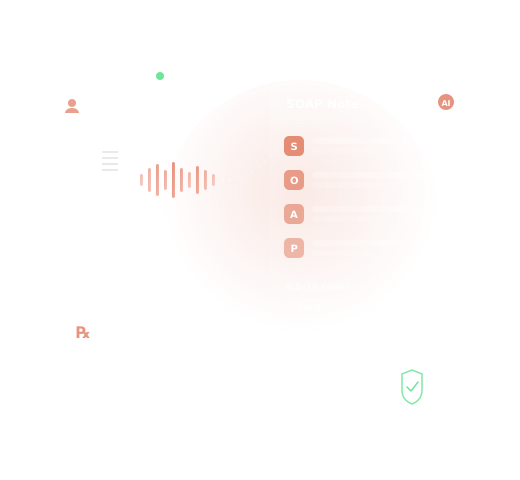
Automatic SOAP note generation: Consultation audio can be converted into draft SOAP-style notes, helping clinicians move from conversation to structured documentation quickly. This is useful for genetics consultations that include history, assessment, and follow-up planning.
Speaker diarization: When multiple people speak in the same session, speaker separation helps organize the transcript more clearly. In genetics counselling, this can support better capture of patient, family member, and clinician inputs.
Multilingual support: Many Indian healthcare interactions shift between English and regional languages. Multilingual support helps teams using an AI medical scribe in India document mixed-language consultations more efficiently.
ICD-10 and CPT suggestions: Coding support can help clinicians and administrative teams prepare cleaner drafts for downstream review. Suggestions remain supportive rather than final, with human validation required before record completion.
On-premise deployment options: Some hospitals and diagnostic organizations prefer tighter infrastructure control. Deployment posture can be chosen as a workflow and governance decision, including private or on-premise setups where appropriate.
Review-first workflow: Drafts are meant for clinician review, edits, and sign-off. This is important in genetics, where subtle wording can affect interpretation, counselling clarity, and referral communication.
How It Works
The workflow for this product is built around practical clinical documentation rather than generic transcription. For genetics lab teams, the process typically follows these steps:
- Capture the consultation conversation: The clinician, counsellor, or authorized care team records the consultation or counselling interaction. This may include patient history, family history, symptoms, prior reports, and discussion of testing options.
- Transcribe and structure the interaction: The system converts speech into text and applies speaker diarization to separate participants where possible. This is useful when genetics sessions involve multiple speakers such as a patient and family member.
- Draft a SOAP-style clinical note: The transcript is organized into a usable draft note with clinically relevant sections. Instead of leaving teams with raw text, the product prepares a structured summary that can fit routine documentation workflows.
- Generate coding support and workflow cues: The system can suggest ICD-10 and CPT mappings based on the documented interaction. These are support tools for review, not final coding decisions, and they help teams move faster toward complete records.
- Clinician review, edit, and sign-off: The treating clinician or authorized user reviews the draft, corrects details, refines wording, and approves the final note before it becomes part of the record. This human checkpoint is essential for accuracy and accountability.
- Choose the right deployment posture: Depending on organizational needs, teams can evaluate private or on-premise deployment approaches. This supports workflows aligned with internal governance preferences without changing the core documentation process.
Local context
Healthcare teams in India often manage high patient volumes, mixed digital maturity, and multilingual communication in the same department. Genetics services may also operate across metro hospitals, referral networks, and diagnostic centers where documentation quality affects continuity of care. An AI medical scribe in India is most useful when it fits these realities: variable consultation lengths, specialist terminology, and the need for practical review workflows rather than fully automated records.
For this reason, the product value is less about marketing claims and more about operational fit. Teams may use it to reduce after-hours note completion, improve consistency in specialist documentation, and support cleaner communication between clinicians and labs. For organizations evaluating an AI medical scribe India healthcare solution, multilingual support and deployment flexibility are often as important as note quality.
Use cases
Pre-test counselling: Capture family history, presenting concerns, prior investigations, and counselling points in a structured draft.
Post-test review: Summarize result discussions, interpretation notes, follow-up recommendations, and referral plans.
Hospital genetics OPD: Support specialists handling multiple consultations where detailed notes are needed but typing time is limited.
Diagnostic network coordination: Improve documentation consistency between referring clinicians, counsellors, and lab-linked teams.
Multispeaker sessions: Help organize conversations involving patients, parents, spouses, or caregivers during genetics consultations.
Documentation standardization: Create more uniform note drafts across clinicians while preserving final human review and sign-off.
FAQ
Can this be used only in genetics labs?
No. It is relevant for broader clinical settings as well, but this page focuses on how the workflow fits genetics lab and counselling use cases.
Does the product replace clinician documentation review?
No. Drafts should be reviewed, edited, and approved by the clinician or authorized user before finalization.
Can it handle multilingual consultations?
Yes, multilingual support is part of the product narrative, which is useful for Indian healthcare settings where consultations may shift between English and regional languages.
Does it provide coding support?
Yes. It can suggest ICD-10 and CPT mappings to support downstream workflows, with human validation required.
CTA
If your hospital, clinic, or genetics lab team is exploring an AI medical scribe in India, start with the practical workflow questions: how consultations are captured, who reviews drafts, what level of structure clinicians need, and whether private or on-premise deployment is preferred. MedScribe is built to support these day-to-day documentation decisions with a clinician-in-the-loop approach. Explore the product overview, features, integrations, and pricing paths to assess fit for your organization’s documentation workflow.