Introduction
An AI medical scribe in India can help GI surgery teams reduce documentation burden during busy OPD sessions, follow-ups, and pre-operative consultations. For gastro-intestinal surgeons, documentation often spans symptom history, prior investigations, operative planning, medication review, risk discussion, and post-procedure instructions. MedScribe is designed as an AI documentation copilot that converts consultation conversations into structured draft notes and coding support, while keeping the clinician in control of review and sign-off.
This page focuses on practical use in GI surgery settings across clinics and hospitals in India. The goal is not to replace clinical judgment, but to support faster note creation, clearer records, and more consistent capture of relevant details. An AI medical scribe in India is especially useful where doctors manage high patient volumes, multilingual conversations, and a mix of in-person and follow-up visits. The product value is reusable across specialties, but the workflow examples here are tailored to GI surgery documentation needs.
Department workflow
GI surgery documentation usually moves through several recurring stages. In a new consultation, the surgeon may capture abdominal symptoms, duration, red-flag features, prior treatment, imaging, endoscopy findings, co-morbidities, and surgical history. In procedure planning, the note may need a concise assessment, differential considerations, operative indication, counselling summary, and next steps. In post-operative or follow-up visits, the focus often shifts to wound status, bowel symptoms, pain, diet tolerance, pathology review, medication changes, and recovery milestones.
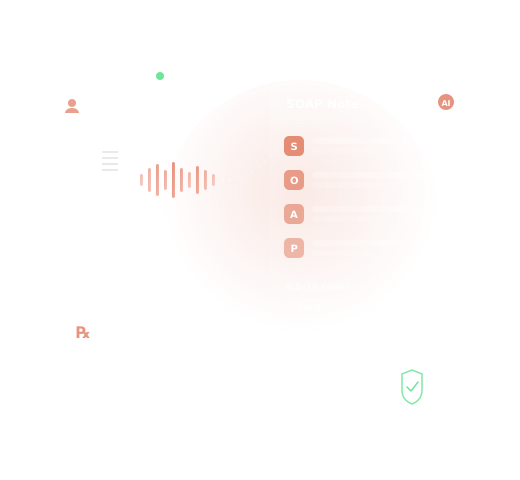
These workflows create repetitive but important documentation tasks. Teams often need to summarize long conversations into usable clinical notes without losing context. They may also need support for coding suggestions, especially when records must be completed quickly after clinic hours. An AI medical scribe in India can fit into this environment by helping capture the encounter, structure the transcript, draft SOAP notes, and present coding suggestions for clinician review.
Features mapped to workflow
Automatic SOAP note generation: For GI surgery consultations, the system can turn conversation content into a draft subjective, objective, assessment, and plan format. This is useful for abdominal pain workups, hernia evaluations, gallbladder disease consultations, colorectal follow-ups, and post-operative reviews.
Speaker diarization: In a busy room, distinguishing clinician and patient speech matters. Speaker separation helps keep the history, counselling, and plan easier to interpret during note review.
Multilingual support: Many Indian consultations move between English and regional languages. Multilingual capture can support more natural doctor-patient conversations while still producing a structured draft for records.
ICD-10 and CPT suggestions: Coding support can help teams prepare draft coding references linked to the documented encounter. These remain suggestions for staff or clinician validation, not automatic final coding.
On-premise or private deployment posture: Some hospitals prefer local control over infrastructure decisions. MedScribe supports workflow choices aligned with internal governance preferences, including on-premise deployment discussions where needed.
Operational review before finalization: Drafts are meant to be reviewed, edited, and approved by the clinician before the record is finalized. This checkpoint is important for surgical documentation quality.
How It Works
The workflow for MedScribe is built around real consultation documentation rather than generic dictation. In GI surgery, that means supporting the path from conversation capture to clinician-approved note completion.
- Capture the consultation conversation: During an OPD visit, pre-op discussion, or follow-up, the encounter audio is captured through the configured workflow. This may include symptom history, prior reports, examination discussion, counselling, and treatment planning.
- Transcribe and structure the encounter: The system converts speech into text and organizes it with speaker diarization, helping separate patient statements from clinician questions and recommendations. This is useful when consultations switch between English and local language phrases.
- Draft a SOAP note for the visit: Based on the structured transcript, MedScribe generates a draft SOAP note. For GI surgery, this can include presenting complaints, relevant history, available findings discussed in the visit, assessment summary, and plan such as investigations, procedure advice, medication changes, or follow-up timing.
- Suggest coding references: The platform can surface ICD-10 and CPT suggestions linked to the documented encounter. These suggestions are intended to support administrative and billing workflows, with human validation before use.
- Clinician review, edit, and sign-off: The surgeon or authorized team member reviews the draft note, corrects details, refines the assessment and plan, and confirms the final version. The record is finalized only after human review and sign-off.
- Choose deployment posture for operations: Depending on clinic or hospital requirements, teams can evaluate private or on-premise deployment options as workflow and governance decisions. This supports operational alignment without presenting infrastructure choices as legal guarantees.
For teams exploring an AI medical scribe in India, this workflow is practical because it mirrors daily OPD operations: capture, structure, draft, review, and finalize. It also complements broader product information available on related MedScribe pages for features, integrations, and pricing.
Local context
In India, GI surgery practices often balance high consultation volumes with variable documentation formats across standalone clinics, day-care centres, and multi-specialty hospitals. Notes may need to be concise for speed but detailed enough for continuity of care. Follow-up visits can also depend on prior imaging, endoscopy, discharge summaries, and medication changes discussed across multiple encounters.
An AI medical scribe in India can support this environment by reducing repetitive typing and helping standardize draft documentation across common visit types. Multilingual support is relevant where patients describe symptoms in a regional language while the final note is reviewed in English. For hospitals with stricter IT preferences, deployment discussions can be aligned with internal infrastructure and governance needs. The emphasis remains practical: support the care team’s workflow, preserve clinician oversight, and improve note readiness after each encounter.
Use cases
New GI surgery consultation: Draft a structured note from a discussion about abdominal pain, hernia symptoms, rectal bleeding, gallstone-related complaints, or referral review.
Pre-operative counselling: Capture consent-related discussion points, expected procedure planning, risk explanation, and next-step instructions in a more organized draft.
Post-operative follow-up: Summarize wound review, bowel function, pain status, pathology discussion, diet advice, and medication updates.
Second opinion visits: Help organize long conversations involving prior reports, previous treatment history, and current surgical recommendations.
High-volume OPD sessions: Support faster draft note creation so clinicians spend less time on repetitive documentation after clinic hours.
FAQ
Can this be used for GI surgery OPD and follow-up visits?
Yes. The workflow is suitable for new consultations, review visits, pre-operative discussions, and post-operative follow-ups where conversation-based documentation is common.
Does the product finalize notes automatically?
No. MedScribe creates draft documentation and coding suggestions, but clinician review, edits, and final sign-off remain essential before record finalization.
Can it handle multilingual consultations?
The product includes multilingual support, which can help in consultations where doctors and patients switch between English and regional languages.
Is deployment limited to one model?
No. Teams can evaluate deployment approaches, including private or on-premise options, based on workflow and governance preferences.
CTA
If your GI surgery clinic or hospital wants a more practical documentation workflow, explore how an AI medical scribe in India can support consultation notes, coding assistance, and clinician-reviewed record completion. Review the core product, feature, integration, and pricing pathways to assess fit for your OPD operations and documentation goals.