Introduction
Gynecology consultations often move quickly between history taking, symptom review, examination findings, treatment planning, follow-up advice, and sensitive patient questions. That pace can make documentation feel like a second job for clinicians and support staff. An AI medical scribe in India can help gynecology teams turn consultation conversations into structured draft notes that are easier to review, edit, and finalize within daily OPD workflows. Instead of replacing clinical judgment, the system is designed to support doctors with faster note preparation, clearer documentation structure, and coding assistance that can be checked before sign-off.
For hospitals, specialty clinics, and multi-doctor practices, the value is practical: less repetitive typing, more consistent SOAP formatting, and a smoother path from consultation to record completion. In gynecology, where visits may include menstrual history, fertility concerns, antenatal follow-up, pelvic pain, menopause counseling, or procedure discussions, documentation needs to stay detailed without slowing the encounter. This is where an AI medical scribe in India becomes useful as a documentation copilot built around real consultation flow.
Department workflow
Gynecology departments usually manage a mix of scheduled OPD visits, repeat follow-ups, counseling-heavy appointments, and procedure-linked documentation. A typical workflow starts with patient intake and prior record review, followed by consultation, examination notes, assessment, treatment planning, and instructions for investigations or follow-up. In many settings, doctors still switch between listening, asking questions, and manually entering notes into the EMR or writing them for later transcription.
That creates friction in busy clinics. Important details such as LMP, obstetric history, cycle pattern, prior surgeries, medication use, ultrasound references, or counseling points may be captured inconsistently when the clinician is under time pressure. An AI medical scribe in India supports this workflow by helping convert the conversation into a structured draft that reflects the encounter sequence. For gynecology teams, this can be especially helpful in visits that involve nuanced history and repeated follow-up documentation across pregnancy care, infertility workups, PCOS management, or menopausal care.
The goal is not to automate decisions. The goal is to reduce clerical load so clinicians can focus on patient interaction while still maintaining a review-first documentation process.
Features mapped to workflow
Conversation capture and transcription: The product captures the consultation audio and converts it into text for downstream note creation. This helps when clinicians want a more complete draft without typing every detail during the visit.
Speaker diarization: In gynecology consultations, both doctor and patient contribute important details. Speaker separation helps distinguish patient history from clinician recommendations, making the draft easier to review.
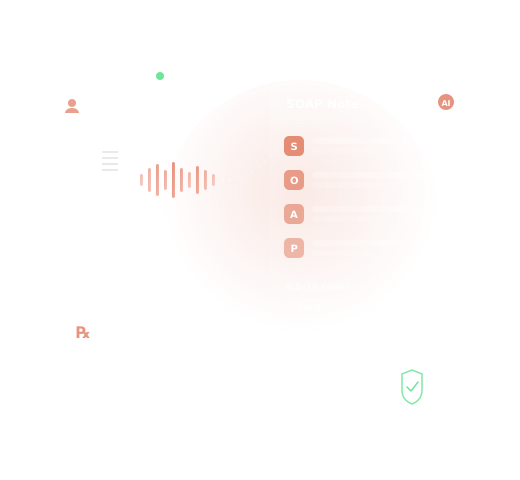
Automatic SOAP note generation: The system structures the encounter into Subjective, Objective, Assessment, and Plan sections. This is useful for repeatable OPD documentation and follow-up visits.
ICD-10 and CPT suggestions: Coding support can assist teams during documentation and billing preparation. Suggestions are intended for clinician or authorized staff review rather than direct acceptance.
Multilingual support: Many clinics in India operate in English plus regional languages or mixed-language conversations. Multilingual capability supports more natural consultations while still producing usable drafts.
On-premise or private deployment options: Some hospitals prefer deployment choices that fit internal IT and governance needs. These options support workflows aligned with organizational data handling preferences.
How It Works
The workflow is designed around the real sequence of a consultation and the need for clinician review before the record is finalized.
- Capture the consultation conversation: During the gynecology visit, the system records the doctor-patient conversation through the configured setup. This may include history taking, symptom discussion, prior treatment review, and counseling points. Multilingual speech handling supports mixed-language consultations common in India.
- Transcribe and structure the encounter: The audio is converted into text, and speaker diarization separates patient statements from clinician inputs. The transcript is then organized into clinically relevant sections so the encounter is easier to interpret than a raw transcript.
- Draft a SOAP note automatically: Based on the structured conversation, the product prepares a draft SOAP note. In gynecology, this can help organize menstrual history, obstetric details, examination references, assessment themes, and next-step plans into a usable clinical format.
- Suggest coding support: The system can surface ICD-10 and CPT suggestions linked to the documented encounter. These suggestions are intended to support workflow efficiency and should be reviewed by the clinician or authorized team member before use.
- Review, edit, and sign off: The clinician checks the draft note, corrects any missing or unclear details, and confirms the final version before it becomes part of the patient record. Human review is an operational checkpoint, not an optional extra.
- Choose deployment posture for operations: Depending on the clinic or hospital setup, teams may use deployment options such as on-premise or private environments. This is a workflow and governance decision that can support internal preferences for integration and data handling.
Local context
In India, gynecology practices often balance high patient volumes with documentation expectations across OPD, day care, and hospital-based settings. Teams may work across mixed digital maturity levels, from fully integrated hospital systems to clinics that are still standardizing documentation. An AI medical scribe in India is relevant in this environment because it supports practical documentation improvement without requiring doctors to change the core way they consult.
It is also common for consultations to shift between English and regional languages, especially when discussing symptoms, family history, or treatment preferences. Multilingual support matters here because it helps preserve natural communication during the visit. For organizations evaluating deployment models, private or on-premise options can support workflows aligned with internal IT policies and operational preferences.
Use cases
High-volume OPD clinics: Reduce after-hours note completion by preparing draft SOAP notes for clinician review.
Fertility and reproductive health consultations: Capture detailed history and counseling discussions in a more structured way.
Antenatal and follow-up visits: Support repeat documentation patterns where consistency matters across multiple visits.
Hospital gynecology departments: Help standardize note drafting across consultants, junior doctors, and support teams.
Mixed-language consultations: Improve usability when patient conversations move between English and local languages.
Across these scenarios, AI medical scribe India healthcare adoption is best approached as a workflow improvement initiative. The strongest fit is where clinicians want faster documentation turnaround while keeping review and sign-off firmly under medical supervision. For many providers, an AI medical scribe in India offers a practical middle path between fully manual note-taking and rigid templates that do not reflect real conversations.
FAQ
Can this be used during sensitive gynecology consultations?
Yes, but clinics should define when and how conversation capture is used, and clinicians should review every draft note before finalization.
Does it replace the doctor's documentation responsibility?
No. It prepares draft notes and coding suggestions, while the clinician remains responsible for review, edits, and final sign-off.
Can it support multilingual consultations in India?
Yes, multilingual support is part of the product narrative and is useful for clinics where consultations shift across languages.
Is deployment flexible for hospitals?
Yes, deployment options such as on-premise or private environments can support organizational workflow and governance preferences.
CTA
If your gynecology team wants more consistent documentation without adding more typing to every consultation, an AI medical scribe in India can be evaluated as a practical workflow tool. Use it to capture conversations, generate draft SOAP notes, support coding review, and keep clinicians in control of final documentation. Explore how the product fits your OPD process, review needs, and deployment preferences before rollout.