Introduction
Hand surgery clinics and hospital units often manage high consultation volumes, detailed examination findings, procedure planning, follow-up documentation, and coordination across OPD, imaging, therapy, and surgery scheduling. An AI medical scribe in India can help reduce the time clinicians spend turning conversations into structured notes while keeping the doctor in control of the final record. For hand surgeons, this is especially useful when visits involve mechanism of injury, dominance, occupation, tendon or nerve symptoms, range of motion findings, imaging review, and treatment discussions that must be documented clearly.
This page explains how an AI medical documentation copilot can support hand surgery workflows in India with practical, day-to-day value. The focus is not on replacing clinical judgment. Instead, it is on helping convert consultation conversations into usable SOAP notes, coding suggestions, and draft documentation that clinicians can review, edit, and sign off. For clinics and hospitals evaluating an AI medical scribe in India, the key question is simple: can it fit naturally into OPD operations without adding friction? When designed well, it supports faster note completion, more consistent documentation, and smoother handoffs between care teams.
Department workflow
Hand surgery documentation has its own rhythm. A typical visit may begin with injury history or chronic symptom review, followed by focused examination of swelling, deformity, tenderness, sensation, grip, pinch, tendon function, vascular status, and joint movement. The surgeon may then discuss splinting, injections, imaging, therapy referral, minor procedures, or operative planning. In postoperative reviews, documentation may include wound status, pain, stiffness, rehabilitation progress, and return-to-work guidance.
Because these encounters are detailed, clinicians often document after the consultation or between patients. That can create delays, incomplete recall, and variable note quality. An AI medical scribe in India can support this workflow by capturing the consultation conversation, structuring the transcript, drafting SOAP notes, and surfacing coding suggestions for clinician review. In hand surgery, this is useful across trauma, nerve compression, tendon injuries, congenital conditions, arthritis-related hand complaints, and postoperative follow-up. The goal is to support the existing workflow rather than force a new one.
Features mapped to workflow
Conversation capture and transcription: During the consultation, the system captures the doctor-patient interaction and converts speech into text. This is helpful when hand surgeons need to focus on examination maneuvers and patient education instead of typing throughout the visit.
Speaker diarization: Distinguishing between clinician and patient speech helps preserve context. In hand surgery, where symptom descriptions and examination findings both matter, speaker separation can make draft notes easier to review.
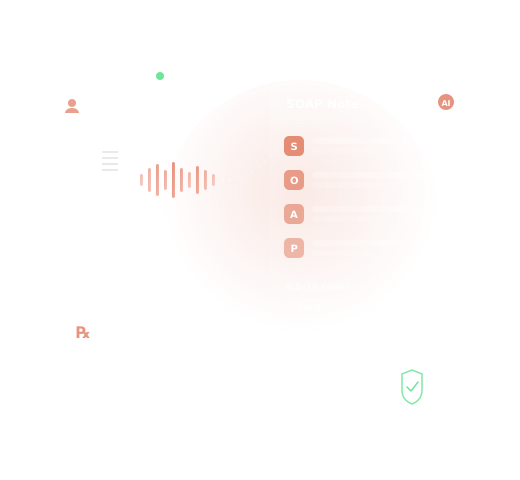
Automatic SOAP note generation: The product can draft subjective, objective, assessment, and plan sections from the consultation. This supports common OPD patterns such as documenting injury onset, examination findings, diagnosis considerations, and treatment plans.
ICD-10 and CPT suggestions: Coding support can help teams prepare documentation for downstream billing and administrative workflows. Suggestions should still be reviewed by the clinician or coding team before use.
Multilingual support: In many Indian care settings, consultations may shift between English and regional languages. Multilingual capability can support more natural conversations while still producing structured documentation.
On-premise or private deployment options: For hospitals and larger groups, deployment posture can be chosen based on internal IT, governance, and workflow preferences. This supports workflows aligned with organizational data handling practices.
How It Works
The workflow below reflects how the product is designed to support real clinical documentation from start to finish in hand surgery settings.
- Capture the consultation conversation: The clinician starts the session during OPD or review visits. The system records the interaction and identifies speakers so the patient history, surgeon questions, and counselling points are separated in the transcript.
- Structure the transcript into clinical context: The raw conversation is processed into organized sections such as presenting complaint, history, examination details, assessment cues, and treatment discussion. For hand surgery, this may include laterality, dominant hand, injury mechanism, numbness, tendon function, or postoperative progress.
- Draft a SOAP note automatically: Based on the structured transcript, the system generates a draft SOAP note. This gives the surgeon a usable starting point instead of a blank screen and can reduce after-hours documentation effort.
- Surface coding suggestions: The product provides ICD-10 and CPT suggestions linked to the documented encounter. These are intended as support for review, not automatic final coding, and should be checked against the clinician's final documentation.
- Review, edit, and sign off: The clinician reviews the draft note, corrects details, adds examination nuance or procedure specifics, and approves the final version before the record is finalized. Human review is the operational checkpoint that keeps the doctor in control.
- Choose deployment posture for operations: Clinics and hospitals can evaluate on-premise or private deployment approaches based on workflow, IT environment, and governance needs. This is a practical implementation decision rather than a legal guarantee.
Local context
In India, hand surgery services may operate within multispecialty hospitals, orthopaedic units, plastic surgery departments, trauma centres, and focused upper-limb clinics. Documentation needs can vary by setup, but common pressures include busy OPD schedules, mixed language consultations, and the need to maintain clear records for procedures, follow-ups, and referrals. An AI medical scribe in India can be useful when teams want to improve note turnaround without changing the clinical flow too much.
For administrators evaluating AI medical scribe India healthcare solutions, practical questions usually matter more than broad claims: how easily can doctors review notes, how well does the system handle specialty terminology, and what deployment model fits the organization? In hand surgery, where concise but specific documentation matters, the value comes from supporting consistent note quality while preserving clinician oversight.
Use cases
Trauma and fracture follow-up: Document injury history, examination findings, imaging discussion, immobilization plans, and surgery counselling.
Nerve compression visits: Capture symptom duration, nocturnal complaints, sensory changes, provocative tests, and treatment planning for conditions such as carpal tunnel presentations.
Tendon and soft tissue conditions: Support notes for trigger finger, tendon injuries, stiffness, and rehabilitation planning.
Postoperative reviews: Draft follow-up notes covering wound status, pain, range of motion, splint use, therapy advice, and next review timing.
High-volume OPD clinics: Help clinicians complete documentation faster by turning consultation dialogue into structured drafts that can be edited and approved quickly.
FAQ
Can this be used during a busy hand surgery OPD?
Yes. The workflow is designed to support live consultation capture and draft note creation so clinicians can review documentation with less manual typing during or after the visit.
Does it replace the surgeon's documentation responsibility?
No. The system creates draft notes and coding suggestions, but the clinician reviews, edits, and signs off before the record is finalized.
Can it support multilingual consultations common in India?
The product includes multilingual support, which can help when consultations move between English and regional languages in routine practice.
Is deployment flexible for hospitals?
Yes. On-premise and private deployment options can be evaluated based on workflow, IT, and governance preferences.
CTA
If your clinic or hospital is exploring an AI medical scribe in India for hand surgery documentation, start with the practical workflow: capture the consultation, generate a structured draft, review it quickly, and finalize the note with clinician oversight. This approach can support more efficient OPD documentation while keeping the record clinically usable. Explore the product overview, features, integrations, and pricing paths to assess fit for your hand surgery team.