Introduction
Head and neck surgery consultations often involve dense histories, symptom timelines, examination findings, imaging references, procedure planning, and follow-up instructions. An AI medical scribe in India can help reduce the documentation load by turning consultation conversations into structured draft notes that clinicians can review and finalize. For hospitals, specialty clinics, and busy OPD settings, the goal is practical: spend less time typing, keep records more consistent, and support smoother handoffs across the care team.
This page focuses on how an AI medical documentation copilot can fit into head and neck surgery workflows in India. The product is designed to convert doctor-patient conversations into usable SOAP notes, support coding suggestions, identify speakers during the encounter, and work in multilingual environments common across Indian healthcare settings. Rather than changing clinical judgment, it supports the documentation process around it.
For specialty departments where consultations may include oncology follow-up, thyroid and salivary gland complaints, neck masses, airway symptoms, swallowing issues, and post-operative reviews, documentation quality matters. An AI medical scribe in India can support more complete draft records while preserving clinician review and sign-off as the final checkpoint.
Department workflow
Head and neck surgery documentation usually spans multiple touchpoints. In OPD, the clinician may capture presenting complaints, duration, prior treatment, tobacco or alcohol history, voice or swallowing symptoms, examination findings, endoscopy observations, imaging references, and treatment options discussed. In procedure-oriented settings, the note may also need pre-op counseling details, consent discussion summaries, and post-op follow-up instructions.
These workflows are often interrupted by high patient volume, mixed language conversations, and the need to coordinate with front desk staff, nursing teams, pathology, radiology, and billing. Manual note entry can slow the consultation or push documentation to the end of the day. An AI medical scribe India healthcare workflow is useful when the department wants draft documentation generated during or immediately after the encounter, while still keeping the surgeon in control of edits and final approval.
For head and neck surgery teams, the most useful support usually includes structured history capture, exam-oriented note formatting, coding assistance for common visit types, and a reliable review step before the record is saved. This makes the tool relevant not only for individual consultants but also for multispecialty hospitals that want more standardized documentation across providers.
Features mapped to workflow
Conversation capture and transcription: The system listens to the consultation audio and converts it into text for downstream note creation. This is helpful when the surgeon wants to focus on the patient rather than typing during the visit.
Speaker diarization: In specialty consultations, both patient and clinician contribute important details. Speaker separation helps distinguish symptoms reported by the patient from findings, advice, and plans stated by the doctor.
Automatic SOAP note generation: The product drafts Subjective, Objective, Assessment, and Plan sections from the encounter. For head and neck surgery, this can support clearer organization of symptom history, examination findings, differential thinking, and next steps.
ICD-10 and CPT suggestions: Coding support can help teams prepare more complete documentation for downstream billing and record workflows. Suggestions remain reviewable and should be validated by the clinician or authorized staff.
Multilingual support: Many consultations in India shift between English and regional languages. This is especially useful in OPD settings where patient comfort and clarity matter.
On-premise or private deployment posture: Some hospitals prefer infrastructure choices that align with internal governance and IT requirements. Deployment decisions can be made based on workflow, data handling preferences, and operational control.
Review before finalization: The product supports draft creation, but the clinician remains responsible for edits, confirmation, and final sign-off before the note becomes part of the record.
How It Works
The workflow below reflects how an AI medical scribe in India can be used in day-to-day head and neck surgery practice.
- Capture the consultation conversation: During the OPD visit, the consultation audio is captured with the appropriate clinic workflow setup. This may include multilingual dialogue, symptom descriptions, prior treatment history, and examination discussion.
- Transcribe and structure the encounter: The system converts speech to text and uses speaker diarization to separate clinician and patient contributions. It then organizes the transcript into clinically relevant segments such as history, findings, assessment cues, and plan elements.
- Draft the SOAP note automatically: Based on the structured conversation, the product generates a draft SOAP note. In head and neck surgery, this may include presenting complaints, duration, examination observations, suspected diagnosis context, investigations advised, and treatment or follow-up planning.
- Suggest coding support: The system provides ICD-10 and CPT suggestions linked to the documented encounter. These suggestions are intended to support workflow efficiency and should be reviewed against the final clinical note and billing process.
- Clinician reviews and edits: The surgeon or authorized team member checks the draft, corrects terminology, adds missing findings, and confirms that the note reflects the actual encounter. Human review is the operational checkpoint before record completion.
- Finalize within the chosen deployment setup: After sign-off, the note can move into the clinic or hospital documentation workflow. Teams may choose on-premise or private deployment models based on internal governance, IT preferences, and integration planning.
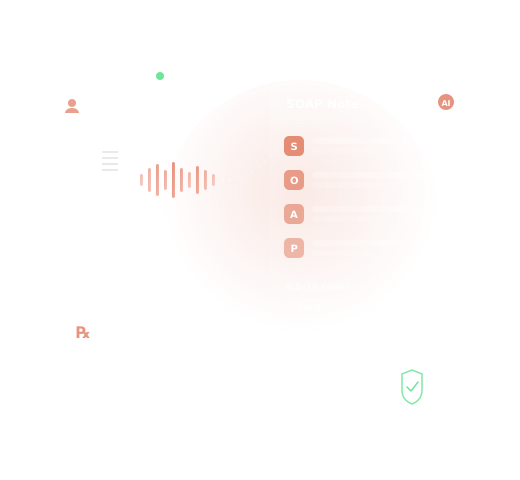
This approach keeps the product practical. It does not replace clinical decision-making. Instead, it supports the path from conversation capture to structured documentation, with review and final sign-off built into the process.
Local context
In India, head and neck surgery departments often manage a mix of high-volume OPD visits, referral cases, second opinions, and follow-up reviews. Documentation needs can vary between standalone specialty clinics and larger hospitals, but the pressure to maintain clear records is common across both. An AI medical scribe in India is most useful when it adapts to real consultation patterns: multilingual speech, variable visit lengths, and the need for fast note turnaround.
Hospitals may also evaluate whether the documentation workflow should connect with broader digital systems over time. That is why many teams look for practical options around integrations, deployment flexibility, and clinician review controls rather than generic automation claims. For Indian healthcare organizations, the value is usually operational: reducing after-hours documentation burden, improving note consistency, and supporting better continuity across departments.
An AI medical scribe in India should therefore be assessed not only on transcription quality, but also on how well it fits OPD routines, specialty note structures, and governance preferences within the institution.
Use cases
New patient consultations: Capture symptom chronology, prior treatment, examination findings, and initial management plan in a structured draft note.
Post-operative follow-up: Document recovery progress, wound status, pathology discussion, medication changes, and next review instructions.
Oncology-related reviews: Support detailed notes where treatment history, imaging references, symptom progression, and multidisciplinary planning need to be recorded clearly.
Procedure counseling visits: Summarize discussion points around planned intervention, expected recovery, and follow-up steps for internal documentation.
High-volume OPD sessions: Help clinicians reduce repetitive typing and maintain more consistent note structure across multiple encounters.
Multilingual consultations: Support encounters where patients explain symptoms in a regional language while the clinician documents in English-oriented clinical formats.
FAQ
Can this be used in a busy specialty OPD?
Yes. The workflow is designed for practical consultation documentation, especially where clinicians want draft notes generated quickly and reviewed before finalization.
Does it replace the surgeon's documentation responsibility?
No. The product creates draft notes and coding suggestions, but clinician review, edits, and final sign-off remain essential before the record is completed.
Is it useful for multilingual consultations in India?
Yes. Multilingual support is relevant for Indian healthcare settings where patient conversations may move between English and regional languages.
Can hospitals choose different deployment approaches?
Yes. Teams may evaluate on-premise or private deployment options based on workflow, IT preferences, and internal governance requirements.
CTA
If your head and neck surgery team wants to reduce documentation friction without disrupting clinical review, explore how an AI medical scribe in India can fit your OPD and specialty workflow. Start by assessing consultation patterns, note requirements, and review checkpoints, then compare product capabilities across /medscribe, /medscribe/features, /medscribe/integrations, and /medscribe/pricing to plan the right rollout for your clinic or hospital.