Introduction
Histopathology teams in India often manage a high volume of specimen-related documentation, clinician discussions, follow-up clarifications, and reporting steps that can consume valuable specialist time. An AI medical scribe in India can support this workload by turning spoken clinical conversations into structured draft notes that are easier to review, edit, and finalize. For pathology departments, the value is practical: less manual typing, more consistent note structure, and smoother handoffs between consultants, residents, and administrative staff.
This page focuses on how an AI medical documentation copilot can fit into histopathology workflows in clinics, diagnostic centers, and hospitals. Rather than replacing clinical judgment, it is designed to assist with documentation tasks such as drafting SOAP-style notes, organizing findings discussed during case reviews, and suggesting coding options for clinician validation. For teams evaluating an AI medical scribe in India, the key question is not just transcription accuracy, but how well the tool supports daily OPD and reporting workflows with clear review checkpoints before records are finalized.
Department workflow
Histopathology documentation is different from many front-line specialties because the workflow often combines specimen intake details, clinician-pathologist discussions, microscopic findings, differential considerations, and final reporting. In many Indian healthcare settings, these steps may happen across multiple touchpoints: a referring doctor call, internal case discussion, resident teaching round, or follow-up clarification with the treating team.
A typical workflow may include receiving the case context, discussing the clinical history, reviewing gross and microscopic findings, documenting impressions, and preparing a final report or note summary. Along the way, teams may need to capture who said what, maintain a usable structure for the medical record, and prepare coding-related information where relevant. This is where an AI medical scribe India healthcare workflow can be useful: it helps convert conversations into organized drafts that clinicians can refine instead of starting from a blank screen.
For histopathology, the documentation burden is not only about speed. It is also about traceability, consistency, and making sure important details from case discussions are not lost. A well-designed AI medical scribe in India should therefore support multilingual conversations, speaker separation, structured note drafting, and clinician-led review before sign-off.
Features mapped to workflow
Conversation capture: During case discussions, referral calls, or internal review meetings, the system can capture the spoken interaction as the starting point for documentation.
Speaker diarization: In pathology workflows, multiple participants may contribute to the discussion. Speaker diarization helps separate comments from the pathologist, resident, referring clinician, or support staff so the draft is easier to interpret.
Multilingual support: Many Indian healthcare teams switch between English and regional languages in routine communication. Multilingual support helps preserve context from mixed-language conversations.
Automatic SOAP note generation: Even when the final pathology report follows a department-specific format, SOAP-style drafting can still help organize history, observations, assessment, and next steps into a reviewable structure.
ICD-10 and CPT suggestions: Coding suggestions can support downstream billing or record workflows where applicable, while keeping the clinician in control of final selection.
On-premise or private deployment options: For organizations with stricter governance preferences, deployment posture can be chosen as an operational decision to support workflows aligned with internal IT and data handling requirements.
How It Works
The product workflow is designed to move from conversation capture to clinician-reviewed documentation in a clear sequence.
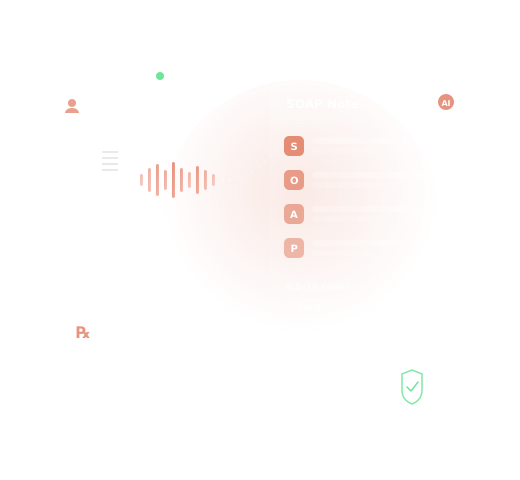
- Capture the consultation or case discussion: The clinician, pathologist, or department team records the relevant conversation during a referral discussion, specimen review meeting, or follow-up clarification. The system ingests the audio and prepares it for processing, including multilingual speech handling where needed.
- Transcribe and structure the interaction: The audio is converted into text with speaker diarization so the draft reflects who contributed key details. This is especially useful in histopathology when a consultant and resident discuss findings together or when a referring doctor provides clinical context.
- Generate a draft SOAP note: The system organizes the conversation into a structured clinical draft. For pathology teams, this can help summarize history, observations, assessment points, and recommended next actions in a format that is easier to review and adapt to department templates.
- Suggest coding support: Based on the documented content, the tool can surface ICD-10 and CPT suggestions for clinician consideration. These are prompts for review, not automatic final coding decisions, which helps keep the workflow practical and clinician-led.
- Review, edit, and sign off: The clinician checks the draft, makes corrections, adds missing pathology-specific details, and approves the final version before it becomes part of the record. Human review is the operational checkpoint that ensures the note reflects the intended clinical meaning.
- Choose the deployment posture that fits governance needs: Depending on the organization, the workflow can be supported through private or on-premise deployment choices. This is best treated as an implementation and governance decision rather than a blanket compliance claim.
Local context
In India, pathology and histopathology teams often work across busy outpatient networks, hospital departments, and diagnostic chains where documentation expectations vary by organization. Some teams need faster turnaround for internal communication, while others prioritize standardization across multiple consultants and locations. An AI medical scribe in India can help by reducing repetitive note creation and supporting more uniform documentation practices without forcing a one-size-fits-all reporting style.
Local practicality matters. Teams may need support for mixed-language conversations, variable internet environments, and governance preferences that favor private infrastructure. That is why many buyers evaluating an AI medical scribe in India look beyond generic transcription and focus on workflow fit, review controls, and deployment flexibility for Indian healthcare operations.
Use cases
Referral discussion summaries: Capture and draft notes from conversations between treating clinicians and pathologists about biopsy context or differential concerns.
Internal case review documentation: Support resident-consultant discussions by structuring the conversation into a usable draft for later review.
Follow-up clarification notes: Document addendum-related discussions or clarifications requested by the treating team.
Coding support workflows: Surface ICD-10 and CPT suggestions where coding review is part of the documentation process.
Multi-site standardization: Help clinics and hospitals create more consistent draft notes across departments and locations while preserving clinician control.
For organizations comparing options, an AI medical scribe India healthcare solution is most useful when it fits existing reporting habits, supports multilingual communication, and keeps final approval with the clinician.
FAQ
Below are common implementation questions from pathology teams considering an AI medical scribe in India.
Can this replace the final pathology report?
No. It is best used as a documentation copilot that creates structured drafts from conversations. The clinician or pathologist still reviews, edits, and signs off on the final record.
Is it useful for histopathology if the department already has report templates?
Yes. Even when final reports follow a fixed format, the tool can help capture discussions, summarize case context, and create a draft that clinicians adapt to their existing templates.
Does it support multilingual conversations common in Indian healthcare?
The product is designed with multilingual support so teams can work more naturally when conversations include English and regional language usage.
How should hospitals think about deployment?
Deployment options such as private or on-premise setups should be evaluated as workflow and governance choices. They can support internal data handling preferences, but implementation decisions should be reviewed by the organization.
CTA
If your pathology department wants to reduce manual note-taking and improve documentation consistency, explore how an AI medical scribe in India can fit your daily workflow. Review the core product overview at /medscribe, compare capabilities at /medscribe/features, and assess how the workflow aligns with your clinic or hospital documentation process.