Introduction
Home healthcare teams work across homes, assisted living settings, and follow-up visits where time with patients matters more than typing after every consultation. An AI medical scribe in India can help clinicians document conversations faster by turning visit discussions into structured clinical notes that are ready for review. For organisations managing doctors, nurses, and care coordinators in the field, the goal is not to replace clinical judgment. It is to reduce repetitive documentation effort, support more consistent note quality, and make records easier to complete after each visit.
For home healthcare providers, documentation often happens in fragmented conditions: variable connectivity, multilingual conversations, caregiver participation, and frequent transitions between assessment, counselling, and care planning. MedScribe is designed to support these realities with conversation capture, transcription structuring, SOAP note drafting, coding suggestions, speaker diarization, multilingual support, and deployment options such as private or on-premise setups. This makes an AI medical scribe in India especially relevant for teams that need practical documentation support without adding more admin burden to field clinicians.
Department workflow
In home healthcare, the workflow usually starts before the visit with a scheduled appointment, referral summary, or prior care plan. During the visit, the clinician reviews symptoms, medications, vitals, wound status, mobility, adherence, and caregiver concerns. The challenge is that useful information is spread across natural conversation rather than entered neatly into a template in real time.
After the interaction, clinicians still need to prepare a clear assessment, update the plan, and document follow-up instructions. In some cases, they also need diagnosis coding support, internal handoff notes, or summaries for supervising physicians. When this is done manually, note completion can be delayed until the end of the day, increasing recall gaps and administrative fatigue.
An AI medical scribe in India fits this workflow by helping convert spoken consultation content into structured drafts that clinicians can edit and sign off. Instead of starting from a blank screen, home healthcare teams can review a draft SOAP note, refine the assessment, confirm coding suggestions, and finalise the record in a more controlled way. This is useful for routine follow-ups, chronic care visits, post-discharge monitoring, palliative support, and physician-led home consultations.
Features mapped to workflow
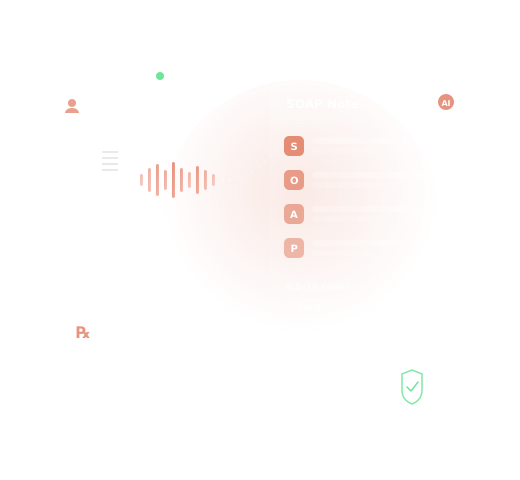
Conversation capture and transcription: During a home visit or remote follow-up, the system captures the consultation audio and converts it into text. This supports clinicians who want to stay engaged with the patient rather than split attention between care and typing.
Speaker diarization: Home visits often include more than one voice, such as the patient, a family caregiver, and the clinician. Speaker separation helps organise the conversation so the final draft is easier to review and less confusing.
Automatic SOAP note generation: The transcript is structured into subjective, objective, assessment, and plan sections. This is particularly useful in home healthcare where observations, medication adherence, and care instructions need to be documented clearly.
ICD-10 and CPT suggestions: Coding support can help clinicians and operations teams move from narrative notes toward more standardised documentation. Suggestions should always be reviewed by the clinician before final use.
Multilingual support: Many home healthcare interactions in India move between English and regional languages. Multilingual support helps teams document more naturally across diverse patient populations.
Private or on-premise deployment options: Some organisations prefer tighter control over where data is processed. Deployment posture can be chosen based on workflow, IT governance, and operational preferences.
How It Works
The product workflow is designed to follow the actual documentation path of a consultation rather than forcing clinicians into a rigid template.
- Capture the consultation conversation: The clinician starts audio capture during a home visit, tele-follow-up, or physician review. The system records the interaction between clinician, patient, and caregiver where applicable, preparing the input for structured documentation.
- Transcribe and organise the discussion: The audio is converted into text with speaker diarization to distinguish who said what. This helps separate patient-reported symptoms, caregiver inputs, and clinician guidance before note creation begins.
- Draft a structured SOAP note automatically: The transcript is processed into a SOAP-style draft, pulling relevant details into subjective history, objective findings, assessment, and plan. This gives the clinician a usable first draft instead of raw transcript text.
- Add coding support and workflow cues: Based on the documented encounter, the system can surface ICD-10 and CPT suggestions to support downstream documentation tasks. These are assistive prompts, not final coding decisions, and should be checked by the clinician or authorised team member.
- Review, edit, and sign off: The clinician reviews the draft, corrects wording, adds missing clinical nuance, and confirms the final note before record finalisation. Human review is the operational checkpoint that keeps the documentation clinically accountable.
- Choose deployment posture for operations: Organisations can evaluate private or on-premise deployment options depending on internal governance, infrastructure, and workflow needs. This supports teams that want documentation tools aligned with their existing IT environment.
Local context
Home healthcare in India often involves distributed teams, mixed digital maturity, and varied documentation habits across physicians, nurses, and coordinators. Some organisations need support for multilingual conversations, while others prioritise private deployment because of internal governance preferences. In this environment, an AI medical scribe in India should be practical first: easy to fit into daily OPD-linked home visits, physician rounds, and follow-up care documentation.
It is also important that the tool supports workflows aligned with existing record-keeping practices rather than forcing a complete process change. For India-based providers, the value often comes from faster note completion, more consistent structure, and easier handoffs between field teams and central operations. That is why AI medical scribe India healthcare use cases are strongest when the product complements current clinical routines and review processes.
Use cases
Doctor home visits: Generate draft notes after chronic disease reviews, medication checks, or post-discharge assessments.
Nurse-led follow-ups: Structure wound care observations, symptom updates, and escalation notes for supervising clinicians.
Geriatric and palliative care: Capture caregiver concerns, functional changes, and care planning discussions in a more organised format.
Remote review workflows: Support teleconsultation documentation when home healthcare teams coordinate with central physicians.
Multi-location provider groups: Standardise note structure across field teams while preserving clinician review and final sign-off.
For organisations evaluating an AI medical scribe in India, these use cases show where documentation support can reduce friction without changing the core care model.
FAQ
Can this be used during home visits with caregivers present?
Yes. Speaker diarization helps separate different voices in the conversation, which can make review easier when patients and caregivers both contribute information.
Does the product create final notes automatically?
It creates draft documentation such as SOAP notes and coding suggestions, but clinician review, edits, and final sign-off remain essential before the record is finalised.
Is it suitable for multilingual consultations?
It is designed with multilingual support, which is useful for home healthcare teams in India where consultations may shift between English and regional languages.
Can organisations choose how the system is deployed?
Yes. Private or on-premise deployment options can be considered based on workflow, infrastructure, and internal governance needs.
CTA
If your home healthcare team wants to reduce after-visit documentation effort and improve note consistency, explore how an AI medical scribe in India can fit your daily workflow. Review the core product at /medscribe, compare capabilities at /medscribe/features, and assess how conversation capture, SOAP drafting, coding support, and clinician review can support your field operations in a practical way.