Introduction
Hospice care documentation often requires time, empathy, and precision at the same moment. Clinicians, nurses, and care coordinators need to capture symptom updates, family discussions, medication changes, care goals, and follow-up plans without letting note-taking interrupt sensitive conversations. An AI medical scribe in India can support this balance by turning consultation audio into structured draft notes that clinicians can review, edit, and finalize. For hospice settings, this means less manual typing during or after visits and a more consistent way to document care discussions across home visits, OPD reviews, and inpatient palliative support.
MedScribe is designed as an AI documentation copilot for practical clinical workflows. It converts consultation conversations into usable drafts such as SOAP notes, supports speaker separation, and can suggest ICD-10 and CPT mappings for clinician review. For hospice care teams in India, the value is not in replacing judgment, but in reducing repetitive documentation effort so staff can focus on patient comfort, communication, and continuity of care.
Department workflow
Hospice and palliative care workflows are different from high-volume transactional specialties. Encounters may include symptom assessment, pain management review, psychosocial discussion, caregiver education, and care planning. Documentation may also need to reflect changes in function, appetite, sleep, medication tolerance, and escalation decisions. In many organisations, these details are spread across handwritten notes, typed summaries, and follow-up calls.
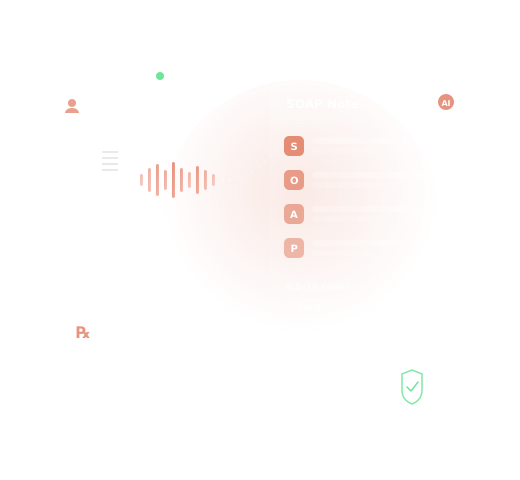
An AI medical scribe in India can fit into this workflow by helping teams capture the conversation once and convert it into a structured draft. During a hospice consultation, the system can process the dialogue, identify speakers, and organise relevant details into sections such as subjective concerns, observed findings, assessment, and plan. This is useful for doctors, palliative specialists, and multidisciplinary teams who need a reliable starting point for final documentation.
For daily operations, the workflow support is practical: less time spent rewriting notes after emotionally complex visits, easier standardisation of documentation across clinicians, and better continuity when multiple team members are involved in the same patient journey. The result is a cleaner handoff process without changing the core care model.
Features mapped to workflow
Automatic SOAP note drafting: Hospice consultations often cover symptoms, family concerns, and care planning in one conversation. Automatic SOAP generation helps convert that discussion into a structured draft that is easier to review and complete.
Speaker diarization: In hospice settings, more than one person may speak during an encounter, including the clinician, patient, and caregiver. Speaker separation helps preserve context and reduces confusion when drafting notes.
Multilingual support: Many care interactions in India move between English and regional languages. Multilingual support can help teams document more naturally without forcing a single-language conversation style.
ICD-10 and CPT suggestions: Coding support can provide a useful starting point for administrative workflows, while keeping the clinician in control of final selection and sign-off.
On-premise or private deployment options: Some hospitals and larger care networks prefer infrastructure choices that support internal governance needs. Deployment posture can be selected as an operational decision based on workflow, IT, and data handling preferences.
Review-first workflow: Drafts are meant for clinician validation. This is especially important in hospice care, where nuance matters and final records should reflect the clinician's judgment and communication accurately.
How It Works
The product workflow is designed to support real consultation documentation from start to finish, while keeping the clinician in control of the final record.
- Capture the consultation conversation: During an OPD review, bedside interaction, or hospice follow-up, the consultation audio is captured through the configured workflow. This may include doctor-patient discussion, caregiver questions, and symptom updates relevant to palliative care.
- Transcribe and structure the interaction: The system converts speech to text and applies speaker diarization to distinguish who said what. This helps preserve context when multiple participants are involved in the encounter.
- Draft a SOAP note automatically: The transcript is organised into a structured clinical draft, including subjective history, relevant observations, assessment themes, and plan items. In hospice care, this can include pain review, medication response, family counselling points, and follow-up instructions.
- Generate coding support for review: The platform can surface ICD-10 and CPT suggestions based on the documented encounter. These are support tools for the clinician or billing team to review, not automatic final coding decisions.
- Clinician edits and signs off: The doctor or authorised team member reviews the draft, makes corrections, adds missing context, and approves the final note before it becomes part of the record. Human review is the operational checkpoint that ensures accuracy and appropriateness.
- Choose deployment posture based on workflow needs: Depending on organisational preferences, teams can evaluate on-premise or private deployment approaches to support workflows aligned with internal governance and IT requirements.
Local context
In India, hospice and palliative care teams often work across mixed care environments, including hospitals, standalone centres, and home-based support models. Documentation needs can vary by organisation, but the operational challenge is similar: clinicians need complete notes without adding more administrative burden to already demanding care interactions. An AI medical scribe in India is useful in this context because it supports practical note creation for everyday clinical work rather than requiring teams to redesign their care process.
For organisations evaluating an AI medical scribe India healthcare solution, the key consideration is workflow fit. Teams may need multilingual conversations handled more naturally, support for structured notes, and deployment options that align with internal IT preferences. In hospice care, where communication quality matters as much as documentation completeness, the right tool should help clinicians document thoroughly while staying present in the encounter.
Use cases
Hospice OPD reviews: Draft structured notes from follow-up consultations covering pain, nausea, fatigue, sleep, appetite, and medication adjustments.
Family counselling documentation: Capture key discussion points around care goals, symptom expectations, and home care instructions for later review and finalisation.
Home visit summaries: Support clinicians who need a faster way to convert visit conversations into usable records after community or home-based care interactions.
Multidisciplinary coordination: Create clearer documentation that can be reviewed by doctors, nurses, and coordinators involved in the same patient plan.
Administrative support: Provide coding suggestions and structured drafts that can reduce rework for teams handling records and billing workflows.
These use cases make an AI medical scribe in India relevant not only for large hospitals but also for palliative units and care networks looking for a more consistent documentation process.
FAQ
Can this be used for sensitive hospice conversations?
Yes, the workflow is intended to support documentation of real clinical conversations, including complex care discussions. Drafts should always be reviewed and edited by the clinician before final sign-off.
Does the product replace manual clinical judgment?
No. It assists with transcription, structuring, SOAP drafting, and coding suggestions, but the clinician remains responsible for review, corrections, and final documentation decisions.
Is multilingual use possible in Indian care settings?
The product supports multilingual workflows, which can be helpful when consultations move between English and regional languages during routine care interactions.
Can hospitals choose different deployment models?
Yes. Teams can evaluate on-premise or private deployment approaches based on workflow, infrastructure, and governance preferences. These options are designed to align with operational needs rather than make blanket compliance claims.
CTA
If your hospice or palliative care team wants to reduce documentation burden without losing clinical control, MedScribe offers a practical path. Explore how an AI medical scribe in India can support structured notes, coding assistance, and review-first workflows for compassionate care settings. Visit /medscribe to see the product overview, review capabilities on /medscribe/features, and assess fit for your organisation's documentation process.