Introduction
Hospital medicine teams in India manage high patient volumes, frequent handoffs, and documentation that must stay clear enough for continuity of care. An AI medical scribe in India can help reduce the time clinicians spend turning conversations into structured notes, while keeping the doctor in control of the final record. For hospitals, nursing homes, and multispecialty clinics, the practical value is simple: capture the consultation, organize the information, draft a usable note, and support coding review without adding another manual step to the day.
This page focuses on how an AI medical documentation copilot fits into hospital medicine workflows in India. The goal is not to replace clinical judgment. It is to support doctors with faster note preparation, clearer summaries, and a more consistent process for review and sign-off. For teams evaluating an AI medical scribe in India, the most useful lens is workflow fit: how well it supports OPD consultations, ward reviews, follow-up visits, and discharge-related documentation.
Department workflow
Hospital medicine documentation often spans multiple touchpoints in a single day. A patient may be seen in OPD, reviewed again during admission, discussed with family, and handed over across shifts. Each interaction creates documentation work. In many settings, doctors or assistants still type notes manually after the consultation, which can delay chart completion and create variation in note quality.
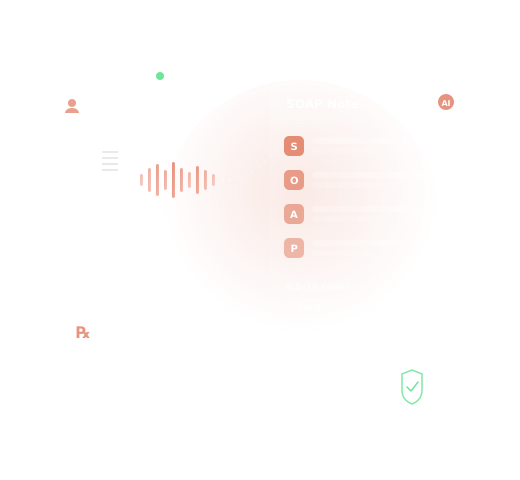
An AI medical scribe supports this environment by fitting into the natural sequence of care. During the consultation, the system captures the conversation and separates speakers. After capture, it converts the discussion into structured text and drafts a SOAP-style note. The clinician can then review the draft, edit findings, confirm the assessment and plan, and finalize the record. For hospital medicine teams, this is especially useful where documentation needs to be completed quickly but still reflect the clinical encounter accurately.
In India, hospital workflows also vary by language, infrastructure, and IT preferences. Some organizations may prefer cloud-based setups, while others may evaluate private or on-premise deployment based on internal governance choices. A practical AI medical scribe in India should therefore support multilingual use, flexible deployment posture, and straightforward review steps that work for both individual doctors and larger hospital teams.
Features mapped to workflow
Conversation capture and transcription: The first requirement is reliable capture of the doctor-patient interaction. This helps reduce dependence on memory or post-visit reconstruction. Speaker diarization supports clearer attribution of who said what during the encounter.
Automatic SOAP note generation: Once the conversation is transcribed, the system organizes content into subjective, objective, assessment, and plan sections. This gives clinicians a usable starting point instead of a blank screen.
Coding suggestions: ICD-10 and CPT suggestions can support downstream documentation and billing workflows. These suggestions are best used as decision support for review, not as automatic final coding.
Multilingual support: In Indian hospital settings, consultations may move between English and regional languages. Multilingual capability helps the documentation process stay closer to the real conversation.
Human review and sign-off: Drafts should always be reviewed by the clinician before finalization. This checkpoint is essential for accuracy, context, and clinical ownership.
Deployment flexibility: Some hospitals may prefer private or on-premise deployment to support internal governance and infrastructure preferences. This is a workflow and operational decision, not a guarantee of compliance.
How It Works
The product workflow is designed to move from live conversation to clinician-approved documentation in a clear sequence.
- Capture the consultation: During an OPD visit, ward review, or follow-up discussion, the system records the clinical conversation through the chosen setup. It identifies speakers so the transcript can distinguish clinician and patient inputs more clearly.
- Transcribe and structure the encounter: The audio is converted into text, then organized into clinically relevant sections. This includes symptoms, history, observations, and plan-related details that can feed note creation.
- Draft a SOAP note automatically: Based on the structured transcript, the system prepares a SOAP-format draft note. This gives hospital medicine teams a usable first version for admission reviews, progress notes, or follow-up documentation.
- Suggest coding support: The workflow can surface ICD-10 and CPT suggestions linked to the documented encounter. These are intended to support review and reduce manual lookup, while the clinician or authorized team member confirms what should be used.
- Review, edit, and sign off: Before anything becomes part of the final record, the clinician reviews the draft, corrects wording, adds missing context, and confirms the assessment and plan. Final sign-off remains a human step.
- Choose deployment posture for operations: Hospitals can evaluate whether a private or on-premise setup better suits their IT environment and governance approach. This helps align the documentation workflow with internal operational preferences.
Local context
For providers evaluating an AI medical scribe in India, local practicality matters more than generic automation claims. Hospital medicine teams often work across mixed digital maturity levels, variable internet environments, and multilingual patient interactions. A useful solution should support daily OPD and inpatient routines without forcing major workflow change.
In India healthcare settings, documentation tools are often judged by whether they save time at the point of care, support clearer records for handoffs, and remain easy for doctors to review. That is why AI medical scribe India healthcare adoption conversations usually focus on note quality, review effort, deployment options, and fit with existing systems rather than novelty alone.
Use cases
Busy OPD clinics: Draft consultation notes faster so doctors can spend less time typing after each visit.
Ward rounds: Capture review discussions and convert them into structured progress note drafts for clinician approval.
Follow-up visits: Maintain more consistent note structure across repeat encounters.
Discharge preparation support: Use structured documentation and coding suggestions to reduce manual back-and-forth before final review.
Multispecialty hospitals: Standardize documentation support across teams while allowing each clinician to edit and sign off their own notes.
These are the kinds of practical scenarios where an AI medical scribe in India can add value without changing who owns the clinical record.
FAQ
Common questions from hospitals and clinics evaluating this workflow are answered below.
CTA
If your team is assessing an AI medical scribe in India for hospital medicine, start with the workflow: consultation capture, structured transcription, SOAP drafting, coding support, and clinician sign-off. Evaluate how it fits your OPD and inpatient routines, what level of review your doctors expect, and whether private or on-premise deployment is the right operational choice. Explore the product pages for features, integrations, and pricing to compare fit for your setting.