Introduction
ICU documentation is detailed, time-sensitive, and often created under pressure. An AI medical scribe in India can help intensivists, duty doctors, and hospital teams turn bedside conversations into structured clinical notes without changing the core responsibility of clinician review. For ICU settings, the goal is not to replace judgment. It is to reduce repetitive typing, support note consistency, and help teams move from conversation to draft documentation faster.
MedScribe is designed as an AI documentation copilot for doctors and hospitals. It converts consultation or care discussions into usable drafts such as SOAP-style notes, while also supporting coding suggestions and multilingual conversations. In critical care, where handoffs, progress updates, and family discussions can generate large volumes of information, an AI medical scribe in India can support more reliable capture of key details while keeping the clinician in control of edits and final sign-off.
This page focuses on ICU workflows in India, where hospitals may need practical deployment choices, multilingual support, and documentation processes that fit existing systems. The emphasis is operational: capture the conversation, structure the information, draft the note, review it, and finalize it within the hospital workflow.
Department workflow
ICU teams work across rounds, bedside assessments, procedure discussions, nursing coordination, and family communication. Documentation may include admission summaries, daily progress notes, problem lists, treatment changes, ventilator updates, medication adjustments, and discharge or transfer summaries. Because multiple clinicians may speak during a case discussion, documentation tools need to distinguish speakers and preserve context.
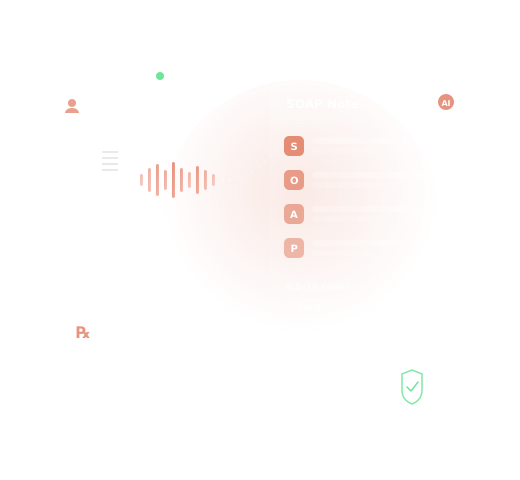
An AI medical scribe in India for ICU use should fit this reality. Instead of asking clinicians to document from memory after rounds, it can support capture during or immediately after the interaction. Speaker diarization helps separate doctor and patient or doctor and caregiver voices. Structured transcription helps organize findings, assessments, and plans. SOAP drafting helps convert raw conversation into a format clinicians can quickly review and refine.
For hospitals and clinics, the value is practical: less manual note assembly, more consistent structure, and a clearer path from spoken interaction to finalized record. In ICU environments, this can be useful for daily progress documentation, consultant reviews, and handoff preparation, especially when teams need to maintain continuity across shifts.
Features mapped to workflow
Conversation capture: Supports the first step of documentation by turning spoken clinical interactions into text that can be processed further. This is useful during bedside reviews, consultant discussions, or family updates where details can otherwise be missed.
Speaker diarization: Helps identify who said what in multi-speaker settings. In ICU care, this matters because attending doctors, residents, nurses, patients, and family members may all contribute information.
Automatic SOAP note generation: Converts the transcript into a structured draft with subjective, objective, assessment, and plan sections. This gives clinicians a usable starting point rather than a raw transcript.
ICD-10 and CPT suggestions: Provides coding support based on the documented interaction. These suggestions are intended to assist review workflows, not replace coding or clinician judgment.
Multilingual support: Useful in Indian healthcare settings where patient and caregiver conversations may shift between English and regional languages. This can help preserve context during documentation.
On-premise or private deployment options: Hospitals may prefer deployment choices that support internal governance and IT preferences. These options are workflow and infrastructure decisions designed to align with institutional requirements.
Review and sign-off controls: The draft remains editable, allowing clinicians to verify findings, correct wording, and approve the final note before it becomes part of the record.
How It Works
The ICU documentation flow with MedScribe is designed to be straightforward and clinician-led:
- Capture the clinical conversation: During rounds, bedside review, or a family discussion, the interaction is recorded through the configured workflow. The system prepares the audio for transcription while preserving the sequence of the encounter.
- Transcribe and separate speakers: The audio is converted into text, and speaker diarization helps distinguish participants. In ICU settings, this is useful when multiple clinicians contribute to the assessment and plan.
- Structure the transcript into clinical sections: The system organizes the conversation into medically relevant segments and drafts a SOAP-style note. This reduces the need to manually convert free-flowing discussion into formal documentation.
- Add coding support: Based on the drafted note, the platform surfaces ICD-10 and CPT suggestions for review. These are intended to support downstream documentation and billing workflows, subject to clinician or coding team validation.
- Review, edit, and sign off: The clinician checks the draft, updates terminology, confirms findings, and approves the final version. Human review is the operational checkpoint before record finalization.
- Finalize within the chosen deployment model: Hospitals can use deployment approaches such as on-premise or private environments depending on workflow, IT, and governance preferences. This supports workflows aligned with internal documentation practices rather than forcing a one-size-fits-all setup.
Local context
Hospitals evaluating an AI medical scribe in India often look for practical fit rather than generic automation claims. ICU teams may need support for multilingual interactions, variable documentation styles across consultants, and deployment choices that work with hospital IT environments. In many Indian settings, clinicians also balance high patient volumes with the need for detailed records, making documentation efficiency a meaningful operational concern.
This is where AI medical scribe India healthcare workflows should stay grounded. The product should support daily care delivery, not add another layer of complexity. For ICU departments, that means helping teams create structured drafts quickly, preserving room for edits, and fitting into existing note review habits. It also means keeping policy references secondary to workflow needs and focusing on documentation quality, consistency, and usability.
Use cases
Daily ICU progress notes: Convert rounds or bedside reviews into structured drafts that clinicians can finalize after checking key findings and plans.
Admission documentation: Support the creation of initial notes from detailed intake discussions, prior history review, and early treatment planning.
Consultant reviews: Help specialists document recommendations from critical care consultations without rebuilding the note from scratch.
Family communication summaries: Capture important discussion points and next steps from family meetings, then convert them into a draft for clinician review.
Transfer or discharge preparation: Use structured documentation support to prepare summaries when a patient moves out of ICU or to another facility.
Coding support workflows: Surface ICD-10 and CPT suggestions from the drafted note to assist review by clinicians or coding teams.
Across these scenarios, an AI medical scribe in India is most useful when it reduces repetitive documentation effort while preserving clinician oversight. That balance is especially important in critical care, where nuance matters and every finalized note should reflect verified clinical judgment.
FAQ
Can this be used for ICU rounds?
Yes. It is designed to support documentation from clinical conversations such as rounds, bedside reviews, and consultant discussions, followed by clinician review and sign-off.
Does it create final notes automatically?
No. It generates draft documentation and coding suggestions, but the clinician reviews, edits, and approves the final note before record completion.
Is multilingual use relevant in Indian hospitals?
Yes. Multilingual support can help when patient or caregiver conversations include English and regional languages, improving context capture for documentation.
Can hospitals choose how it is deployed?
Yes. Deployment options such as on-premise or private environments can support workflows aligned with hospital IT and governance preferences.
CTA
If your ICU team is exploring a practical AI medical scribe in India, MedScribe can support the path from conversation capture to structured note drafting, coding support, and clinician-reviewed finalization. Explore the product overview at /medscribe, review capabilities at /medscribe/features, and assess how the workflow can fit your hospital or clinic documentation process.