Introduction
Internal Medicine teams in India often manage high OPD volumes, chronic disease follow-ups, medication reconciliation, and detailed case histories in limited consultation time. An AI medical scribe in India can help reduce the documentation burden by turning doctor-patient conversations into structured clinical notes that are easier to review, edit, and finalize. For physicians, group practices, and hospitals, the goal is not to replace clinical judgment. The goal is to support faster, more consistent documentation while keeping the clinician in control of the final record.
MedScribe is designed as an AI documentation copilot for daily practice. It converts consultation audio into draft SOAP notes, supports speaker diarization, and provides coding suggestions such as ICD-10 and CPT references for clinician review. For Internal Medicine, this is useful across routine fever cases, diabetes and hypertension follow-ups, thyroid reviews, respiratory complaints, preventive visits, and complex multi-morbidity consultations. In practical terms, an AI medical scribe in India helps clinicians spend less time typing after clinic hours and more time focusing on patient interaction, care planning, and follow-up decisions.
Department workflow
Internal Medicine documentation is rarely linear. A typical consultation may begin with the chief complaint, move into prior history, current medications, allergies, vitals, examination findings, differential thinking, investigations, and treatment planning. In many clinics, doctors also switch between English and regional languages, ask family members for context, and revisit earlier symptoms during the same encounter. This creates a documentation challenge: the conversation is rich, but the final note must be concise, clinically useful, and easy to retrieve later.
An AI medical scribe in India is especially relevant in this setting because it can support multilingual conversations, separate speakers, and organize the encounter into a familiar SOAP structure. For Internal Medicine teams, that means the workflow can move from listening and examining to reviewing a draft note instead of building every note from scratch. The result is a more practical documentation process for OPD visits, follow-ups, and recurring chronic care encounters.
Features mapped to workflow
Conversation capture: The product supports consultation capture as the starting point for documentation. This is useful when physicians want the note to reflect the actual flow of the visit rather than fragmented manual entry.
Speaker diarization: Internal Medicine consultations may include the physician, patient, and sometimes an attendant. Speaker separation helps keep the transcript readable and supports cleaner note drafting.
Multilingual support: In India, consultations often mix English with Hindi or other regional languages. Multilingual handling supports more natural conversations without forcing rigid language use during the visit.
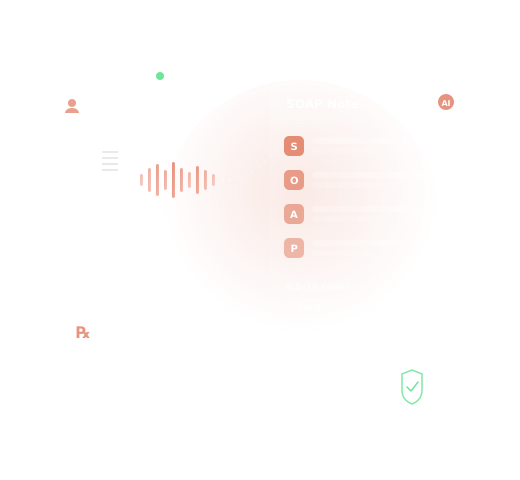
Automatic SOAP note generation: Drafting Subjective, Objective, Assessment, and Plan sections can save time for physicians who otherwise document after each visit or at the end of the day.
ICD-10 and CPT suggestions: Coding support can help clinicians and administrative teams review likely code options alongside the note. These remain suggestions for human review, not automatic final coding.
On-premise or private deployment options: For hospitals and larger groups, deployment posture can be chosen based on IT, governance, and workflow preferences. This supports workflows aligned with internal data handling requirements.
How It Works
The workflow is designed to mirror how Internal Medicine consultations happen in real practice, from conversation capture to clinician sign-off.
- Capture the consultation conversation: During the OPD visit, the doctor-patient interaction is recorded through the configured workflow. The system is built to handle natural consultation flow, including symptom narration, medication review, and follow-up planning.
- Transcribe and structure the encounter: The audio is converted into text with speaker diarization to distinguish who said what. This helps organize the encounter when the physician asks targeted questions, the patient explains symptoms, and an attendant adds history.
- Draft a SOAP note automatically: The transcript is then structured into a draft SOAP note. For Internal Medicine, this can include history details, relevant examination points, assessment themes, and a treatment or investigation plan in a format clinicians already use.
- Surface coding suggestions for review: Based on the documented encounter, the system can present ICD-10 and CPT suggestions to support downstream documentation and billing workflows. These are prompts for clinician or staff review rather than final coded output.
- Review, edit, and sign off: The clinician reviews the draft note, corrects wording, adds missing findings, and confirms the final assessment and plan. Human review is the operational checkpoint before the record is finalized.
- Choose deployment posture for workflow governance: Depending on the clinic or hospital setup, teams may opt for on-premise or private deployment models. This is a workflow and governance decision intended to fit operational preferences, integration needs, and internal IT processes.
Local context
For clinics and hospitals evaluating an AI medical scribe in India, the practical questions are usually about OPD speed, multilingual use, clinician adoption, and deployment flexibility. Internal Medicine departments often see a mix of acute and chronic cases, which means note quality matters for continuity of care. A documentation copilot is most useful when it fits existing habits: listening during the consultation, creating a usable draft, and leaving the doctor with a quick review step instead of a blank screen.
In India healthcare settings, teams may also prefer phased adoption. A clinic may start with selected physicians, standard follow-up visits, or specific OPD blocks before expanding usage. Hospitals may evaluate whether private or on-premise deployment is better suited to their infrastructure. This is where AI medical scribe India healthcare adoption tends to be practical rather than theoretical: the value comes from smoother daily documentation, not from adding another complex tool to the consultation room.
Use cases
Chronic disease follow-ups: Diabetes, hypertension, dyslipidemia, and thyroid reviews often require repetitive but important documentation. Draft SOAP notes can help standardize follow-up records.
Complex multi-morbidity visits: Internal Medicine physicians frequently manage patients with several active conditions and long medication lists. Structured drafting helps capture the encounter more clearly.
High-volume OPD sessions: When clinics run on tight schedules, an AI medical scribe in India can support faster note completion without forcing the doctor to type continuously during the visit.
Multilingual consultations: Where patients describe symptoms in a regional language and the physician documents in English, multilingual support can make the workflow more natural.
Coding review support: Teams that want documentation and coding prompts in one workflow can use coding suggestions as a review aid before final submission or record completion.
FAQ
Is this suitable only for large hospitals?
No. The workflow can be relevant for individual physicians, specialty clinics, and hospitals, depending on consultation volume and documentation needs.
Does the system finalize notes automatically?
No. The intended workflow includes clinician review, edits, and final sign-off before the record is finalized.
Can it support multilingual consultations common in India?
Yes, multilingual support is part of the product description, which can help in consultations where English and regional languages are mixed.
Does it provide coding output without review?
No. ICD-10 and CPT references are presented as suggestions to support review, not as automatic final coding decisions.
CTA
If your Internal Medicine team wants a more practical documentation workflow, explore how an AI medical scribe in India can support consultation notes, coding review, and clinician efficiency. Review the product pathways at /medscribe and feature details at /medscribe/features to assess fit for your clinic or hospital workflow.