Introduction
AI medical scribe in India is becoming a practical option for hospitals and clinics that want to reduce documentation load without disrupting specialist care. In interventional cardiology, clinicians often move between OPD consultations, procedure planning, follow-up reviews, and coordination with cath lab teams. That creates a high volume of notes, summaries, and coding-related tasks that can take time away from patient interaction. An AI medical documentation copilot can help convert consultation conversations into structured drafts that are easier to review, edit, and finalize.
For interventional cardiology teams, the value is not just faster note creation. It is about supporting a more consistent workflow across pre-procedure assessment, risk discussion, medication review, post-procedure follow-up, and discharge documentation. MedScribe is designed to capture clinical conversations, organize them into usable note formats such as SOAP, and provide coding suggestions that clinicians can verify before sign-off. This makes AI medical scribe in India relevant for both independent cardiac practices and larger multispecialty hospitals looking for practical workflow support.
Department workflow
Interventional cardiology documentation has a distinct rhythm. A typical day may include chest pain evaluations, angiography planning, stent follow-up, antiplatelet therapy review, device-related consultations, and coordination with imaging or procedure teams. Each encounter can involve symptom history, prior intervention details, medication adherence, comorbidity review, consent discussion, and next-step planning. When these details are documented manually, clinicians may need to switch attention repeatedly between the patient, the EHR, and administrative tasks.
An AI medical scribe in India can support this workflow by helping structure the encounter while the clinician remains focused on the consultation. In OPD settings, it can assist with history capture and assessment drafting. In hospital settings, it can support follow-up notes, discharge summaries, and coding preparation. For interventional cardiology, this is especially useful where documentation often needs to reflect timelines, procedure context, medication changes, and clear follow-up instructions.
Features mapped to workflow
MedScribe is built as an AI medical documentation copilot for day-to-day clinical use. For interventional cardiology teams, the product value maps closely to common documentation steps:
- Conversation capture and transcription: Supports turning clinician-patient conversations into text that can be used for note drafting.
- Speaker diarization: Helps distinguish between speakers so the clinical narrative is easier to interpret during review.
- Automatic SOAP note generation: Converts encounter details into a structured draft that clinicians can refine.
- ICD-10 and CPT suggestions: Provides coding support to help teams prepare documentation for downstream billing and record workflows, subject to clinician verification.
- Multilingual support: Useful in Indian care settings where consultations may shift between English and regional languages.
- On-premise deployment options: Supports organizations that prefer private or on-premise setups as part of their workflow and governance choices.
These capabilities are relevant to clinics that need faster OPD note completion and to hospitals that want more standardized documentation support across departments. The result is a workflow that stays clinician-led while reducing repetitive typing and reformatting.
How It Works
Below is a practical view of how the product fits into an interventional cardiology encounter from start to finish:
- Capture the consultation conversation: During an OPD visit or follow-up discussion, the system records the clinical conversation through the configured workflow. This may include symptom review, prior angioplasty history, medication adherence, risk factors, and next-step planning.
- Transcribe and structure the interaction: The audio is converted into text, with speaker diarization helping separate clinician and patient dialogue. The transcript is then organized into clinically relevant sections so the encounter is easier to review.
- Draft a SOAP note automatically: Based on the structured transcript, MedScribe generates a draft SOAP note. For interventional cardiology, this can help organize subjective complaints, objective findings discussed in the visit, assessment context, and the treatment or follow-up plan.
- Suggest coding support: The system surfaces ICD-10 and CPT suggestions linked to the documented encounter. These are intended to support workflow efficiency and should be reviewed by the clinician or billing team before use.
- Review, edit, and sign off: The clinician checks the draft, makes corrections, adds procedure-specific nuance where needed, and completes final sign-off before the record is finalized. Human review remains the operational checkpoint for accuracy.
- Choose deployment posture for the organization: Depending on hospital or clinic preferences, teams can evaluate private or on-premise deployment approaches. This supports workflows aligned with internal governance and IT decisions rather than promising any blanket compliance outcome.
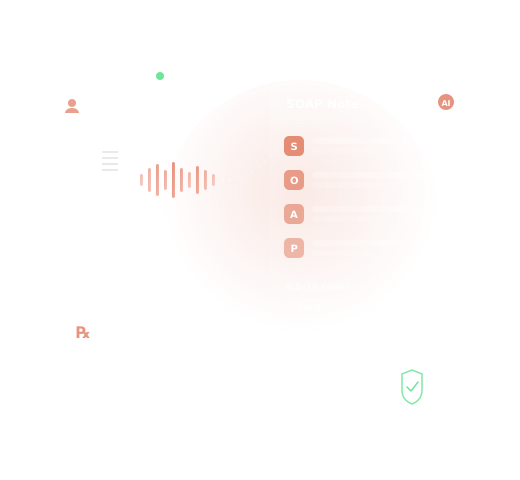

This workflow keeps the clinician in control. The product assists with documentation creation and organization, but the final medical record depends on review, edits, and approval by the care team.
Local context
In India, interventional cardiology practices often manage high patient volumes, multilingual consultations, and a mix of digital and semi-digital documentation environments. That makes practical usability important. AI medical scribe in India should fit into real OPD and hospital routines rather than require major process redesign. Teams may also have different infrastructure preferences, from cloud-based setups to private deployment models, depending on internal IT policies and operational comfort.
For this reason, AI medical scribe India healthcare adoption is often strongest when the tool supports existing documentation habits: capturing the consultation, drafting structured notes, and allowing quick clinician edits before finalization. In interventional cardiology, where follow-up clarity matters, this can help maintain more consistent records across first visits, procedure planning, and post-intervention reviews.
Use cases
- OPD consultation notes: Draft structured notes for chest pain evaluation, dyspnea review, hypertension with cardiac risk, and post-angioplasty follow-up.
- Procedure planning visits: Support documentation for angiography discussions, medication review, and pre-procedure counseling.
- Post-procedure follow-up: Organize symptom updates, access-site concerns, medication changes, and recovery instructions into a usable draft.
- Discharge and summary support: Help teams prepare cleaner documentation inputs for discharge workflows and continuity of care.
- Multilingual consultations: Assist in settings where clinicians and patients switch between English and local languages during the encounter.
These use cases make AI medical scribe in India especially relevant for specialist departments that need both speed and reviewability in documentation.
FAQ
Can this be used in interventional cardiology OPD workflows?
Yes. It is designed to support consultation documentation, including history capture, SOAP drafting, and coding support that clinicians can review before final sign-off.
Does the product replace clinician judgment?
No. The system assists with transcription, note drafting, and coding suggestions, but the clinician remains responsible for review, edits, and record finalization.
Can it support multilingual consultations common in India?
Yes. Multilingual support is part of the product design, which is useful when consultations include English and regional language exchanges.
Is deployment flexible for hospitals with internal IT preferences?
Yes. Organizations can evaluate private or on-premise deployment options based on workflow, infrastructure, and governance needs.
CTA
If your cardiology clinic or hospital wants a more practical way to handle consultation notes, coding support, and clinician review, MedScribe can help streamline the documentation process. Explore how an AI medical scribe in India can fit interventional cardiology workflows, from OPD visits to follow-up documentation. You can also review related product details on /medscribe, feature capabilities on /medscribe/features, integration considerations on /medscribe/integrations, and commercial planning on /medscribe/pricing.