Introduction
Interventional radiology teams manage high-volume documentation across consultations, procedure planning, consent discussions, imaging review, post-procedure notes, and follow-up communication. An AI medical scribe in India can help reduce manual typing by turning clinician-patient conversations into structured draft notes that are ready for review. For hospitals, day-care procedure centres, and specialty clinics, the goal is practical: save time during OPD and procedure-day workflows, improve note consistency, and support cleaner handoff documentation without changing how clinicians practice.
MedScribe is designed as an AI documentation copilot for doctors and care teams. It converts consultation audio into structured clinical documentation, including SOAP-style drafts, while also surfacing coding suggestions such as ICD-10 and CPT support for clinician review. For interventional radiology, this is useful because documentation often spans symptoms, prior imaging context, procedural indication, risk discussion, sedation or access details, and follow-up instructions. Rather than replacing clinical judgment, the system supports a review-first workflow where the doctor remains in control of edits and final sign-off.
For organisations evaluating an AI medical scribe in India, the key question is not just transcription accuracy. It is whether the tool fits daily workflows, supports multilingual conversations, and can be deployed in a way that aligns with internal governance preferences such as private or on-premise setups.
Department workflow
Interventional radiology documentation is rarely a single note. A typical workflow may begin in OPD with referral review, symptom discussion, and imaging correlation. It then moves into procedure planning, where indication, approach, risks, expected outcomes, and alternatives are discussed. On the day of intervention, teams may need concise pre-procedure summaries, intra-procedure observations, and post-procedure instructions. Follow-up visits add another layer with recovery status, symptom change, medication updates, and next-step planning.
Because these interactions happen across multiple touchpoints, clinicians often repeat information in different formats. Manual note creation can slow clinics, especially when doctors switch between imaging interpretation, patient counselling, and procedure coordination. An AI medical scribe in India is most useful here when it captures the conversation, separates speakers, structures the content into clinically usable sections, and leaves the final note ready for quick review instead of full manual drafting.
Features mapped to workflow
Automatic SOAP note generation: Useful for OPD consultations and follow-up visits where history, assessment, and plan need to be captured quickly in a standard format.
Speaker diarization: Helps distinguish clinician and patient speech during counselling, symptom review, and consent-related discussions, making draft notes easier to validate.
ICD-10 and CPT suggestions: Supports coding workflows by surfacing likely options based on the documented encounter. These remain suggestions for clinician or billing-team review.
Multilingual support: Important in Indian care settings where consultations may move between English, Hindi, and regional language phrases within the same encounter.
On-premise or private deployment posture: Relevant for hospitals that prefer tighter control over infrastructure decisions and internal data handling workflows.
Review and edit before finalization: Critical for interventional radiology, where procedural nuance matters and every draft should be checked by the treating clinician before becoming part of the record.
How It Works
The product workflow is designed around real consultation and procedure documentation steps rather than generic dictation.
- Capture the encounter: During an OPD visit, counselling session, or follow-up discussion, the conversation is recorded through the configured workflow. This may include symptom review, prior imaging discussion, procedural indication, and next-step planning.
- Transcribe and separate speakers: The system converts speech into text and uses speaker diarization to distinguish clinician and patient contributions. This helps preserve context when the note includes history, questions, explanations, and care instructions.
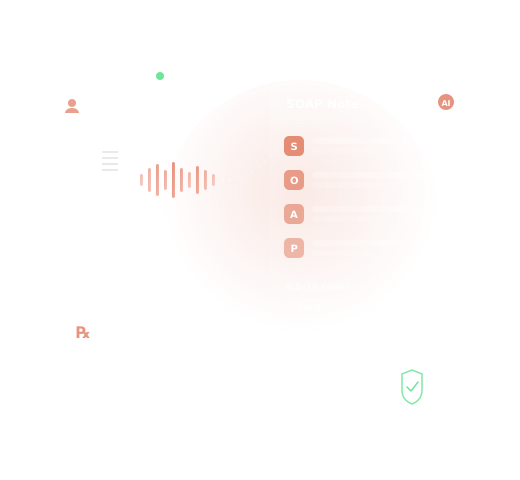
- Structure the draft into clinical sections: The transcript is organized into a usable draft note, including SOAP-style formatting where appropriate. For interventional radiology, this can help turn a free-flowing conversation into a clearer summary of indication, assessment, and plan.
- Surface coding support: Based on the documented encounter, the system can suggest ICD-10 and CPT options to support downstream coding review. These suggestions are intended to assist staff, not replace clinical or billing judgment.
- Clinician review and edits: The doctor reviews the draft, corrects terminology, adds procedural specifics, and confirms that the note reflects the actual encounter. This human checkpoint is essential before any record is finalized.
- Finalize within the chosen deployment model: After sign-off, the note can move into the organisation's documentation workflow. Teams may choose deployment approaches such as private or on-premise setups based on operational and governance preferences.
Local context
In India, interventional radiology services often operate across mixed documentation environments, from standalone specialty centres to multispecialty hospitals with established IT teams. That makes flexibility important. An AI medical scribe in India should support practical realities such as multilingual consultations, variable clinic throughput, and differing infrastructure preferences across organisations. Some teams may want a lightweight rollout for OPD documentation first, while others may evaluate broader use across procedure counselling and follow-up workflows.
For buyers comparing options in the AI medical scribe India healthcare space, it helps to focus on operational fit: how quickly clinicians can review drafts, whether coding suggestions are useful, and whether deployment choices support internal governance expectations. The strongest value usually comes from reducing repetitive documentation effort while keeping the doctor firmly in control of the final record.
Use cases
Referral and first consult documentation: Capture presenting complaints, prior imaging references, and treatment indication discussions in a structured draft.
Procedure counselling: Summarize benefits, risks, alternatives, and expected recovery points discussed with the patient and family.
Follow-up visits: Draft notes for symptom improvement, wound or access-site review, medication updates, and next imaging or clinic plans.
Coding support workflow: Help teams prepare cleaner documentation that can support ICD-10 and CPT review after the encounter.
Multilingual OPD settings: Support consultations where doctors and patients switch between English and Indian languages during the same visit.
These scenarios show why an AI medical scribe in India is relevant beyond generic transcription. The value comes from turning conversation into structured, reviewable documentation that fits how interventional radiology teams actually work.
FAQ
Can this be used for interventional radiology OPD and follow-up visits?
Yes. It is suited to consultation-style encounters where history, imaging discussion, assessment, and plan need to be documented quickly and then reviewed by the clinician.
Does it replace clinician review?
No. The workflow is designed around draft generation followed by human review, edits, and final sign-off before record finalization.
Can it help with coding?
It can provide ICD-10 and CPT suggestions based on the documented encounter. These are support tools and should be validated by the clinician or billing team.
Is multilingual use supported?
Yes. Multilingual support is useful for Indian clinical settings where consultations may include English and regional language usage.
What deployment options are available?
Teams can evaluate private or on-premise deployment approaches depending on workflow, IT, and governance needs. These choices are operational decisions rather than guarantees of compliance.
CTA
If your interventional radiology team wants faster documentation without losing clinical oversight, explore how an AI medical scribe in India can fit your OPD, counselling, and follow-up workflows. Review the core product at /medscribe, compare capabilities at /medscribe/features, and assess whether the workflow matches your documentation goals. For hospitals and clinics looking for a practical AI medical scribe in India, the best next step is to evaluate note quality, review effort, and deployment fit in your real care setting.