Introduction
An AI medical scribe in India can help lactation clinics reduce documentation load during busy consultations while keeping the clinician in control of the final record. In breastfeeding support visits, conversations often cover feeding history, latch concerns, maternal symptoms, infant weight trends, pumping routines, supplements, and follow-up plans. Capturing all of this clearly takes time, especially when the clinician also needs to observe feeding technique and counsel caregivers. MedScribe is designed to convert consultation conversations into structured clinical notes and coding suggestions that support practical OPD workflows.
For lactation consultants, obstetric teams, paediatric clinics, and hospitals offering breastfeeding support, the value is straightforward: less time spent typing, more attention on the parent-infant interaction, and more consistent note structure across visits. Rather than replacing clinical judgment, the system supports documentation by drafting SOAP notes from the encounter, identifying speakers, and presenting outputs for clinician review. This makes an AI medical scribe in India useful in settings where documentation quality matters but consultation time is limited.
The product message here is practical. Clinics need a tool that fits daily operations, supports multilingual conversations, and can be deployed in ways that align with internal governance preferences, including private or on-premise setups where appropriate. For lactation care, that means helping teams document nuanced counselling and follow-up instructions without adding friction to the visit.
Department workflow
Lactation clinic workflows are conversation-heavy and often involve both assessment and education. A typical visit may begin with intake on delivery history, feeding frequency, infant output, maternal pain, prior interventions, and current concerns. The clinician may then observe positioning, latch, milk transfer, pumping technique, nipple condition, or infant behaviour during feeding. After assessment, the visit usually shifts into counselling: correcting latch, discussing feeding cues, planning expressed milk use, reviewing supplementation, and setting follow-up timelines.
Documentation in this department can become fragmented because key details are spread across narrative history, observation findings, and counselling points. Teams may also need to record maternal and infant issues in a way that is easy to revisit at the next appointment. An AI medical scribe in India helps by turning the consultation into a structured draft that reflects subjective concerns, objective observations, assessment themes, and a plan. This is especially useful when the clinician wants to maintain eye contact and hands-on guidance instead of switching constantly between patient interaction and typing.
In hospital-linked lactation services, workflows may also connect with obstetrics, neonatology, paediatrics, and discharge counselling. In those settings, consistent note formatting and coding support can help teams prepare cleaner records for internal systems and follow-up coordination.
Features mapped to workflow
MedScribe is built around the core steps of clinical documentation. Automatic SOAP note generation supports the common structure used after lactation consultations, helping clinicians move from free-flowing conversation to a usable draft. Speaker diarization helps distinguish clinician and patient or caregiver speech, which is valuable in counselling-led visits where multiple people may speak. Multilingual support is relevant for Indian healthcare settings where consultations may shift between English and regional languages.
ICD-10 and CPT suggestions can support downstream documentation tasks, while still requiring clinician review before final use. This is helpful for teams that want coding assistance without relying on manual recall alone. On-premise deployment and private deployment options can be considered by clinics and hospitals that prefer tighter control over infrastructure decisions as part of their workflow and governance planning.
For lactation clinics specifically, these features map well to recurring needs: documenting feeding complaints, summarising observed latch issues, capturing counselling instructions, and preparing follow-up notes efficiently. The result is not just faster note creation, but a more repeatable documentation process across first visits and review visits.
How It Works
The workflow for this product is designed to follow the real sequence of a consultation, from conversation capture to clinician-approved documentation.
- Capture the consultation conversation: During the lactation visit, the discussion between clinician and parent or caregiver is captured through the configured workflow. This may include history taking, feeding observations, counselling, and follow-up planning. Speaker diarization helps separate voices so the draft reflects who said what more clearly.
- Transcribe and structure the encounter: The system converts the conversation into text and organises it into clinically useful segments. In a lactation setting, this can help separate presenting concerns, feeding history, maternal symptoms, infant observations, and education points instead of leaving everything as one long transcript.
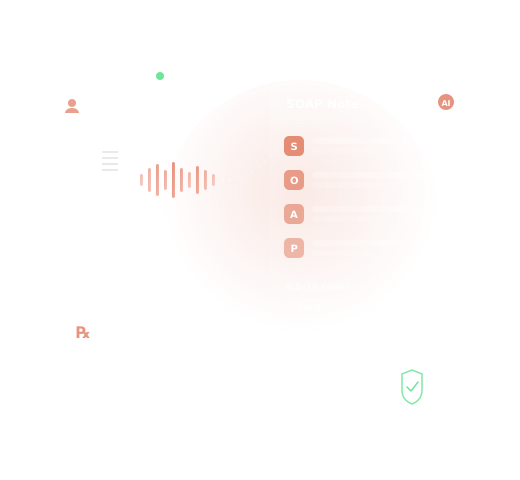
- Draft SOAP notes automatically: MedScribe generates a SOAP-style draft based on the encounter. Subjective content may include pain, latch difficulty, low milk supply concerns, or feeding frequency. Objective content may reflect observed latch, positioning, nipple condition, or infant behaviour. Assessment and plan sections are drafted to support clinician editing rather than replace judgment.
- Add coding support: The system can surface ICD-10 and CPT suggestions linked to the documented encounter. These suggestions are intended to support workflow efficiency and should be reviewed by the clinician or authorised staff before use in the final record.
- Review, edit, and sign off: The clinician checks the draft, corrects details, refines the assessment, and confirms the final plan. Human review is the operational checkpoint that matters most. Only after edits and sign-off should the note be finalised in the clinic record.
- Choose deployment posture for operations: Clinics and hospitals can evaluate deployment options such as private or on-premise setups based on internal IT preferences, workflow design, and governance needs. This is best treated as an operational decision that supports workflows aligned with organisational requirements.
Local context
In India, lactation support may be delivered in maternity hospitals, paediatric clinics, women’s health centres, and independent counselling setups. Consultations can be multilingual, family members may participate, and follow-up may happen in short intervals after delivery. These realities make structured documentation useful, especially when clinicians need to balance counselling quality with throughput.
An AI medical scribe in India is most effective when it adapts to practical OPD conditions rather than forcing a rigid workflow. That includes support for mixed-language conversations, repeat visits, and coordination with broader maternal and child health teams. For organisations evaluating technology, the focus should be on whether the tool helps clinicians document faster, review confidently, and maintain consistency across encounters.
Because healthcare organisations vary in infrastructure maturity, deployment flexibility also matters. Some teams may prefer cloud-based workflows, while others may evaluate private or on-premise approaches. The right choice depends on internal operations, IT readiness, and documentation processes.
Use cases
Lactation clinics can use MedScribe across several common scenarios. In an initial breastfeeding assessment, the tool can help capture delivery history, feeding frequency, latch concerns, maternal discomfort, and infant output in a structured draft. In a follow-up visit, it can summarise progress, note changes in positioning or milk transfer, and document updated counselling. In hospital discharge counselling, it can support concise records of feeding education, warning signs, and review plans.
It can also be useful in multidisciplinary settings where lactation support intersects with paediatrics or obstetrics. When clinicians need to document both assessment findings and detailed counselling, an AI medical scribe in India can reduce repetitive typing while preserving a review-first workflow. For administrators, the benefit is often better note consistency and less variation in documentation style across providers.
FAQ
Can this work for counselling-heavy consultations?
Yes. Lactation visits often involve long counselling segments, and the product is designed to convert conversation into structured drafts that clinicians can review and refine.
Does it replace clinician documentation responsibility?
No. The system drafts notes and coding suggestions, but human review, edits, and final sign-off remain essential before the record is finalised.
Is multilingual use relevant for Indian clinics?
Yes. Multilingual support is useful where consultations move between English and regional languages or include multiple speakers.
Can hospitals consider private deployment options?
Yes. Teams can evaluate private or on-premise deployment as an operational and governance choice based on internal workflow and IT preferences.
CTA
If your team wants a more practical way to document breastfeeding support visits, explore how an AI medical scribe in India can fit lactation clinic workflows. Review the core product at /medscribe, compare capabilities at /medscribe/features, and assess whether the workflow matches your OPD, hospital, or counselling setup. The goal is simple: help clinicians spend less time on repetitive note creation and more time on patient care, with review and final approval always staying in clinical hands.