Introduction
An AI medical scribe in India can help lifestyle medicine clinics and hospitals reduce documentation burden during busy consultations. In preventive and lifestyle-focused care, clinicians often need to capture detailed histories around sleep, nutrition, physical activity, stress, tobacco or alcohol use, metabolic risk, and follow-up goals. That makes note-taking time-consuming, especially when the visit includes counselling, behaviour change planning, and longitudinal tracking. MedScribe is designed as an AI medical documentation copilot that converts consultation conversations into structured clinical notes and coding suggestions, while keeping the clinician in control of review and sign-off.
For organisations evaluating an AI medical scribe in India, the practical question is not just transcription accuracy. It is whether the tool fits real OPD workflows, supports multilingual conversations, separates speakers clearly, and produces usable drafts that save time without disrupting patient interaction. In lifestyle medicine, where the conversation itself is often the core of care, a documentation copilot can support more attentive consultations and more consistent records.
This page focuses on how an AI medical scribe can support lifestyle medicine workflows in India, with emphasis on day-to-day usability for clinics, physician groups, and hospitals.
Department workflow
Lifestyle medicine consultations usually involve more narrative detail than a short episodic visit. A typical workflow may begin with a patient discussing symptoms, weight changes, sleep quality, stressors, diet patterns, exercise habits, medication adherence, and family history. The clinician then interprets these details in the context of chronic disease risk, existing diagnoses, and achievable behaviour goals. Follow-up plans may include counselling, lab review, referrals, and measurable targets for the next visit.
Because of this structure, documentation often needs to capture both medical and behavioural context. Teams may document subjective concerns, objective findings, assessment of risk factors, and a plan that includes lifestyle interventions alongside medications or investigations. An AI medical scribe in India can support this workflow by listening to the consultation, structuring the conversation into draft SOAP notes, and surfacing coding suggestions for clinician review. This is especially useful in OPD settings where doctors move quickly between patients and need records that are complete, readable, and easy to finalize.
For hospitals and multi-specialty clinics, the value also extends to standardization. When documentation follows a more consistent structure, handoffs, follow-ups, and internal review become easier. In lifestyle medicine, that can help teams track counselling themes and care plans more reliably across repeat visits.
Features mapped to workflow
MedScribe is built around the documentation tasks clinicians already perform. Automatic SOAP note generation helps convert a consultation into a draft that reflects the flow of subjective history, objective observations, assessment, and plan. Speaker diarization helps distinguish clinician and patient voices, which is useful when counselling conversations are detailed or when family members contribute context. Multilingual support is relevant for Indian care settings where consultations may shift between English and regional languages.
ICD-10 and CPT suggestions can support coding workflows by giving clinicians a starting point for review rather than requiring manual recall after every visit. This is not a replacement for clinical judgment; it is a support layer that can reduce repetitive administrative effort. For organisations with stricter governance preferences, on-premise deployment can be considered as an operational choice for data handling and infrastructure control. In practice, an AI medical scribe in India is most useful when these features work together: capture the conversation, structure it into a draft, support coding review, and allow the clinician to edit before finalizing the record.
These capabilities are relevant across preventive cardiometabolic counselling, obesity management, diabetes lifestyle follow-up, smoking cessation visits, stress-related consultations, and longitudinal wellness programs.
How It Works
The workflow is designed to mirror a real consultation rather than force a separate documentation process.
- Capture the consultation conversation: During the visit, the system records the clinician-patient conversation through the configured setup. It is designed to support multilingual interactions and uses speaker diarization to separate who said what, which is helpful in counselling-heavy lifestyle medicine visits.
- Transcribe and structure the encounter: The conversation is converted into text and organized into clinically relevant sections. Instead of leaving the team with a raw transcript, the system prepares structured content that can be used for documentation workflows.
- Draft SOAP notes automatically: Based on the consultation, MedScribe generates a draft SOAP note that captures history, observations, assessment themes, and the care plan discussed. This can include lifestyle recommendations, follow-up instructions, and monitoring points when they are part of the encounter.
- Suggest coding for review: The platform surfaces ICD-10 and CPT suggestions linked to the documented encounter. These suggestions are intended to support clinician or billing review, not replace professional judgment.
- Clinician review, edit, and sign-off: Before any record is finalized, the clinician reviews the draft, makes edits, confirms coding relevance, and signs off. Human review is an operational checkpoint built into the workflow so the final note reflects the clinician's intent.
- Choose deployment posture for governance needs: Depending on organisational requirements, teams can evaluate deployment options such as on-premise or private setups. This is a workflow and governance decision that can support internal data handling preferences and IT planning.
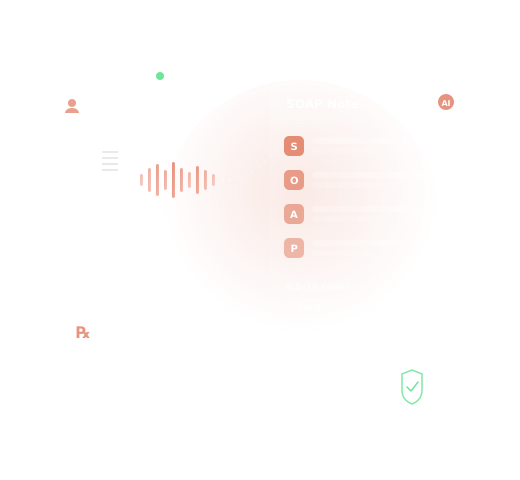
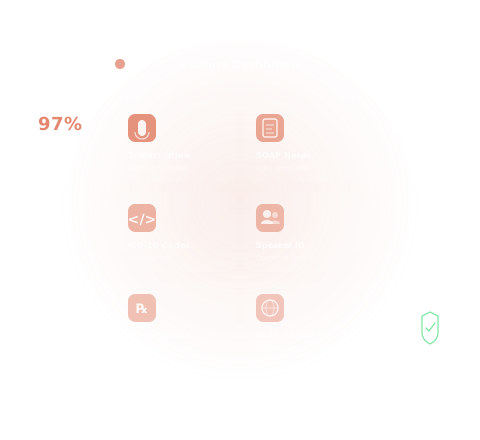
This end-to-end flow is why many teams exploring an AI medical scribe in India look beyond basic dictation. The goal is not just to capture words, but to support a usable clinical documentation process from conversation to final note.
Local context
In India, lifestyle medicine workflows often sit alongside high-volume OPD operations, chronic disease management programs, and multilingual patient communication. Clinicians may switch between English and local languages within the same consultation, and they may need to document both counselling detail and medical decision-making efficiently. An AI medical scribe in India should therefore be practical for mixed-language encounters, variable consultation lengths, and settings ranging from independent clinics to hospital outpatient departments.
Another local consideration is infrastructure preference. Some organisations may prefer private or on-premise deployment models as part of their internal governance approach. Others may prioritize ease of rollout across multiple sites. The right choice depends on workflow, IT readiness, and documentation priorities rather than a one-size-fits-all model. For Indian healthcare teams, the most useful solution is one that supports daily documentation habits without adding friction.
Use cases
In lifestyle medicine, documentation support can be valuable across several recurring scenarios. A physician managing obesity and metabolic syndrome may use the tool to capture dietary patterns, exercise barriers, sleep concerns, and agreed behaviour goals in a structured note. A diabetes follow-up visit may involve medication review, adherence discussion, foot care reminders, and nutrition counselling, all of which can be drafted into a SOAP format for quick review. Smoking cessation and alcohol reduction visits often include motivational interviewing and staged planning, where detailed conversation capture can improve note completeness.
Hospitals can also use an AI medical scribe in India for preventive health clinics, executive health programs, and chronic disease counselling units where documentation quality matters but clinician time is limited. Multi-doctor practices may benefit from more consistent note structure across providers, while solo specialists may value faster completion of records after each OPD session. The product is also relevant when teams want coding support alongside note drafting, especially in workflows where documentation and billing review are closely linked.
FAQ
Below are common implementation questions from clinics and hospitals evaluating this workflow.
Can this replace clinician documentation entirely?
No. The system is designed to draft notes and support coding review, but the clinician remains responsible for reviewing, editing, and signing off before the record is finalized.
Is it useful for counselling-heavy visits?
Yes. Lifestyle medicine often involves long conversations around habits and goals. Structured drafting and speaker separation can help turn those discussions into usable notes more efficiently.
Does it support multilingual consultations common in India?
The product narrative includes multilingual support, which is relevant for Indian OPD settings where clinicians and patients may switch languages during the visit.
Can hospitals consider private or on-premise deployment?
Yes. On-premise deployment is available as an operational option for organisations that want infrastructure choices aligned with internal governance and workflow needs.
CTA
If your clinic or hospital is assessing documentation tools for preventive and chronic care workflows, MedScribe offers a practical path from conversation capture to clinician-reviewed notes. Explore how an AI medical scribe in India can fit lifestyle medicine OPD workflows, support SOAP drafting, and reduce repetitive documentation effort while keeping final clinical control with the care team. Review the core product pages for MedScribe, compare capabilities on features, and evaluate fit for your organisation's workflow and deployment preferences.