Introduction
Medical records teams and clinicians often spend valuable time turning consultations into structured notes, updating charts, and preparing documentation that can be reviewed and stored consistently. An AI medical scribe in India can support this process by converting doctor-patient conversations into draft clinical notes that are easier to review, edit, and finalize. For hospitals, clinics, and multi-specialty OPD settings, the goal is not to replace clinical judgment, but to reduce repetitive documentation work and help teams maintain clearer records.
MedScribe is designed as an AI documentation copilot for daily care delivery. It supports conversation capture, transcription, SOAP note drafting, coding suggestions, and clinician review before final sign-off. For organizations evaluating an AI medical scribe India healthcare workflow, the practical value lies in fitting documentation support into existing medical records processes without adding unnecessary complexity. This makes it relevant for busy outpatient departments, specialty clinics, and provider groups that want more consistent documentation while keeping clinicians in control.
Department workflow
In many Indian healthcare settings, the medical records function sits at the intersection of clinical care, administration, and continuity of treatment. A typical workflow starts with the consultation, followed by note preparation, diagnosis and procedure documentation, chart updates, and record storage. Delays often happen when clinicians document after the visit, when notes vary in structure, or when records staff need to clarify incomplete entries.
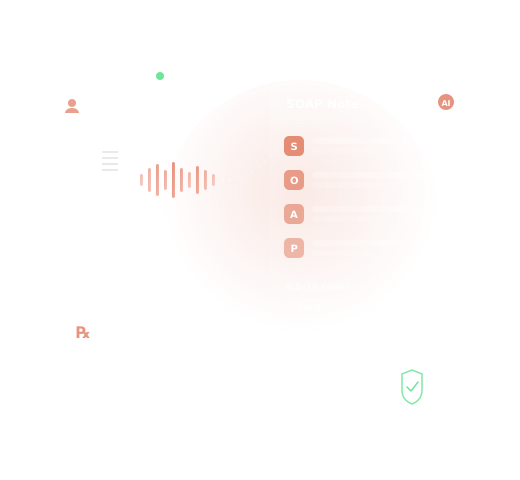
An AI medical scribe in India is most useful when it supports this existing workflow rather than forcing a new one. During the consultation, the system can capture the conversation and identify speakers. After the interaction, it can organize the transcript into a structured draft, such as SOAP format, and surface coding suggestions for clinician review. The doctor or authorized user then edits the draft, confirms accuracy, and signs off before the record is finalized. Medical records teams benefit from more standardized inputs, while clinicians spend less time starting documentation from a blank screen.
This approach is especially practical in OPD environments where patient volumes are high, multilingual interactions are common, and documentation quality needs to remain usable across follow-up visits, referrals, and internal audits.
Features mapped to workflow
Conversation capture and transcription: The product supports capture of consultation conversations and converts them into text for downstream documentation. This helps create a usable starting point for records instead of relying only on memory or delayed dictation.
Speaker diarization: By separating clinician and patient speech, the draft becomes easier to interpret and review. This is useful in consultations where symptoms, history, and advice need to be attributed clearly.
Automatic SOAP note generation: The system can structure the interaction into Subjective, Objective, Assessment, and Plan sections. For medical records teams, this supports more consistent note formatting across providers and departments.
ICD-10 and CPT suggestions: Coding support can help clinicians and documentation teams review likely diagnosis and procedure codes alongside the note. These remain suggestions and should be validated by the responsible clinician or coding workflow.
Multilingual support: In India, consultations may move between English and regional languages. Multilingual support can help clinics document encounters more naturally while still producing structured drafts for review.
On-premise or private deployment options: Some organizations prefer deployment choices that align with internal governance, IT architecture, and data handling preferences. These decisions are operational and workflow-driven, especially for larger hospitals and enterprise groups.
How It Works
The workflow for this AI medical scribe in India is designed around real consultation and documentation steps, with human review built in before any record is finalized.
- Capture the consultation: During the OPD or clinic visit, the conversation is recorded through the configured workflow. The system prepares the audio for transcription and identifies speakers where possible, helping distinguish doctor and patient dialogue.
- Transcribe and structure the encounter: The audio is converted into text, and the transcript is organized into clinically relevant segments. This creates a structured base that can be used by the medical records workflow instead of an unformatted transcript.
- Draft SOAP notes automatically: Based on the consultation content, the platform generates a draft SOAP note. This gives the clinician a usable first version of the encounter summary, including history, findings, assessment, and plan where supported by the conversation.
- Surface coding suggestions: The system presents ICD-10 and CPT suggestions linked to the documented encounter. These suggestions are intended to support review and documentation completeness, not replace clinician judgment or coding validation.
- Review, edit, and sign off: The clinician or authorized user checks the draft note, makes corrections, adds missing context, and confirms the final version. Human review is the operational checkpoint before the note becomes part of the patient record.
- Finalize within the chosen deployment model: Organizations can implement the workflow in a way that supports their infrastructure preferences, including private or on-premise deployment approaches where needed. This helps teams align documentation operations with internal governance and integration plans.
Local context
Healthcare organizations in India often manage high outpatient volumes, mixed digital maturity, and varied documentation habits across departments. In this environment, an AI medical scribe in India should be practical, flexible, and easy to fit into existing routines. Clinics may want faster note completion at the end of each consultation, while hospitals may focus on standardization across specialties and sites.
Multilingual interactions are another important factor. Doctors may take history in one language, explain treatment in another, and still need records that are clear for future care. A solution built for AI medical scribe India healthcare use should therefore support documentation workflows that reflect how consultations actually happen on the ground. For larger institutions, deployment posture may also matter, especially when IT teams evaluate private infrastructure, integration planning, and internal review processes.
Use cases
Busy OPD clinics: Reduce time spent writing repetitive consultation notes and help clinicians close records sooner after each visit.
Multi-doctor practices: Improve consistency in note structure across providers while preserving each clinician's review and editing control.
Specialty clinics: Support follow-up documentation where recurring symptoms, treatment plans, and medication discussions need clear summaries.
Hospital medical records departments: Receive more structured documentation inputs that are easier to review, organize, and maintain in patient records workflows.
Enterprise groups with governance needs: Evaluate private or on-premise deployment options as part of broader documentation and infrastructure planning.
FAQ
Can this replace clinician documentation entirely?
No. The system is designed to create draft notes and coding suggestions, but clinician review, edits, and final sign-off remain essential before record finalization.
Does it support multilingual consultations?
Yes, multilingual support is part of the product narrative, which is useful for Indian clinical settings where consultations may include English and regional languages.
How does it help medical records teams?
It can improve the consistency and usability of draft documentation by converting conversations into structured notes that are easier to review and store.
Can hospitals choose different deployment approaches?
Yes. Deployment can be planned as a workflow and governance decision, including private or on-premise approaches depending on organizational needs.
CTA
If your clinic or hospital wants to reduce documentation friction and improve note consistency, explore how an AI medical scribe in India can fit into your medical records workflow. Review the core product at /medscribe, compare capabilities at /medscribe/features, and assess how the workflow can support your OPD, specialty, or hospital documentation process. For teams looking at practical AI medical scribe India healthcare adoption, the next step is to evaluate how conversation capture, SOAP drafting, coding support, and clinician sign-off can work together in your day-to-day environment.