Introduction
Menopause clinics often manage consultations that are detailed, sensitive, and longitudinal. Discussions may cover vasomotor symptoms, sleep changes, mood concerns, menstrual history, sexual health, bone health, metabolic risk, prior treatments, and follow-up planning. For clinicians, this creates a documentation burden that can slow OPD flow and reduce time for patient interaction. An AI medical scribe in India can help by turning consultation conversations into structured draft notes that are easier to review, edit, and finalize.
For menopause care teams, the value is practical: less repetitive typing, more consistent note structure, and better support for follow-up continuity. MedScribe is designed as an AI medical documentation copilot that converts consultation dialogue into usable clinical notes and coding suggestions. Instead of replacing clinical judgment, it supports the doctor with draft SOAP notes, speaker-aware transcription, multilingual handling, and coding assistance that can fit into daily clinic operations. For hospitals and specialty centres evaluating an AI medical scribe in India, the key question is not just automation, but whether the workflow remains clinician-led and operationally realistic.
Department workflow
Menopause clinics usually run on a repeatable but nuanced workflow. A patient arrives with symptoms that may overlap with endocrine, gynecologic, mental health, and lifestyle concerns. The clinician gathers history, clarifies symptom duration and severity, reviews prior investigations, discusses treatment options, and plans follow-up. Documentation must capture both subjective concerns and objective findings while preserving context for future visits.
In a busy OPD, this often means switching attention between the patient and the screen. A medical scribe workflow can reduce that friction by capturing the consultation, organizing the transcript, and preparing a draft note for review. In menopause practice, this is especially useful when visits involve counseling, medication adjustments, risk discussions, and longitudinal symptom tracking. The goal is not generic transcription alone, but structured documentation that supports continuity across first visits, review appointments, and multidisciplinary referrals.
An AI medical scribe in India is particularly relevant where clinics may handle multilingual conversations, variable documentation styles, and a mix of standalone specialty centres and hospital-based departments. The workflow benefit comes from supporting the doctor through note preparation while keeping review and sign-off firmly in clinician hands.
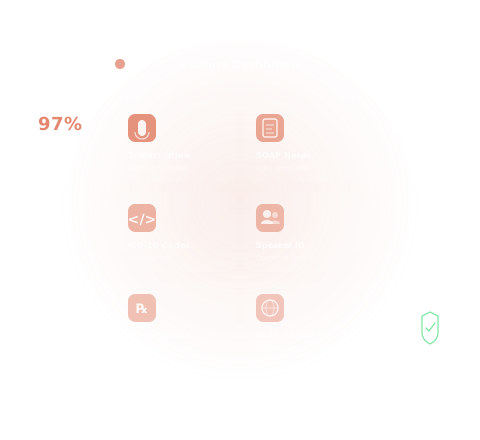
Features mapped to workflow
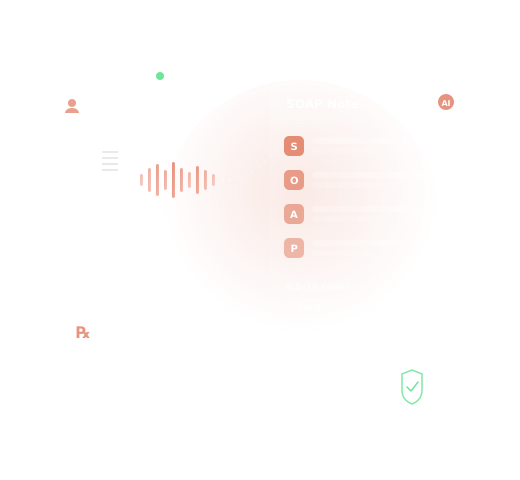
Conversation capture and transcription: The system captures the consultation audio and converts it into text, helping reduce manual note-taking during the visit. Speaker diarization helps distinguish clinician and patient speech, which is useful when symptom narratives are detailed.
Automatic SOAP drafting: Menopause consultations often map well to SOAP structure. Subjective sections can include hot flashes, sleep disturbance, mood changes, cycle history, and treatment concerns. Objective sections can summarize vitals, examination findings, or available reports. Assessment and plan can then be drafted for clinician review.
Coding support: ICD-10 and CPT suggestions can support downstream documentation workflows. These suggestions are best used as prompts for review rather than automatic final coding decisions.
Multilingual support: In many Indian clinics, consultations may move between English and regional languages. Multilingual support can help preserve the flow of conversation without forcing the doctor to document everything manually afterward.
Deployment posture options: Some organizations may prefer private or on-premise deployment models based on internal governance, IT architecture, or workflow preferences. These choices should be evaluated as operational decisions that support workflows aligned with institutional requirements.
How It Works
The workflow of an AI medical scribe in India should be clear, auditable, and easy for clinicians to adopt. In menopause clinics, the process typically follows these steps:
- Capture the consultation conversation: During the OPD visit, the clinician conducts the consultation as usual while the system records the interaction. This may include symptom history, prior treatment response, lifestyle discussion, and follow-up planning. Speaker diarization separates patient and clinician voices to improve note organization.
- Transcribe and structure the dialogue: The captured audio is converted into text and organized into clinically relevant segments. Instead of leaving the team with a raw transcript, the system prepares structured content that can feed into note generation.
- Draft a SOAP note automatically: Based on the conversation, the platform generates a draft SOAP note. For menopause care, this may include symptom summaries, relevant history, assessment themes, and a treatment or follow-up plan. The draft is intended to save time, not to replace clinician judgment.
- Suggest coding support: The system can surface ICD-10 and CPT suggestions linked to the documented encounter. These suggestions help the team move faster, but they remain reviewable and editable before use.
- Clinician review, edit, and sign-off: The doctor reviews the draft note, corrects details, adds missing findings, and confirms the final assessment and plan. Human review is the operational checkpoint before the record is finalized.
- Finalize within the chosen deployment workflow: Depending on the organization, the workflow may run in a private or on-premise setup. This supports teams that want deployment choices aligned with internal governance and integration preferences.
Local context
In India, menopause care is delivered across gynecology clinics, women’s health centres, multispecialty hospitals, and preventive care programs. Documentation needs can vary by setup, but the common challenge is balancing patient counseling with efficient note completion. An AI medical scribe in India can support this by reducing repetitive documentation work while keeping the clinician in control of the final record.
Local relevance also comes from language diversity and variable digital maturity across organizations. Some clinics may want a lightweight documentation copilot for OPD use, while larger hospitals may evaluate integration and deployment options more closely. In both cases, the practical requirement is the same: the tool should fit the consultation workflow rather than forcing the clinician into a rigid process. For teams exploring AI medical scribe India healthcare solutions, usability in real outpatient settings matters more than broad automation claims.
Use cases
Initial menopause assessment: Capture a detailed first consultation and generate a structured draft note covering symptoms, history, and care plan.
Follow-up visits: Speed up repeat documentation when reviewing treatment response, side effects, sleep changes, or symptom progression.
Counseling-heavy consultations: Support visits where significant time is spent on education, lifestyle guidance, and shared decision-making.
Multilingual OPD encounters: Help document consultations where patient communication shifts between English and regional languages.
Hospital specialty workflows: Support clinicians who need draft notes and coding prompts while maintaining review and sign-off before finalization.
FAQ
Can this be used during live menopause consultations?
Yes. The workflow is designed to support live consultation capture and convert the conversation into a structured draft note for clinician review.
Does it replace the doctor’s documentation responsibility?
No. The system prepares draft notes and coding suggestions, but the clinician reviews, edits, and signs off before the record is finalized.
Is it useful for multilingual clinics?
Yes. Multilingual support can help clinics where consultations include English and regional language usage within the same visit.
Can hospitals choose different deployment models?
Yes. Some organizations may evaluate private or on-premise deployment options based on workflow, IT, and governance preferences.
CTA
If your menopause clinic wants to reduce documentation load without disrupting OPD flow, MedScribe offers a practical path. Explore how an AI medical scribe in India can support consultation capture, SOAP drafting, coding assistance, and clinician-led review. For specialty clinics and hospitals looking for a usable documentation copilot, this approach keeps the workflow focused on patient care first and record completion second.